
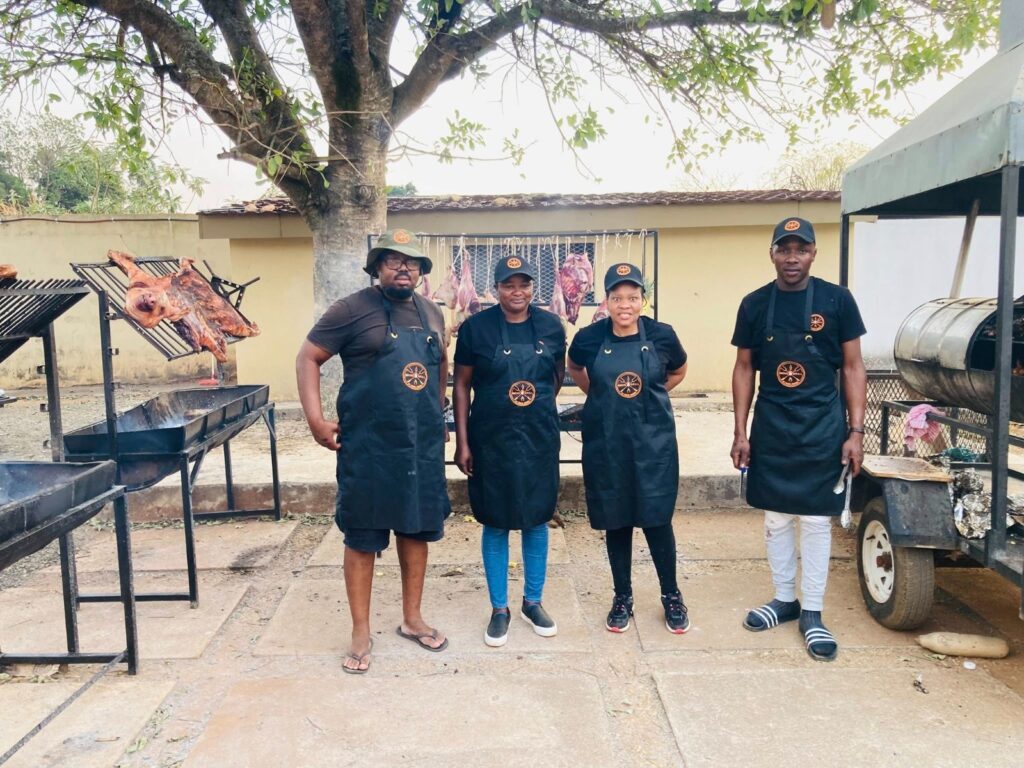
Hi Sipho, thank you for taking the time to talk with us. Could you start by introducing yourself to our readers and sharing how your business journey began?
I was born and raised in Manzini and attended Salesian High School until the end of Form 2. At that point, my twin sister and I moved to the UK to stay with our mother who was the special advisor and head of the health department at The Common Wealth Secretariat. After earning my GCSEs, I got a part-time job at Pizza Hut, working in the kitchen making pizzas, which was my first real experience in the food industry. The next year, I moved to South Africa to complete my A-levels and later earned a degree in Marketing from UNISA through the Midrand Graduate Institute. After finishing my studies, I returned to Eswatini and spent several years working in the real estate industry.
And when did you get into the food industry?
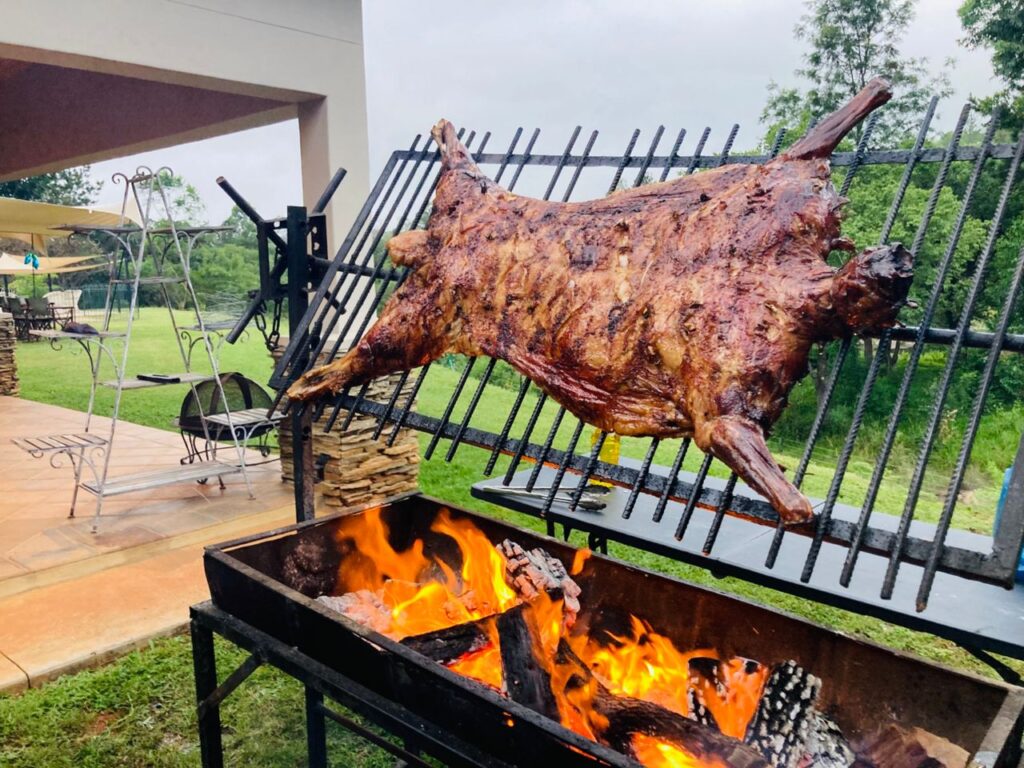
Around that time, while I was still working, I developed a growing interest in food channels. Watching them, I noticed a rising global fascination with pulled pork, an American barbecue classic, especially popular in the Southern United States. It’s made from shredded pork shoulder that’s slow-smoked over wood, resulting in tender, flavorful meat. I started experimenting at home, teaching myself how to make pulled pork until I felt I had perfected the technique. In early 2016, I decided to test it by applying for a stall at the MTN Bushfire Festival, and we got accepted. Our menu was simple: we sold only pulled pork. The response was incredible, and we were invited back the following year.
Later that year, in December 2017, we opened The Smoke & Grill at the Mantega Lifestyle Centre, where we are sitting right now. Funny enough, I stumbled upon the space by chance while driving past one day. I was actually headed to Mantenga Lodge to pitch them on stocking our biltong. I then approached the center’s owners, pitched my idea, and managed to secure a small spot there. We would become just the second eatery in the center. We started on a modest budget with minimal equipment, but we had one key asset: our mobile meat smoker we used at the Bushfire Festival. From there, we grew slowly, refining our craft as we went. Our earliest customers were mainly people who had tasted our food at Bushfire and followed us to the restaurant, along with tourists who, at the time, were the main visitors to the Lifestyle Centre.
This wasn’t your first business venture, was it?
No, it wasn’t. I had previously started a business called Travel Snacks, where we sold packaged biltong that I cured and dried myself at home. These were available at most gas stations and convenience stores nationwide. Later, we expanded our product line to include snacks like nuts and dried fruit to complement the biltong and dried wors we already offered. Initially, we had a presence in most bars, restaurants, and filling stations, but we realized that the costs of restocking all those outlets were too high. So, we scaled back and focused on a few strategic locations, such as convenience centers near border gates and close to our base. The COVID-19 pandemic also affected how the business operated, so we had to adapt our strategy accordingly.
Besides running The Smoke & Grill, you’ve also taken your skills on the road with open-flame catering. How did that part of the business start?
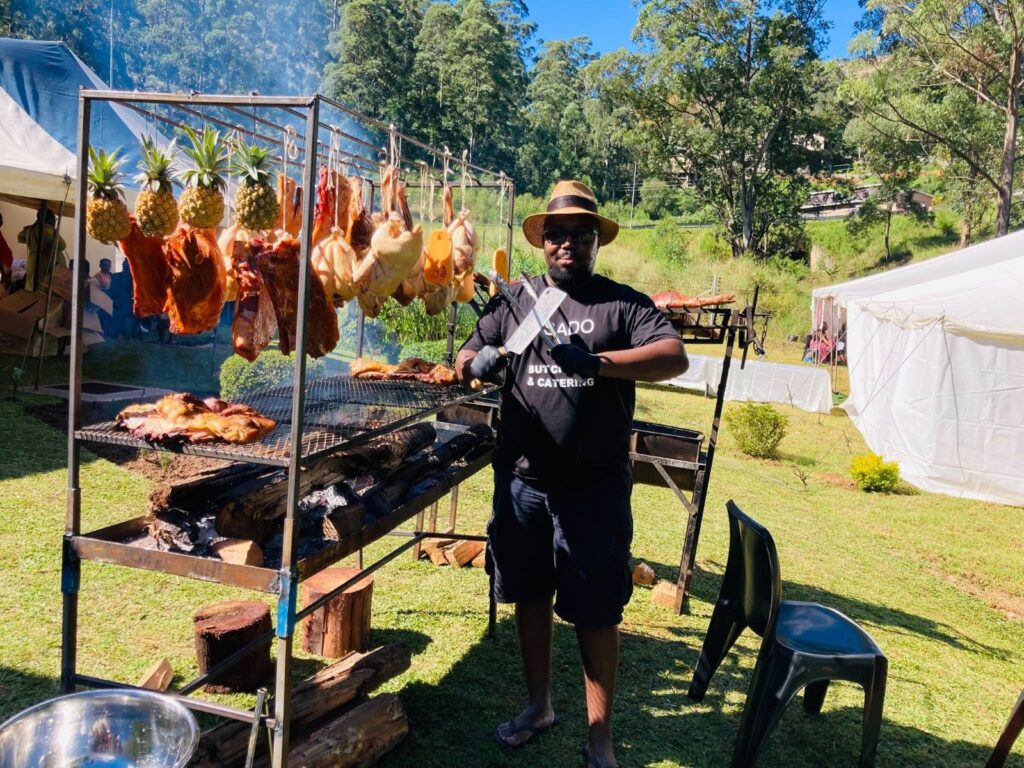
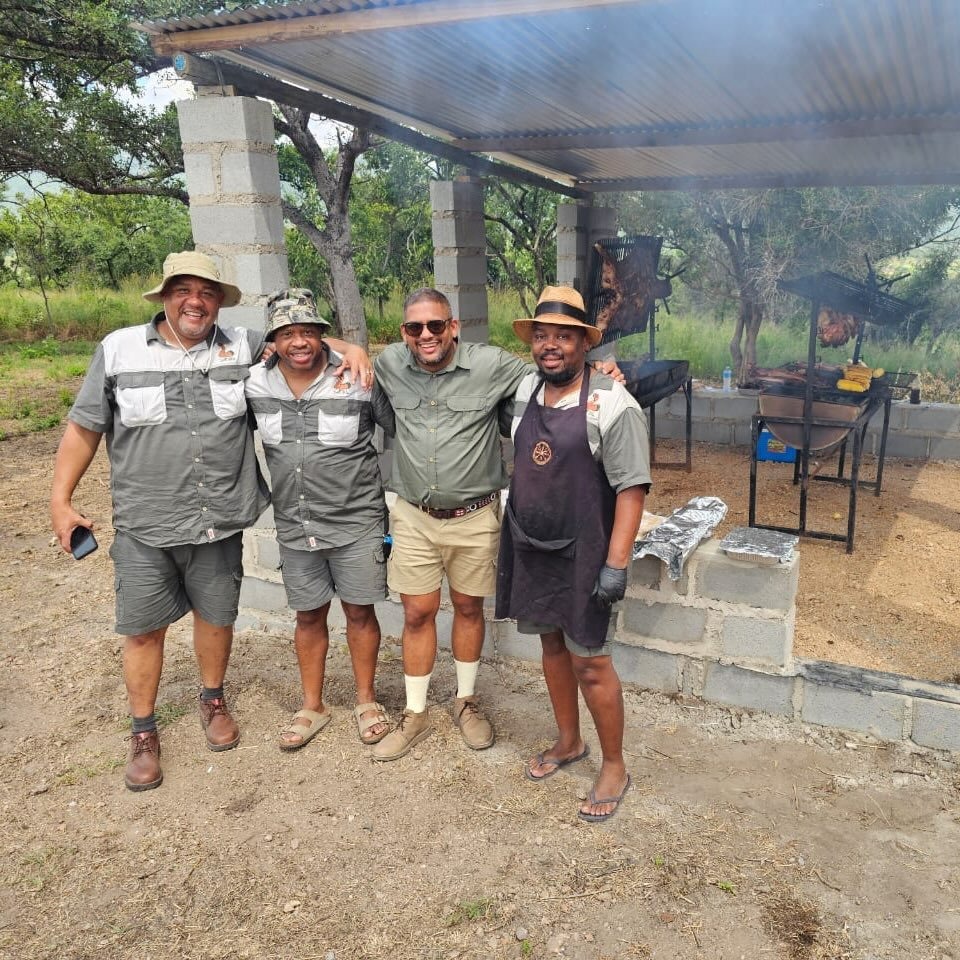
We recognized the need to expand our business beyond The Smoke & Grill, so we ventured into outside catering for events and private functions. Over time, we refined our approach and found our niche in open-flame catering. While spit braais were already quite popular in Eswatini, we aimed to create something more unique.
Our approach features meat suspended over an open flame, slow-cooked alongside hanging fruits and vegetables to create a visually striking and flavorful experience—something that allows clients to truly ‘feast with their eyes’. We’ve also expanded our menu beyond meats, adding Mediterranean-inspired starches like garlic and herb potatoes, along with our signature chimichurri sauce. The meat is reverse-seared over the flames according to each client’s preference, moving us away from the traditional barbecue style.
Drawing from my background in biltong making, which is essentially a form of meat curing, I decided to deepen my knowledge by taking a meat-curing course in Cape Town, where I had the privilege of learning from Richard Bosman of Richard Bosman’s Quality Cured Meats, a respected producer of Italian and Spanish-style charcuterie. We later collaborated at this year’s Standard Bank Luju Food & Lifestyle Festival. Looking ahead, Richard and I have discussed further collaboration on a business venture. The goal is to establish a specialized meat processing and curing business in the country that produces premium products such as ham, salami, and bruschetta, aimed at both local and international markets.
Is this how Asado Butchery got started?
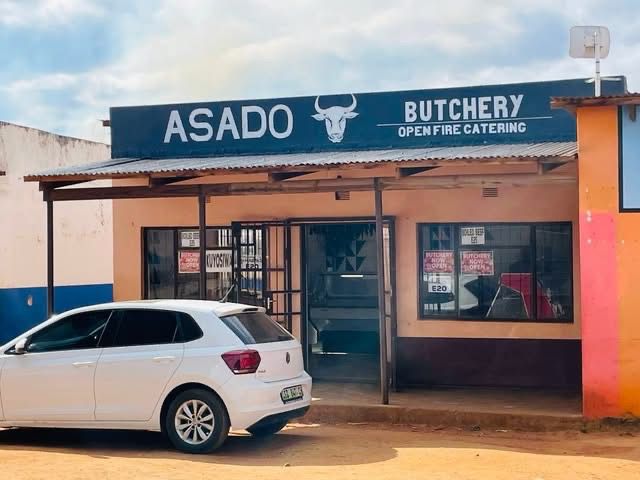
Not quite. Around March this year (now last year), we came across an opportunity to lease a property in Lobamba and set up a butchery. Naturally, our interest was driven by the large amount of meat we already use for The Smoke & Grill and our biltong production, making it a logical step to become part of that value chain. The location also attracted us because it was spacious enough to include open-braai facilities. That’s when the idea struck: to create an authentic Shisa Nyama experience using the Asado technique.
Currently, the butchery mainly serves the local community in Lobamba and surrounding areas, offering traditional favorites like Inhloko and trotters (emasondvo), along with everyday cuts that aren’t fancy but are definitely higher quality. Entering this market was a strategic move. In today’s economic climate, entrepreneurs need to explore markets where profit margins might be smaller, but sales volumes are higher. This balance helps support our other, more capital-intensive ventures.
Why the name Asado?
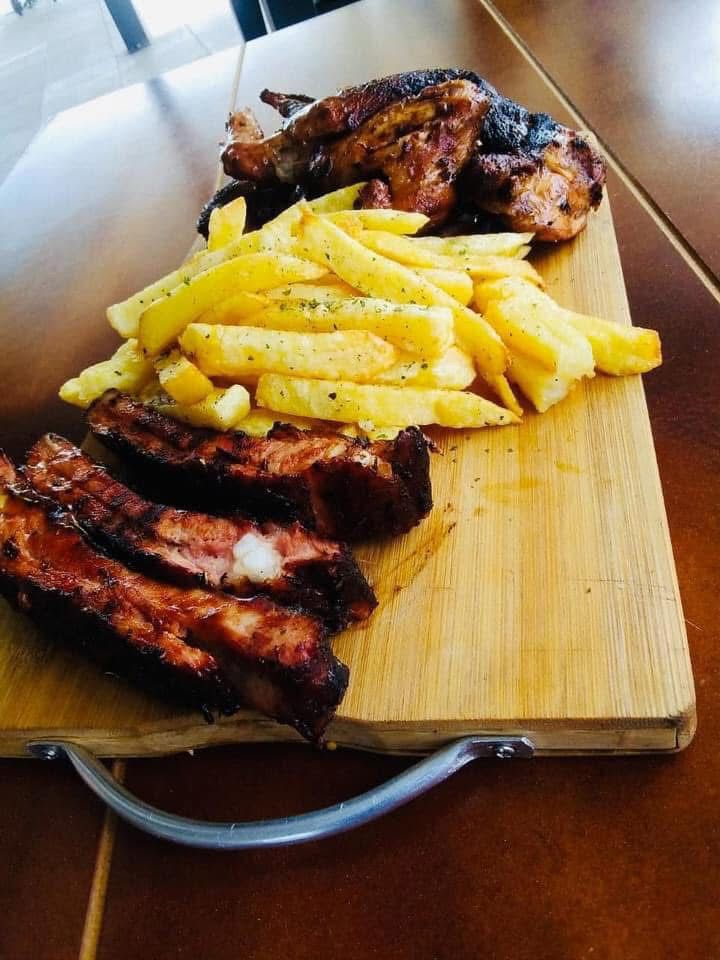
The name Asado originates from the Argentine method of slowly grilling meat over an open flame using adjustable stands that let the chef raise or lower the meat to control heat and cooking speed. This technique locks in moisture and flavor, unlike traditional braai stands, which usually stay at one fixed height. Some people were surprised by how much we spent on building the custom Asado stand, especially since the butchery is located in Lobamba, but for us, it’s a long-term investment in both quality and education, showcasing what’s possible to our market.
Can you walk us through your decision to expand The Smoke & Grill to Mbabane? What happened with that venture, since it didn’t seem to last very long?
A common mistake many of us make in business is not doing enough research, understanding the market, the location, and all the small details that can make or break a venture. That said, I also believe in taking calculated risks. Sometimes setbacks are the best teachers; they’re part of paying your “school fees” in business, even if the lessons can be costly.
What we ultimately realized was that the population around Ezulwini, where The Smoke & Grill at Mantenga Lifestyle Centre is located, isn’t large. Interestingly, most of our customers were actually people from Mbabane or Manzini who enjoyed driving out to Mantenga as part of their experience. For them, visiting The Smoke & Grill wasn’t just about the food; it was a treat, a family outing, or a date night. Most of our business happened during the evenings and weekends rather than during the daily lunch hours. So, when we opened a branch in Mbabane, we unintentionally took away that sense of destination. Our regulars still preferred to drive to Mantenga for the ambiance and experience they associated with us.
Although many encouraged us to open in Mbabane or Manzini that support didn’t always lead to steady customers. Our menu is distinctive, providing something different from the usual lunchtime options like stews or curries that people eat daily at work. Looking back, the location we chose in Mbabane was also not the best for convenience, even for those near the city center.
So, I admit, the excitement of expanding clouded our judgment, and we didn’t do enough research. Still, I see it as a valuable learning experience. Moving forward, we’ve decided not to expand The Smoke & Grill to other areas. Instead, we’ll focus on engaging more people through our other projects, such as event catering and the butchery, by bringing our brand to them in more adaptable ways, while The Smoke & Grill retains its current spot with its unique identity.
That’s very interesting. You’ve pointed out The Smoke & Grill’s unique location as a key selling point. What other factors do you believe have helped set the brand apart?
Firstly, it’s about experience and consistency. When we started, I was very hands-on in the kitchen, from preparing food to managing the smoking process. Over the years, I’ve built and trained a skilled team that now handles much of that work behind the scenes. Many team members have been with us for years, including our main meat smoker, which highlights the consistency we’ve maintained. Although I’m not in the kitchen daily due to other business ventures, I remain heavily involved in sourcing our meats and raw materials, an area I’m well-versed in. Having our own butchery now gives us an edge, but even beyond that, I pay close attention to details. For example, when we buy pork belly, I’ll personally specify how much fat we want on it, depending on what we’re preparing in the kitchen or the smoker.
We’re also very intentional about the experience we offer. We might not be a fine dining restaurant, but our setup features outdoor benches and a relaxed vibe, and we take pride in providing a top-notch smokehouse and grill experience. Looking ahead, we plan to expand with our upcoming meat-curing business, introducing new options like pizzas topped with our own smoked and cured meats.
What would you consider a defining moment in your business journey?
The first key experience was the exposure we gained from participating in the MTN Bushfire Festival. The feedback and encouragement we received there motivated us to open The Smoke & Grill, even though, as I mentioned earlier, the opportunity came about quite by chance. The second significant moment was securing our current location. After presenting our concept and aligning with the center’s vision as a tourist destination, we were given the chance to set up here. That opportunity proved to be a lifeline because, in this type of business, location truly is everything. More recently, the chance to acquire Asado Butchery has been important. It has helped us strengthen our position within the value chain and improved our cash flow, which supports our other business ventures.
Thank you so much for your time Khaile.
Thank you Mhlungwane.