

The Regional Excellence Development Initiative (REDI) has officially launched the Institute of Corporate Directors, a first-of-its-kind platform aimed at professionalising board leadership and enhancing accountability across both the public and private sectors.
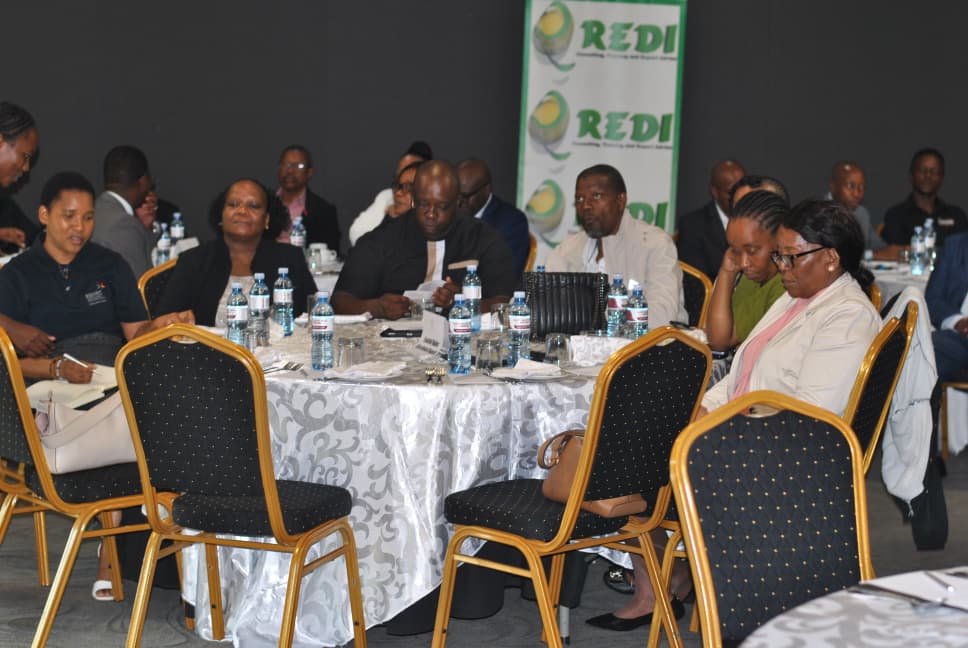
The Institute was launched during a high-level breakfast session convened by the REDI, bringing together board chairpersons, chief executive officers, policymakers, and captains of industry.
Delivering opening remarks, Chief Executive Officer of REDI, Dr Sikhomba Gumbi said the establishment of the Institute responds directly to a long-standing gap within Eswatini’s corporate governance ecosystem.
“For many years, when we have been running programmes on corporate governance, one question has consistently been asked: why do we not have a forum where board members and aspiring directors can engage, share experiences, and build capacity?” he said. “Today, we are proud to say that such a platform now exists.”
Dr Gumbi explained that the Institute is designed to serve as a recognised national resource for directors, offering guidance, training, and a central point of reference for governance-related matters. A key feature of the initiative will be the creation of a database of qualified and aspiring board members, which organisations can consult when appointing directors.
“This is about building a credible pipeline of leadership,” he said. “Institutions should be able to identify individuals with the right skills, experience, and ethical grounding to serve effectively on boards.”
Beyond capacity building, the Institute also seeks to address a critical challenge faced by local institutions: the application of international governance frameworks within the Eswatini context.
Dr Gumbi noted that while globally recognised governance models, particularly the widely used King Reports, provide a strong foundation, they are primarily tailored to South Africa’s legislative and regulatory environment.
“When you apply these frameworks locally, you often encounter references that are specific to another jurisdiction,” he said. “What this Institute will do is provide authentic, context-specific guidance on how those principles should be interpreted and implemented in Eswatini.”
The Institute will offer a range of membership categories, including individual and corporate membership, as well as associate membership for professionals such as engineers, managers, and students. It will also accommodate retired professionals as “friends of the institution,” recognising the value of experience and mentorship in strengthening governance practices.
Providing further insight into the vision behind the initiative, REDI Chief Operations Officer, Thembayena Dlamini, highlighted the importance of diversity and focus within board structures.
Using the Institute’s logo as a symbolic representation, she explained that the circular form reflects a boardroom table, while a central focal point serves as a reminder of directors’ fiduciary responsibilities.
“The board must remain focused, diligent, and fully aware of the responsibilities entrusted to it,” she said. “Around that table sits diversity of skills, experience, age, and perspectives, which is essential for balanced and effective decision-making.”
The launch was further marked by a keynote address delivered on behalf of Dr Absalom Thembani Dlamini, who was represented by Dr Phil Mnisi, Governor of the Central Bank of Eswatini. The address warned that weak governance remains a major threat to organisational performance, often manifesting through poor oversight, lack of accountability, ethical lapses, and ineffective leadership.

“Corporate governance is fundamentally about how organisations are directed and managed,” the address noted. “When applied correctly, it provides sustainable solutions to a wide range of challenges at both board and management levels.”
The keynote further emphasised the need for continuous training, enforceable governance frameworks, and a culture of accountability within institutions. It also highlighted the importance of orienting board members and executives on governance principles at the start of their tenure.
Dr Gumbi concluded that the launch of the Institute marks not just the creation of a new organisation, but the beginning of a broader national conversation on leadership, accountability, and the future of corporate governance in Eswatini.
“We are laying the foundation,” he said. “What remains is for all of us directors, executives, and stakeholders to actively participate in shaping a culture of good governance that will benefit generations to come.”