

By Staff Reporter
Menzi Mbingo has been appointed Chief Building Engineer at the Ministry of Public Works and Transport.
This move aims to strengthen discipline, efficiency, and accountability in the delivery and maintenance of public infrastructure.
The appointment was confirmed by Ministry of Public Works and Transport Principal Secretary Thulani Mkhaliphi, who said Mbingo had already been formally introduced to and welcomed by colleagues in the Ministry.
Mkhaliphi said the appointment reflected the government’s intention to place experienced technical leadership at the centre of public infrastructure management, particularly at a time when the country is implementing capital development programmes while grappling with ageing public buildings and constrained resources.
A decade of experience in public-sector infrastructure planning
Mbingo brings more than a decade of experience in public-sector infrastructure planning, design, supervision, and project management. He previously held senior engineering roles in government, working on large-scale infrastructure projects funded by donors and the national government.
Between July 2013 and November 2014, Mbingo served as an Infrastructure Officer at the Ministry of Economic Planning and Development. In that role, he coordinated and provided technical oversight of infrastructure projects implemented in partnership with the European Union. The total value of works delivered under these programmes amounted to approximately E837 million, equivalent to about €44 million.

His responsibilities spanned both road and building infrastructure projects and included ensuring compliance with South African Bureau of Standards (SABS) and Ministry of Public Works specifications, including SATCC, TRH, and TMH guidelines.
Mbingo also coordinated multiple stakeholders, including contractors, consultants, and funding partners. During the same period, he played a leading role in upgrading the Siphofaneni–St. Phillips Road, a European Union-funded project that included the construction of the 375-meter-long Usuthu Bridge at Siphofaneni and the 80-meter-long Mhlathuzane Bridge downstream toward the Lubovane Dam.
The Siphofaneni Bridge later received regional recognition when it was awarded the ‘Most Outstanding Project in Structural Engineering’ by the South African Institution of Civil Engineering.
Mbingo later served as a lead civil engineer on several nationally significant road infrastructure projects, overseeing planning, design, supervision, and overall project management. Among these was the E647 million Nhlangano–Sicunusa (MR13) Road Project, officially commissioned by His Majesty King Mswati III in October 2024.
He also oversaw national road rehabilitation programmes, emergency repair works, and the Low Level Crossings construction programme, which represented an investment of more than E400 million. These projects were implemented nationwide and focused on improving road safety, access, and resilience, particularly in flood-prone areas.

While serving as Head of Maintenance in the Roads Department, Mbingo introduced an approach that prioritised the use of internal departmental capacity for maintenance and rehabilitation works. He encouraged the utilisation of government-employed personnel, including artisans, operators, and technical staff, rather than outsourcing all works to private contractors.
According to the Ministry, this approach resulted in cost savings and enabled the government to implement more projects with available resources. Projects implemented under this model included the Kakholwane Culvert Crossing Rehabilitation and Extension and the KaMjuda Culvert Crossing Rehabilitation in Nhlangano, among others.
In his new role, Mbingo will oversee the Buildings Department, which is responsible for planning, designing, constructing, rehabilitating, and maintaining all government institutional and residential buildings.
“As a Ministry, we already employ labourers, artisans, operators, and professionals with the necessary skills. The intention is to use this internal capacity more effectively while maintaining quality and accountability,” he said.
The Department also serves as an implementing agency for capital development programmes across all government ministries and departments. The Department operates through in-house architectural, engineering, and quantity surveying divisions, supported by construction, maintenance, and electrical units, as well as regional depots in Mbabane, Manzini, Piggs Peak, Nhlangano, and Siteki.
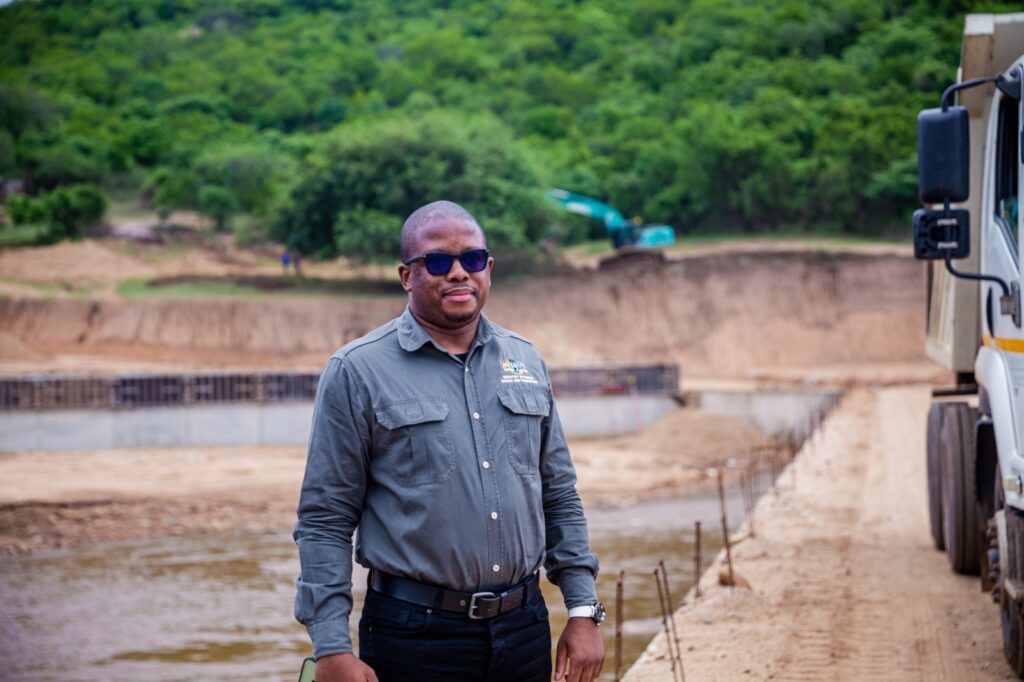
Mbingo said his leadership would be guided by the Buildings Department Service Charter, which commits the Department to efficiency, cost-effectiveness, transparency, and quality service delivery.
“Our responsibility is not only to construct buildings, but to ensure that they are safe, functional, and fit for purpose throughout their lifespan. This requires proper planning, strict enforcement of standards, and sustained investment in maintenance,” he said.
He further said the focus would be on ensuring that public buildings support government service delivery and remain safe, functional, and fit for purpose throughout their lifespan.
Mbingo said the Department would adopt accountability, transparency, professionalism, service excellence, and efficiency as its core values to strengthen service delivery to client ministries and departments.
He also indicated that the model of utilising internal capacity, previously applied in the Roads Department, would be extended to the Buildings Department, leveraging personnel already employed at Ministry headquarters and in regional depots.
Mkhaliphi reiterated that Mbingo’s appointment was expected to strengthen technical oversight and improve value for money in public infrastructure delivery, especially as the government faces mounting pressure to do more with limited resources.