

The Minister of Agriculture, Mandla Tshawuka has clarified that Eswatini’s lucrative international meat markets remain open in principle, despite a temporary pause in trade necessitated by the recent Foot and Mouth Disease (FMD) outbreak.
Tshawuka emphasized that the current suspension is a standard regulatory response rather than a permanent ban, expressing optimism that exports could resume within a year once the disease is fully eradicated.
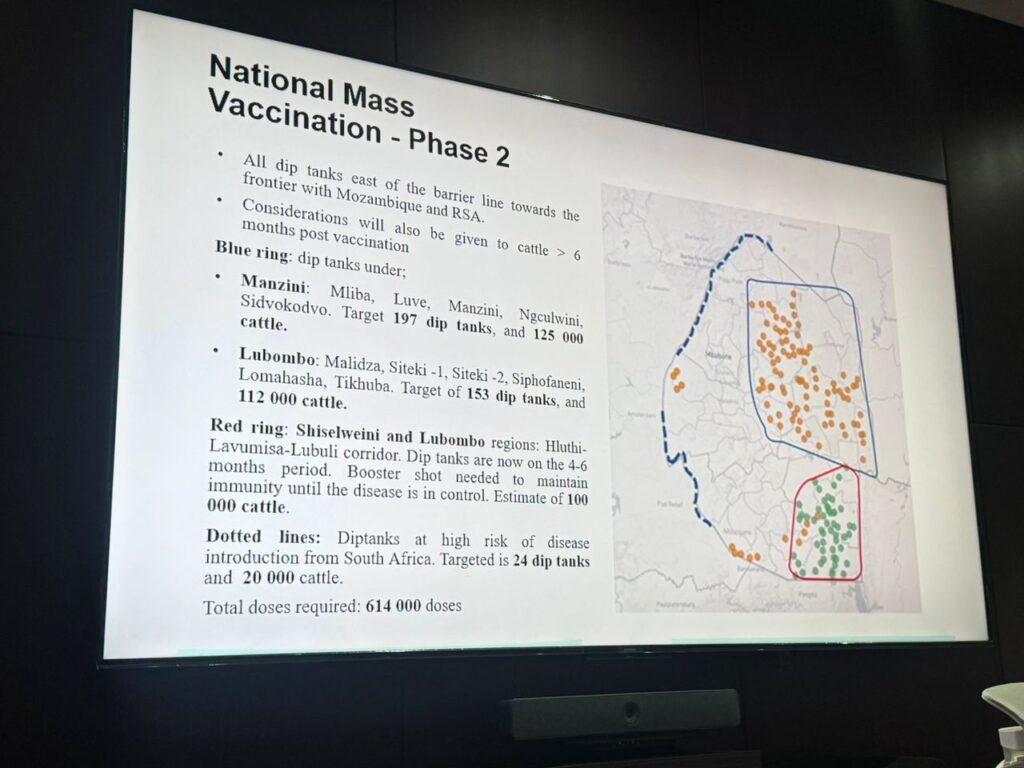
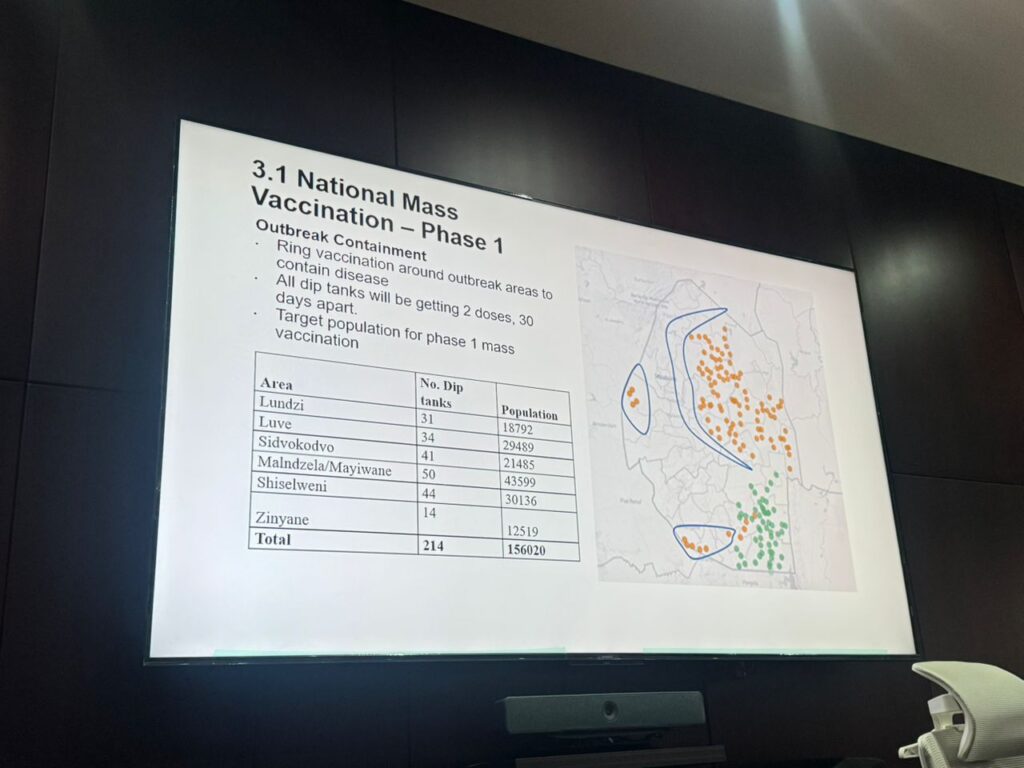
The Minister noted that the primary focus remains on beating the disease through a comprehensive national vaccination process, with close to 300 000 vaccinated at the time of the press conference on Thursday. According to the minister, the country is looking at a potential 12-month window following the successful containment of the outbreak to regain its status and restart shipments to high-value markets.
To facilitate this recovery, the government is intensifying its efforts to secure the national herd. This includes a robust vaccination drive and stricter border controls to prevent illegal cattle movements that compromise the country’s sanitary status.
“Our meat markets did not ban us; they just advised that we deal with the FMD outbreak,” the Minister explained. He added that the 12-month timeline is a realistic goal for the country to demonstrate its disease-free status to international inspectors, provided the vaccination and monitoring processes continue without hitches.
The beef industry is a critical component of Eswatini’s agricultural GDP, particularly through its export quotas to the European Union and other regional partners. The Ministry’s proactive stance is intended to reassure farmers and commercial stakeholders that the infrastructure for trade remains intact.
In the same press conference the Minister announced a partial relaxation of livestock movement controls for cloven-hoofed animals, including cattle, sheep, goats, and pigs.
While the national pause on international beef exports is expected to last approximately 12 months as the country completes its vaccination cycle, these new domestic measures aim to facilitate the local meat value chain under strict bio-security protocols.
Minister Mandla Tshawuka clarified that the relaxation is highly regulated, particularly for the Hhohho region, where movement remains prohibited due to active infection, with exceptions only granted in the Lobamba area under specific conditions.
The Ministry has outlined rigorous Standard Operating Procedures (SOPs) for animals destined for slaughter, distinguishing between Red Zones and Clean Zones.
Animals from a red zone must be slaughtered at abattoirs within that same zone, and likewise for clean zones.
To facilitate movement, owners must adhere to a strict 48-hour window once a local movement permit is issued. The process requires an inspection by an Animal Health Inspector (AHI) within seven days of movement, and all consignments must be officially sealed. Furthermore, every shipment must be accompanied by a Health Inspection Certificate (Form FMD-P1) and a Check Point Report (Form FMD-P2) to ensure full traceability from farm to abattoir.
The Ministry has also provided a framework for bio-secure feedlots—facilities registered and authorized to receive animals for finishing prior to direct slaughter. While movement from clean areas to clean feedlots remained unaffected, new provisions now allow for movement into “dirty” feedlots, provided the owner obtains a “No Objection Permit” from the destination’s sub-regional office. Animals entering these facilities must stay for a minimum of one month and a maximum of three months.
For farmers looking to move animals for breeding, the Ministry is enforcing a like-to-like area policy. In non-vaccinated areas, movement is only permitted between non-vaccinated dip tanks, meanwhile animals may only move between dip tanks with the same vaccination status (either first dose or fully vaccinated).
Inter-sub-regional movement is strictly limited to fully vaccinated sub-regions with no clinical cases, such as Hluthi, Lavumisa, Lubuli, and specific sections of Sithobela and Siphofaneni.
Tshawuka remains optimistic that these internal controls will demonstrate Eswatini’s commitment to international sanitary standards.