

By Ayanda Dlamini
Air cargo has been identified as a critical lever for accelerating trade, investment, and industrial growth in Eswatini, as policymakers and private-sector leaders gathered at Royal Villas for a strategic engagement on air transport’s role in national development.
Addressing stakeholders, Eswatini Civil Aviation Authority (ESWACAA) Director General Andile Mtetwa said that aviation and air cargo, in particular, must be deliberately integrated into the country’s economic planning to compete effectively in regional and global markets. “Aviation is not a nice-to-have; it is an economic enabler,” Mtetwa said.
“When air transport is excluded from our industrial, trade, and logistics planning, we are not merely missing opportunities; we are failing the future we are responsible for building.”
She noted that Africa accounts for only about 2 percent of global aviation traffic, a figure that has remained largely unchanged for decades. As a landlocked country, Eswatini cannot afford delays or inefficiencies, she warned, adding that speed, reliability, and access to markets are central to export competitiveness. Air cargo compresses distance,” she said. “For a country like ours, it accelerates trade and creates opportunity.”
The DG emphasized that global perceptions of aviation have shifted, with governments increasingly viewing air transport as a strategic enabler of national growth and integration into global value chains, rather than merely a support service. She cited countries such as Rwanda, Angola, and Uganda, which are investing heavily in air cargo infrastructure to support trade and industrialization.

Central to the discussion was the need to position Eswatini’s airports as more than passenger facilities. The DG argued that cargo success depends on integrated systems, including road and rail connectivity, efficient customs, logistics hubs, and policy alignment across sectors. “Cargo does not move on runways alone,” she said.
“Trade does not succeed without coordinated investment, operational efficiency, and strong collaboration among institutions.” She raised concerns that air transport is often overlooked in national and sectoral strategies, citing examples in which industrial and logistics plans were developed without reference to aviation. “That is planning to fail,” she said.
Mtetwa also underscored the importance of customs efficiency in supporting air cargo velocity, noting that prolonged cargo clearance times at African borders and airports deter international logistics operators. Faster, predictable customs processes, she said, are essential to making Eswatini a reliable trade partner.
From a regulatory perspective, the ESWACAA Director General noted that safety and security standards are not only compliance requirements but key investment signals. International investors and airlines closely monitor aviation safety and security scores when deciding where to deploy capital and which routes to serve.
“Finance enables scale, transport enables reach, and customs enables velocity,” Mtetwa said. “Each institution represented here holds a critical lever that makes air cargo work.”
She also stressed that air transport should be treated as a mode of transportation for all, not a luxury for the few. When properly planned and integrated, inclusive air cargo and aviation systems support access to healthcare and education, tourism, logistics development, and job creation, while strengthening social cohesion.
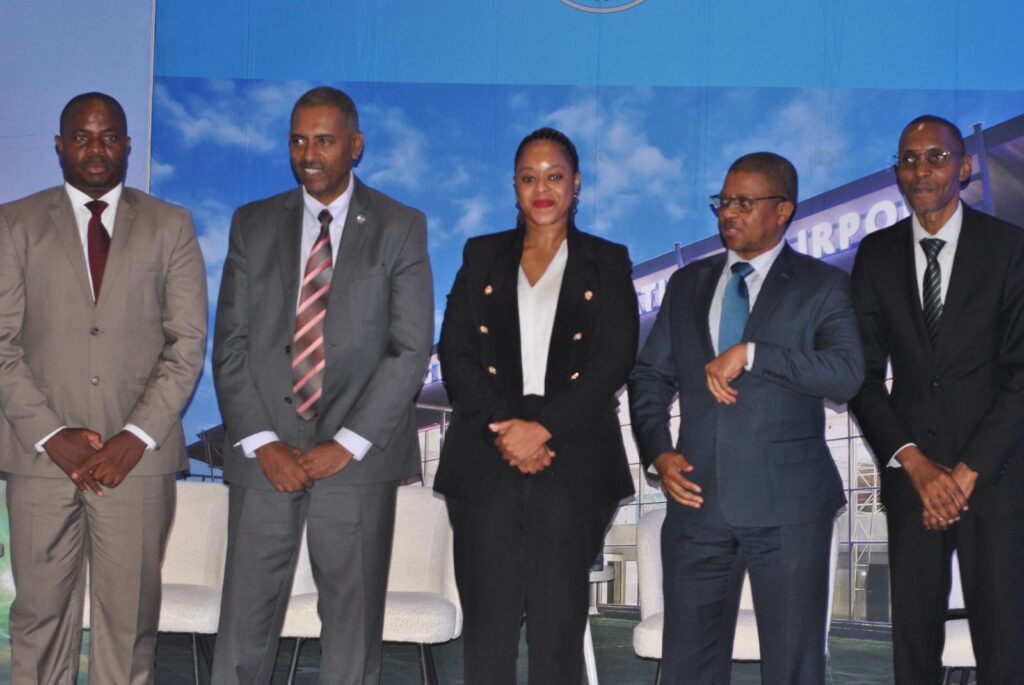
The engagement brought together representatives from government ministries, financial institutions, airlines, airport operators, rail entities, customs authorities, municipalities, tourism bodies, and investment agencies, reflecting a deliberate shift from siloed planning to systems thinking.
The Royal Villas engagement marked a renewed commitment to positioning air cargo as a driver of national transformation, supporting Eswatini’s ambitions for trade expansion, industrial growth, and deeper integration into regional and global value chains.