

Marking six decades as a major part of the country’s banking industry, Eswatini Bank has announced a strategic leap into the world of global finance by formally submitting its application for accreditation to the Green Climate Fund (GCF).
Speaking at an event held at Farm 443 today, Managing Director Dr. Nozizwe Mulela explained that the core advantage of this application lies in the potential for Eswatini Bank to become a Direct Access Entity.
This means that once accredited, the bank will enable Eswatini to access climate finance directly from the fund rather than through international intermediaries.
Through this accreditation, Eswatini Bank will be positioned to support projects in renewable energy, climate-smart agriculture, sustainable infrastructure, and community adaptation. These initiatives are designed to protect the environment while creating jobs, empowering youth, and uplifting women-led enterprises.
Dr. Mulela emphasized the broader mission behind the paperwork, stating, “This effort is not solely about the bank; it reflects our enduring commitment, built over six decades, to empowering communities and fostering sustainable development across Eswatini.”
“This will allow our country to prioritize its own climate and development projects, strengthen national ownership, and ensure that resources are directed where they are needed most,” she explained, adding that the initiative positions the nation to mobilize greater climate finance and protect livelihoods.
Achieving this level of accreditation requires a rigorous evolution of internal operations to meet stringent international fiduciary standards.

Dr. Mulela highlighted that the bank’s commitment goes beyond mere compliance. “We are embedding gender equity, strong environmental and social safeguards, and sound corporate governance into our systems,” she said.
While the GCF application looks toward a new horizon, the bank’s current portfolio proves its green credentials are already well-established. Over the past three years, the institution has invested over E210.8 million in green projects.
Dr. Mulela detailed that green financing remains a key strategic priority, citing investments in climate-resilient irrigation systems such as LUSIP II, renewable energy technologies, and sustainable potable water systems as evidence of this momentum.
Looking ahead, the MD invited collaboration from the government, private sector, and civil society to shape the next phase of development. “Today is not only about reflecting on our progress, but also about inviting collaboration,” she said, noting that future priorities, including biodiversity conservation and sustainable transport will be shaped by the expertise of national stakeholders.
“As we celebrate 60 years of service, we look forward to a successful application and to becoming Eswatini’s first Direct Access Entity,” she said.
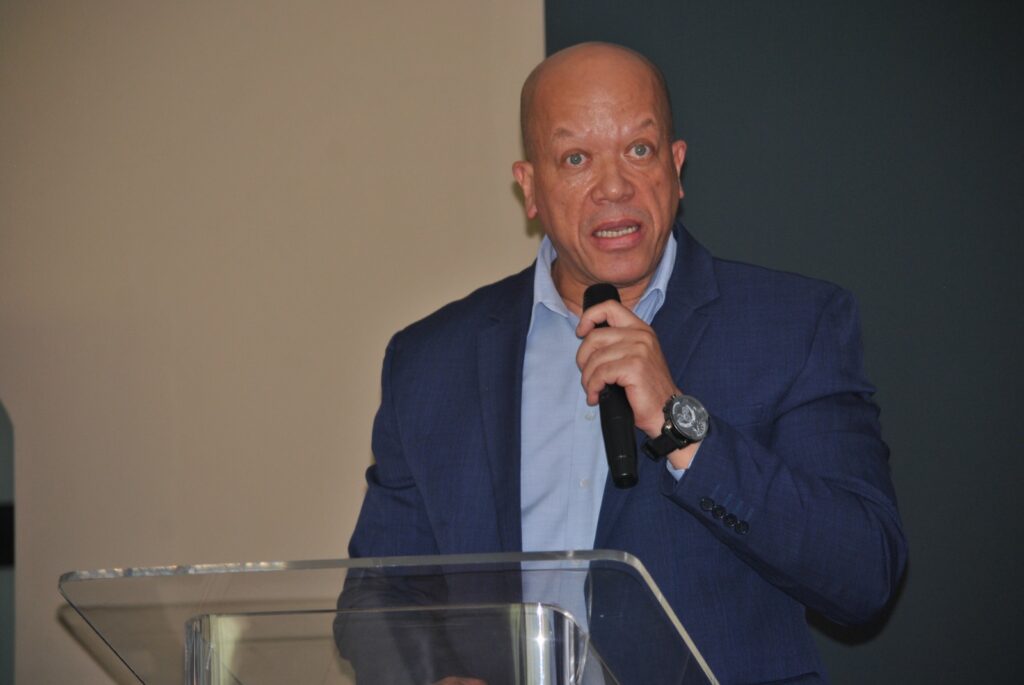
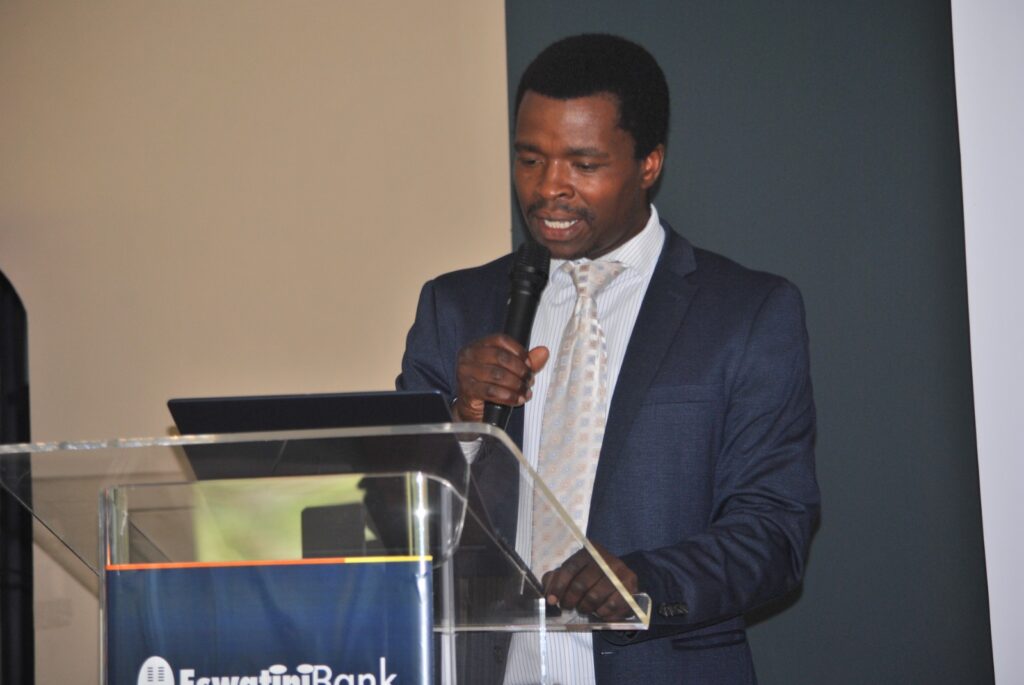
Executive Manager of Business Banking, Druce de Jesus Sargo, explained that the next steps include launching a mobile portal for easier access and streamlining internal processes. He also noted the development of a five-year concept paper and the bank’s commitment to continuous engagement with all stakeholders.
FAO Representative Howard Mbuyisa described the application as a powerful statement of national readiness. “We have waited for this funding for a very long time. If Eswatini Bank is successful, it will be a significant win for the entire country,” Mbuyisa said.

The Minister of Tourism and Environmental Affairs, Jane Mkhonta-Simelane, welcomed the application, highlighting that it signals a major shift in how the nation approaches climate resilience.
“As Emaswati, we acknowledge Eswatini Bank’s efforts to reach out to our communities. This milestone is a vital tool for inclusivity and real community impact,” the Minister remarked.
The Minister further emphasized that climate finance must remain human-centered. “We must remember that climate finance is not just about numbers and projects—it is about people. It is about the farmer seeking drought-resistant crops, the young innovator developing clean energy solutions, and the woman entrepreneur building a sustainable business.”
Accreditation with the GCF aims to ensure these voices are heard and their dreams supported. This application is fully aligned with Eswatini’s Nationally Determined Contributions (NDCs) under the Paris Agreement, biodiversity commitments under the Convention on Biological Diversity, and resilience strategies under the UN Convention to Combat Desertification.