

Business Eswatini has revealed that it had predicted the financial crisis at the Eswatini Electricity Company (EEC) nearly two years before the utility officially declared bankruptcy in October 2025.
Speaking at the Leveraging ICT to Spur Private Sector Growth and Competitiveness Indaba in the BE War Room, CEO E. Nathi Dlamini said warning signs were evident in 2023, when BE initiated a detailed financial review with EEC’s executive leadership.
“We invited the entire EEC executive team to come in here. They opened their books to us: their financials, income statements, and balance sheets,” Dlamini said. “We began analyzing these figures in 2023. In 2024, they came again. We told them they would be bankrupt by September 2025, and they were, in October 2025. That’s how serious the situation is.”
The revelation came as business leaders gathered with ICT Minister Savannah Maziya to discuss digital transformation. However, the energy crisis quickly emerged as a defining concern. Dlamini framed EEC’s challenges within a broader continental crisis, warning that Africa faces a severe energy shortfall that directly undermines digital ambitions.

“ICT solutions are energy-intensive. They consume a lot of electricity. Electricity, which we don’t have in Africa,” he said.
He cited stark statistics: approximately 600 million of Africa’s 1.3 billion people lack access to electricity, leaving them in the dark. At the same time, Africa’s population is growing by about 4% annually, further widening the gap between demand and supply.
“Africa is dark. There’s a serious energy deficit across Africa,” Dlamini said.
For Eswatini, he implied, the energy crisis is not merely a corporate failure but part of a structural challenge facing the continent, one that threatens economic competitiveness and digital transformation. Currently, Eswatini produces only about 30 percent of the electricity it consumes, and the rest is imported.
Cross Subsidy Not Sustainable
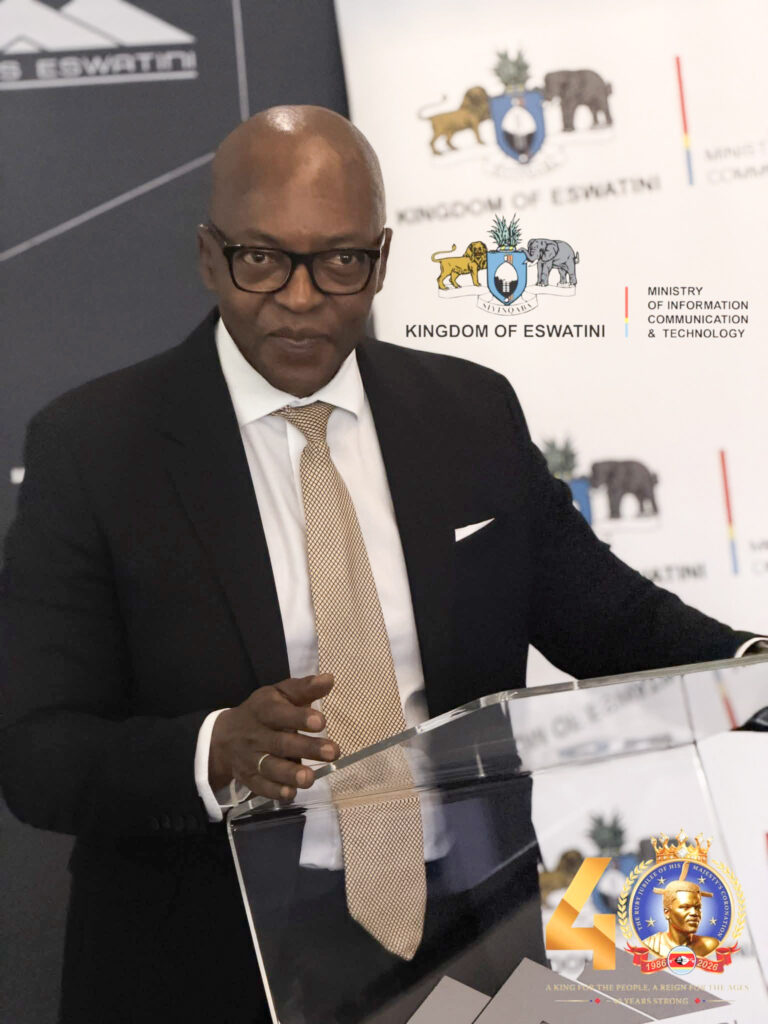
Dlamini also shed light on the long-standing cross-subsidy model embedded in electricity tariffs, revealing that businesses bear a substantial share of the burden.
“In my house, up to 40 percent of my electricity bill is subsidized by all of you,” he said. “If you own a company, you must know that the 40 percent you pay to EEC is used to subsidize homes. It’s called a cross-subsidy. It’s been that way for decades.”
While noting that cross-subsidization exists globally, including in the United Kingdom, he questioned whether Eswatini’s current economic climate could sustain such a model.
Businesses, especially small enterprises, are increasingly concerned about rising tariffs and the sustainability of maintaining residential subsidies while remaining competitive. “Some of these increases cannot be sustained, particularly for small businesses,” Dlamini cautioned.
He said BE has opted for structured engagement with the government rather than public confrontation, including discussions with the Ministry of Finance on whether the national fiscus can absorb part of the burden.