
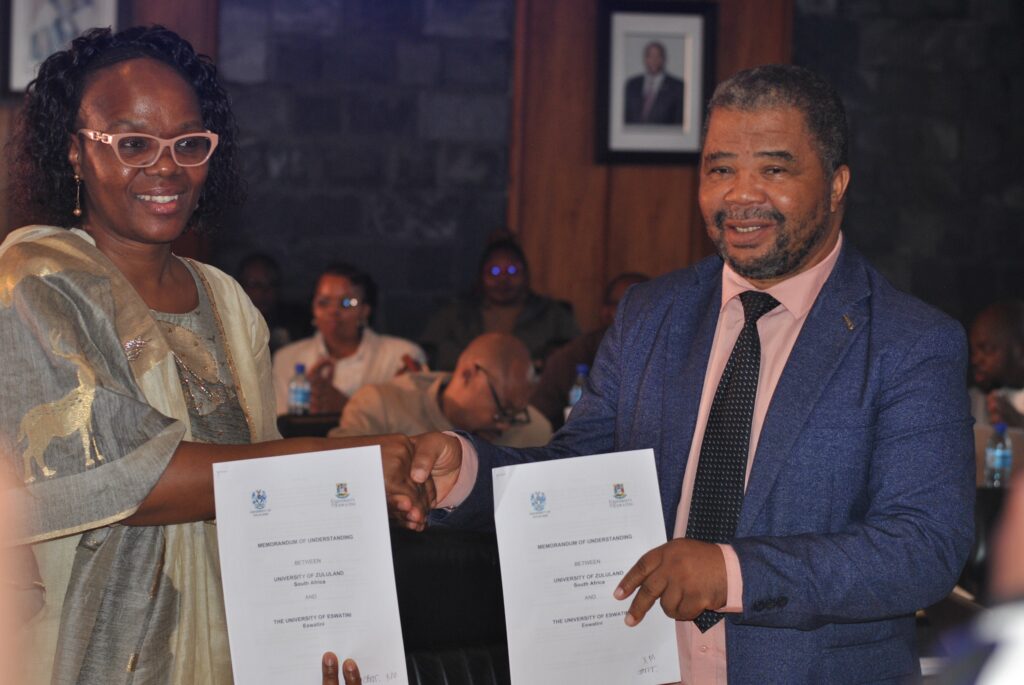
The University of Eswatini (UNESWA) and the University of Zululand (UNIZULU) have signed a Memorandum of Understanding (MoU), formalising a strategic academic partnership aimed at strengthening regional collaboration in higher education, research, and innovation.
The MoU, signed on Thursday at UNESWA’s Kwaluseni Campus, is a step toward deepening institutional ties between the two universities, with a focus on student mobility, staff exchanges, joint research initiatives, and the sharing of academic resources.
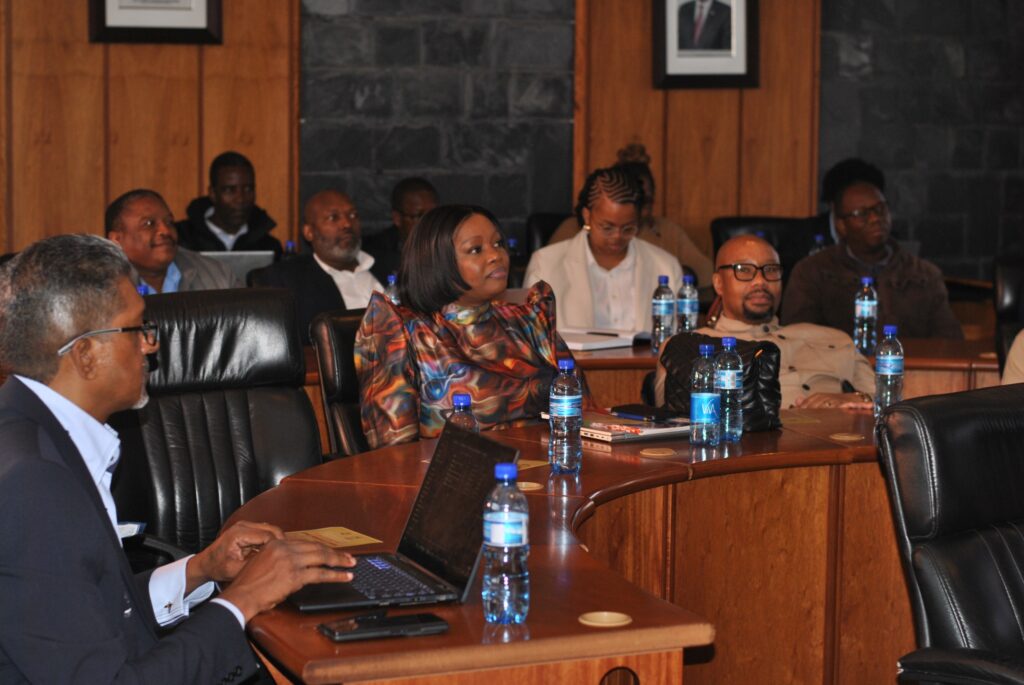
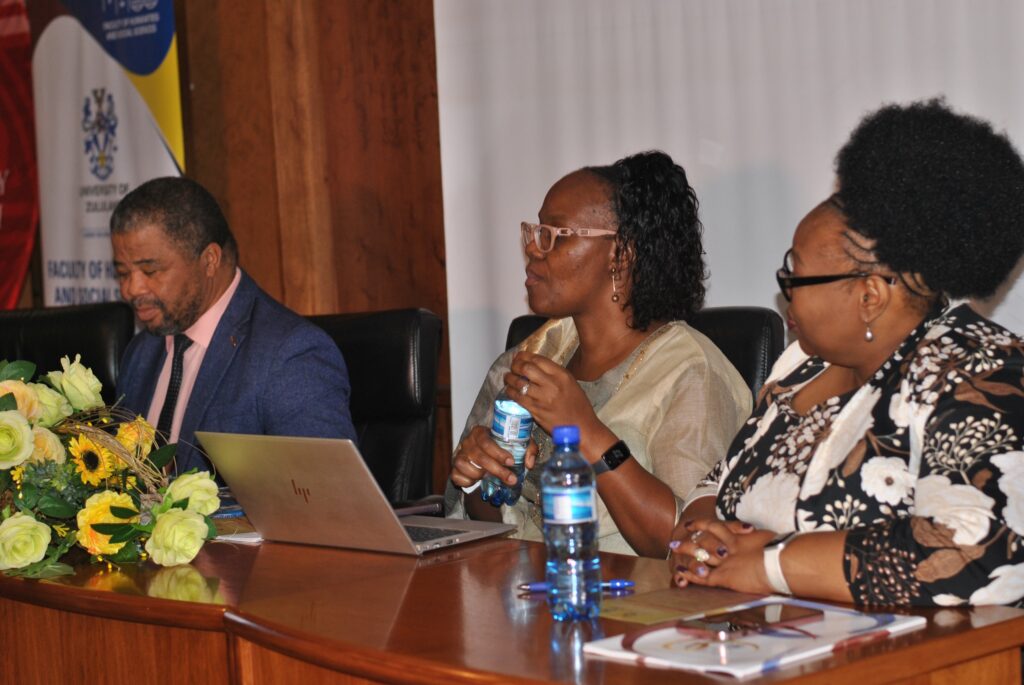
The signing event brought together leadership and academic representatives from both institutions, including deans, heads of departments, and senior management, signalling a shared commitment to advancing knowledge and addressing regional development challenges through collaboration.
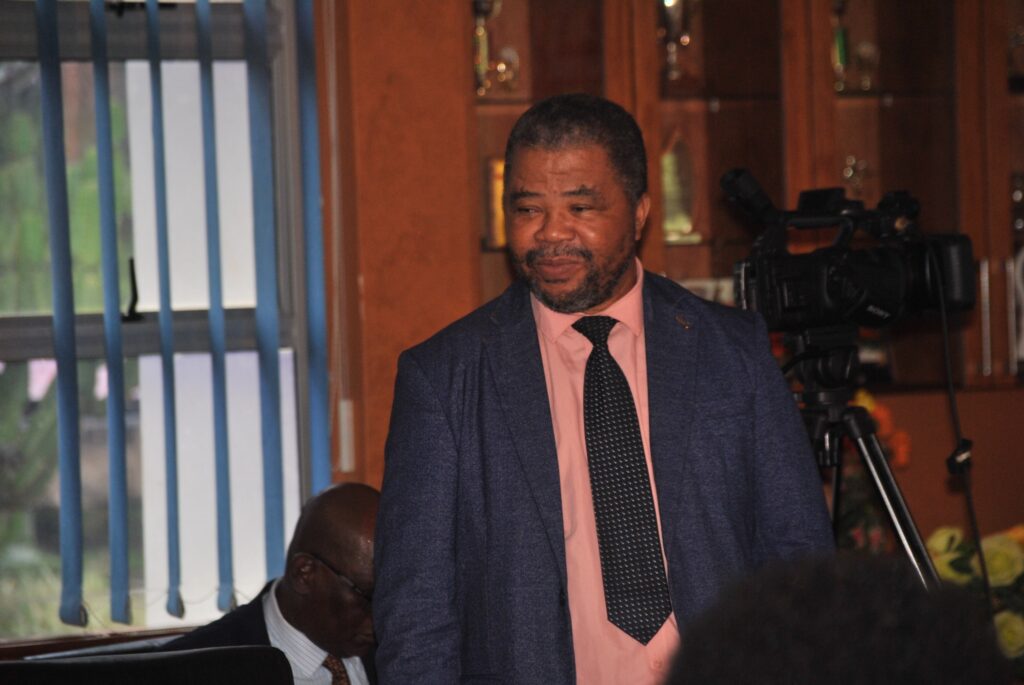
UNESWA Vice-Chancellor, Professor Justice Thwala, emphasised that the partnership reflects the institution’s broader vision of becoming “a sustainable public institution that impacts society and improves lives,” a goal that requires strong and strategic partnerships in an increasingly interconnected global academic landscape.
“This is not merely a signing ceremony, it is an institutional engagement,” the representative said. “It presents an opportunity for meaningful dialogue, reflection, and the identification of practical areas where our institutions can collaborate to enhance teaching, research, and community engagement.”
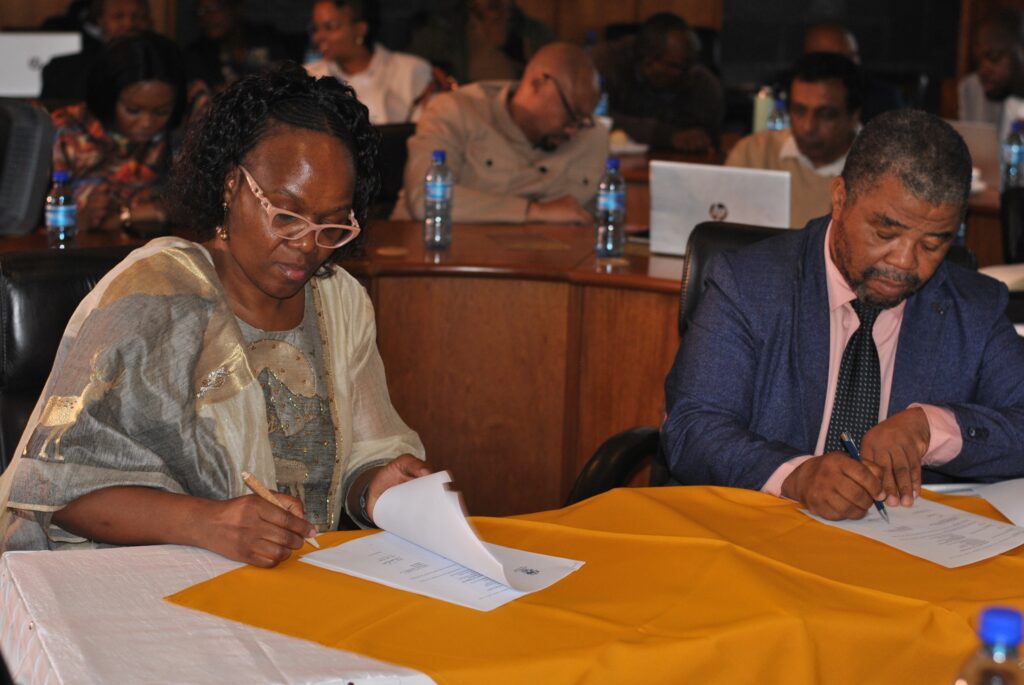
The MoU establishes a framework for cooperation across several key areas, including academic exchange programmes, collaborative research projects, curriculum development, and joint academic activities such as conferences, symposia, and short courses. It also creates pathways for both undergraduate and postgraduate students to participate in exchange programmes and research initiatives across the two institutions.
The VC stressed that while the agreement provides a formal structure for cooperation, its success will depend on how effectively both institutions implement and expand upon its provisions.
“The true value of this partnership will be measured not by the signing itself, but by the actions that follow,” he noted. “We must use this opportunity to align our programmes with industry needs, co-develop solutions to regional challenges, and strengthen interdisciplinary collaboration.”
From the UNIZULU delegation, Dean of the Faculty of Humanities and Social Sciences, Professor Allucia Shokane, described the agreement as a strategic shift from previously informal engagements to a structured and institutionalised partnership.
“This MoU represents a transition from individual, project-based collaborations to a comprehensive institutional framework that allows for broader academic engagement,” she said. “We are here to formalise a relationship that has been built with intention and shared purpose.”
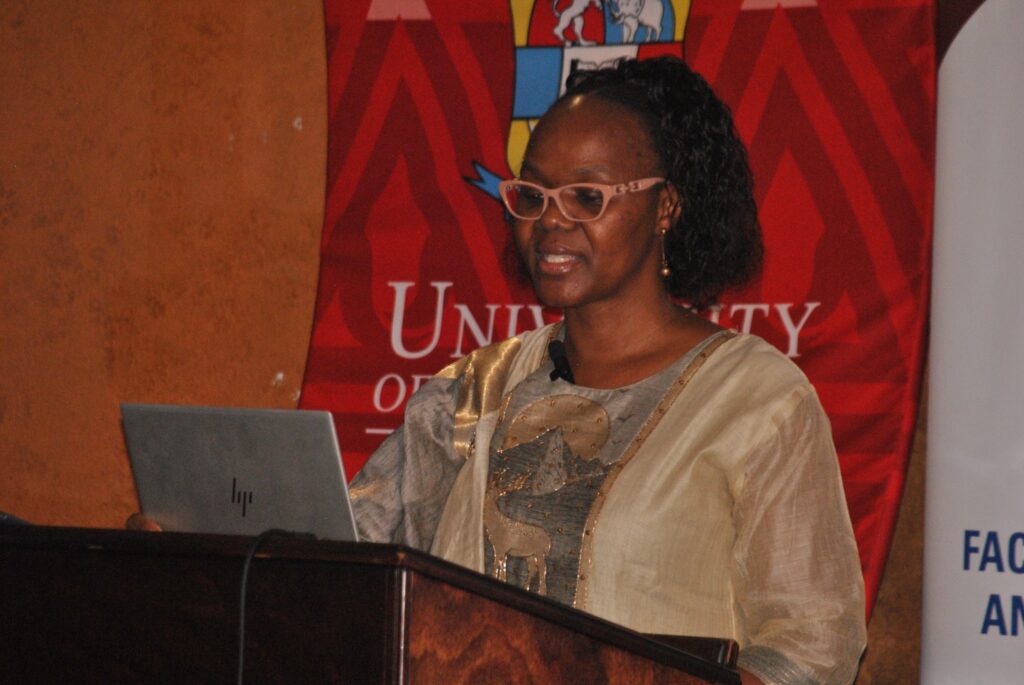
Shokane further highlighted the importance of grounding the partnership in African realities, noting that the collaboration will prioritise the integration of indigenous knowledge systems and African-centred approaches to teaching and research.
“Our goal is to equip students to solve African problems using African knowledge, strengthened by global tools,” she said. “This partnership allows us to centre African epistemologies while enhancing the quality and relevance of our academic programmes.”
She also underscored the practical components of the agreement, which include collaborative online international learning initiatives, guest lectures, joint research grant applications, and co-supervision of postgraduate students. These initiatives are expected to expand access to international academic experiences, even for students who may not be able to travel.
“Internationalisation does not always require a passport,” Shokane added. “Through virtual engagement and collaborative learning platforms, we can bring global experiences into our classrooms.”
The partnership also places strong emphasis on research collaboration, with both institutions committing to joint publications and shared research outputs. Academic departments across disciplines – including law, social sciences, commerce, tourism, and journalism – are expected to engage directly with their counterparts to drive implementation.
Importantly, both universities signalled their intention to use the partnership as a platform for securing national and international research funding, thereby strengthening their capacity to contribute to innovation and evidence-based policy development in the region.
Both institutions emphasised that the MoU should be seen as the beginning of a long-term collaboration rather than an endpoint, with a strong call for faculties, departments, and researchers to actively engage and build sustainable partnerships.
“As universities, we exist to serve society through teaching, research, and community engagement,” the VC said. “These responsibilities achieve greater impact when institutions work together, sharing expertise, strengthening capacity, and accelerating innovation that benefits our communities.”