
By WeNkosi Khumalo
The ESPPRA continues to position itself as the primary architect of Eswatini’s economic transformation by turning public procurement into a foundation for lasting national prosperity. By embedding transparency and foresight into the country’s DNA, the Agency is ensuring that public spending serves as a powerful engine for inclusive, long-term growth for every citizen.
To turn this vision into reality, the Agency has launched a groundbreaking series of nationwide workshops designed to empower government departments and state entities with the tools to manage taxpayer money more effectively.
These workshops aim to eliminate inefficiencies and bridge skills gaps, ensuring that every public entity possesses the technical expertise to convert government spending into tangible social and economic development.
ESPPRA Chief Executive Officer Vusumutiwendvodza Matsebula frames the Agency’s nationwide capacity-building workshops as a cornerstone of this transformation.
“We are repositioning ESPPRA from a largely responsive regulator to a proactive, forward-looking institution. One that anticipates risk and opportunities, and strengthens systems before they fail. One that delivers a procurement environment that inspires confidence among citizens, government and investors alike,” Matsebula says.
“These workshops are not isolated interventions. They are embedded within our broader turnaround strategy that is anchored on relevance, customer experience, international best practice, and the long-term sustainability of public procurement in Eswatini.”
This strategic reset is rooted in the Public Procurement Act 2011 and reinforced by the Methodology for Assessing Procurement Systems (MAPS), ensuring national spending meets global standards to build lasting public trust.



Historically, gaps in compliance, fragmented systems, and limited procurement data have constrained the full potential of public procurement as a driver of economic growth. Today, ESPPRA is addressing these headwinds head-on; rebuilding trust, strengthening oversight, and aligning Eswatini with international standards.
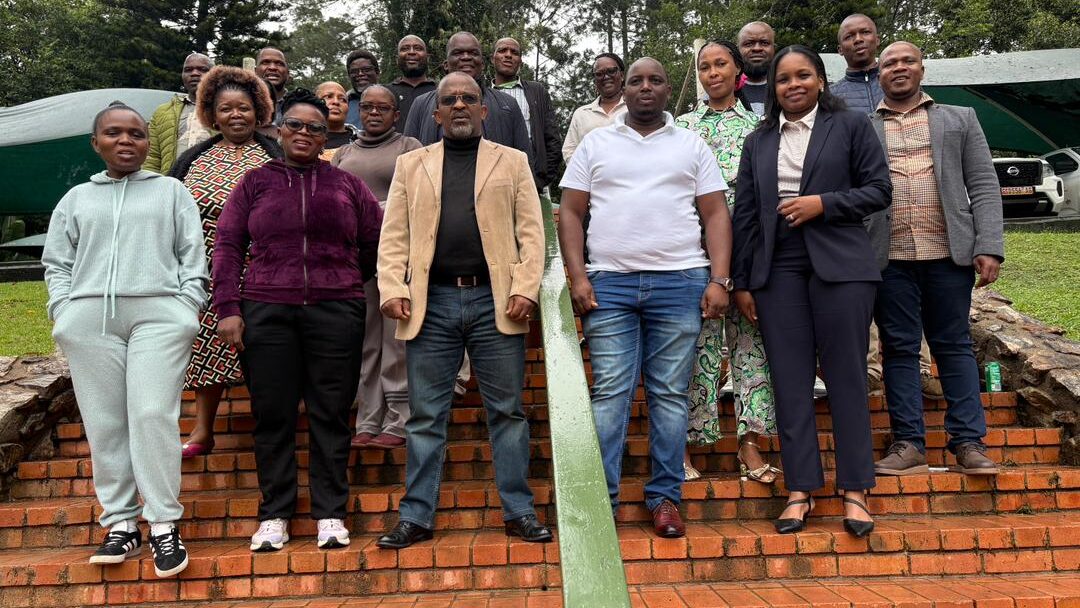
A practical example of this commitment in action is the recent engagement with the Ministry of Agriculture, where 25 procurement staff from various sections completed a highly interactive workshop at Pigg’s Peak Hotel between 21 and 23 April, 2026.
For Nomfundo Simelane, Senior Capacity Building Officer-Reforms Initiatives, the workshops represent a critical lever in translating reform into real-world impact. She was speaking on behalf of Manager -Capacity Building Thulile Sifundza.
“These workshops are a mandatory deliverable within the national procurement reform programme. They are designed to ensure that procuring entities, particularly within key sectors such as agriculture, are fully capacitated to operate within a system that is transparent, efficient and compliant,” she explains. Her emphasis is unequivocal that compliance is the anchor.
“When institutions comply, they do more than follow the law. They generate the data that allows us to analyse government spending, identify trends, and guide policy direction. Without compliance, there is no credible procurement system.”
Unlocking the Power of Procurement Data
A persistent challenge has been the lack of reliable procurement data; a gap that limits the ESPPRA’s ability to interpret performance across sectors and optimise resource allocation.
“Compliance and data go hand in hand,” Simelane notes. “When entities submit procurement plans and reports consistently, we are able to build a national picture where government is spending, how efficiently, and where interventions are required.”
This data-driven approach is central to ESPPRA’s evolving strategy, transforming procurement from an administrative function into a strategic intelligence tool that informs national development priorities.
Structured around four interactive pillars, the workshops are designed to move participants beyond theory into confident execution.

* Legal Framework: grounding practitioners in the procurement Act, Regulations and governance principles that underpin public procurement.
*Tendering Process: a practical, step-by-step immersion into procurement planning, bidding and contract award, clarifying both best practice and common pitfalls.
* Evaluation: strengthening the integrity and technical rigour of bid assessments to ensure fairness and value for money.
* Compliance: reinforcing reporting standards, audit readiness and accountability mechanisms.
“These sessions are highly interactive,” Simelane explains. “Participants engage with real scenarios, interrogate their internal systems, and align their processes with national requirements.”
What emerges is a deliberate shift in mindset, one that elevates procurement from routine administration to a strategic driver of economic transformation.
“We are cultivating professionals who understand that every procurement decision carries national implications,” says CEO Matsebula. “Public procurement is one of the most powerful tools for economic growth it shapes industries, supports local enterprises, and determines how effectively public resources translate into development.”
Equally, the workshops confront systemic risks, particularly corruption and unethical conduct.
Simelane agrees and adds: “There is no room for ‘brown envelope’ practices. The law is clear, and the principles of procurement are uncompromising, integrity, transparency and fairness must define every process.”
Running throughout the year, the programme is designed to reach every procuring entity, and ensuring that any institution spending public funds is aligned with the national framework.