

Aviation experts, regulators and airport infrastructure specialists from 12 countries across Southern Africa have gathered in Eswatini this week for a regional workshop aimed at strengthening technical capacity and accelerating the implementation of international airport safety standards.
The four-day Aircraft Classification Rating/Pavement Classification Rating (ACR/PCR) Awareness Workshop, hosted by the Eswatini Civil Aviation Authority (ESWCAA) in collaboration with the International Civil Aviation Organization (ICAO) and the SADC Aviation Safety Organisation (SASO), has brought together delegates from Civil Aviation Authorities, aerodrome operators, inspectors and air navigation service providers from across the region.
Held at the Happy Valley Hotel in Ezulwini, the workshop focuses on the implementation of the ACR/PCR system, a globally recognized methodology used to assess airport pavement strength and determine whether aerodrome infrastructure can safely accommodate different aircraft types.
While the subject matter may appear highly technical, officials say it has significant implications for aviation safety, airport operations and infrastructure planning across Southern Africa.
Opening the workshop, ESWCAA Director General, Andile Mtetwa-Amaeshi, described the event as an important milestone in strengthening regional cooperation and ensuring that Southern African countries remain aligned with international aviation standards.
She thanked ICAO for entrusting Eswatini with hosting the capacity-building initiative and acknowledged the contribution of Airbus facilitators who will provide technical expertise throughout the programme.

According to Mtetwa-Amaeshi, the aviation industry is currently navigating a major transition following ICAO’s adoption of the ACR/PCR system, which replaces the previous Aircraft Classification Number/Pavement Classification Number (ACN/PCN) methodology that had been used by airports worldwide for decades.
“The ACR-PCR system represents a significant paradigm shift in the assessment of pavement strength and aircraft compatibility at aerodromes,” she said.
The new framework was introduced by ICAO to harmonise pavement classification practices globally and improve the accuracy of infrastructure assessments. By providing a more precise understanding of how aircraft interact with airport pavements, the system is expected to enhance operational safety, improve infrastructure management and support more efficient airport planning.
Although ICAO established 28 November 2024 as the mandatory implementation date, progress among countries has been uneven.
Mtetwa-Amaeshi noted that while some states have made substantial progress in adopting the new methodology, others are still in the process of building the technical capacity required for full implementation.
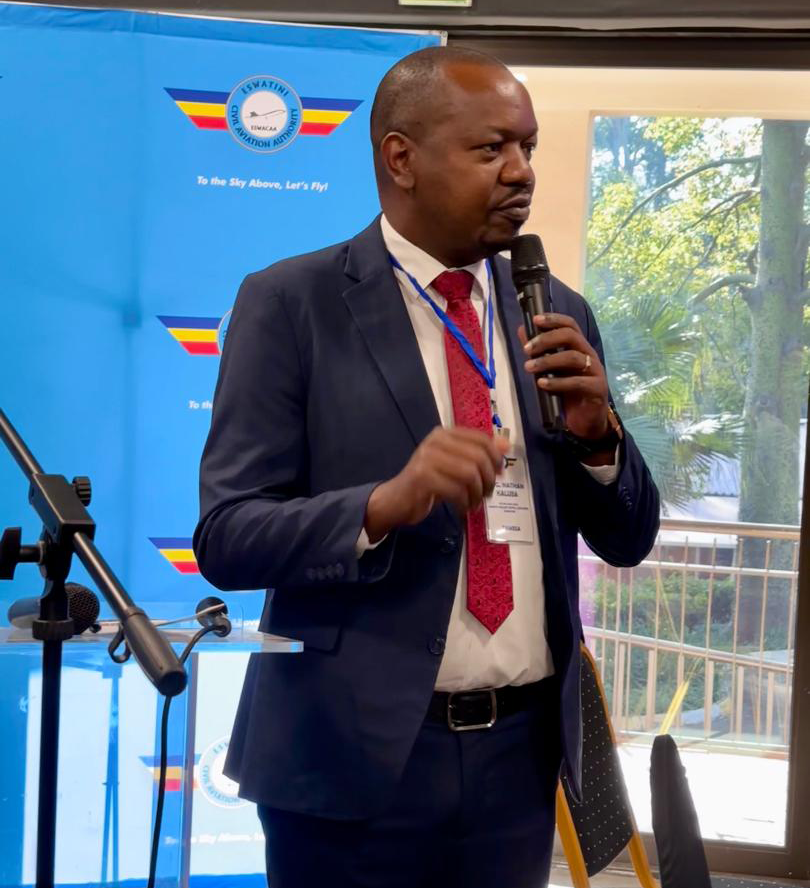

“It is therefore essential that we, as a region, accelerate our coordinated efforts to ensure the consistent and accurate application of the ACR-PCR system in full compliance with ICAO standards,” she said.
The workshop is expected to help address those challenges by creating a platform where aviation professionals can exchange experiences, discuss common obstacles and identify practical solutions that can be applied within their respective countries.
For many participating states, the transition represents more than a compliance exercise. Airport pavements are among the most valuable and critical infrastructure assets within the aviation sector. Accurate pavement assessments influence decisions relating to aircraft operations, airport maintenance, infrastructure investment and future expansion projects.
Addressing delegates during the opening ceremony, SASO Executive Director, Kabo Phutietsile, emphasized that the workshop represents a critical opportunity to strengthen regional expertise in aerodrome pavement management.
“The transition to, and implementation of, the ACR/PCR system is an important milestone for our aviation industry, as it enhances the accuracy and reliability of pavement strength reporting, thereby improving operational safety and efficiency,” he said.