
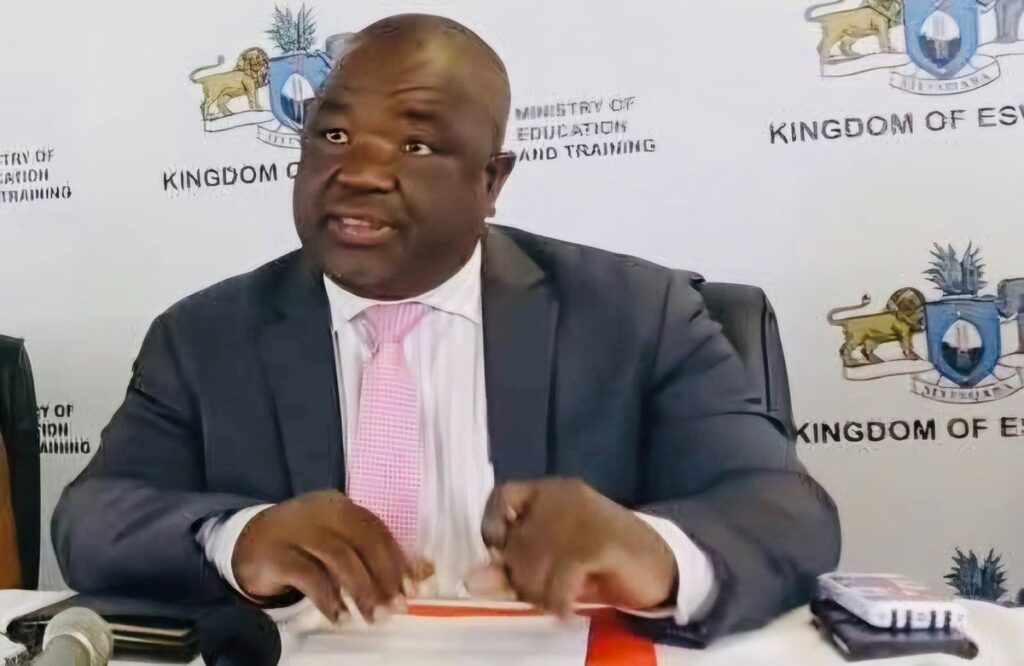
By Ayanda Dlamini
The government of the Kingdom of Eswatini has placed education and health at the centre of its 2026/27 fiscal agenda. The two ministries have received the largest share of the national budget.
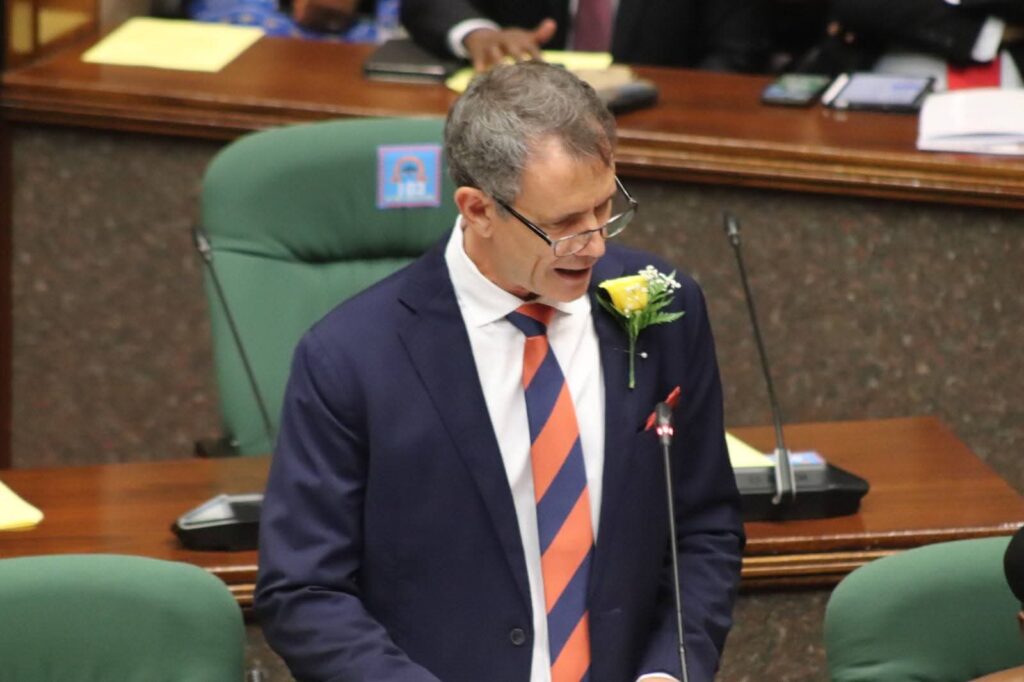
Presenting the 2026 Budget Speech to Parliament, the Minister for Finance, Neal Rijkenberg, underscored the government’s commitment to investing in people, infrastructure, and long-term national resilience.
Together, these ministries account for a substantial share of public expenditure, reflecting what the Minister described as the government’s “intentionality” in shaping Eswatini’s future.
…E6.4 Billion Allocation Signals Long-Term Education Investment
The Ministry of Education and Training (MoET) received the largest allocation in the 2026/27 financial year, totaling E6.4 billion, or 16.7 percent of the national budget. The funding covers recurrent and capital expenditures, as well as scholarships and the Orphans and Vulnerable Children (OVC) Fund.
In his address, the Minister framed education not merely as a service sector but as a moral and economic investment in the Kingdom’s future. “Education is where Agape Love makes its longest investment. The decisions we make in our classrooms today will determine the kind of nation we will be in 2040.”
A major reform highlighted in the budget is the nationwide rollout of Competency-Based Education (CBE). The Minister explained that this curriculum reform shifts learning from rote memorization to applied understanding, equipping learners with practical skills suited to a modern economy.
Currently, 340 Grade 0 classrooms are implementing the CBE curriculum, and 243 schools are targeted for full material distribution.
In addition, the government has launched the Teach at The Right Level (TaRL) pilot programme in 30 primary schools, an evidence-based model that assesses learners’ actual competency rather than their grade level.
The Minister also announced the introduction of AS/A Level as a local pathway to internationally recognized qualifications. This move will enable EmaSwati students to access global university opportunities without leaving the country for advanced secondary education.
Regarding teacher welfare, the government converted 243 educators, including 130 primary and 113 high school teachers, from temporary to permanent employment this year. “A teacher who has security in their own life is better placed to build security in the lives of their students,” the Minister stated.
Infrastructure expansion is also underway, supported by an additional E85.36 million grant from the Japan International Cooperation Agency (JICA) to build four new secondary schools, one in each region, in Ngwenyameni, New Thulwane, Maphungwane, and Lavumisa.
The Minister emphasized that the E6.4 billion allocation reflects the government’s recognition that economic growth begins in the classroom.
…Health: E3.24 Billion to Strengthen Prevention and System Reform
The Ministry of Health received E3.24 billion in the 2026/27 fiscal year, underscoring the government’s commitment to safeguarding national well-being amid global uncertainties.
The Minister acknowledged that the year brought extraordinary fiscal pressures due to shifts in the United States’ global health financing priorities, particularly regarding PEPFAR funding.
However, he confirmed that the government had signed a Memorandum of Understanding (MOU) with U.S. representatives to ensure continuity of HIV support. “This year has presented us with an extraordinary challenge,” he said. “But we have engaged directly and secured continuity in our HIV response.”
A key policy direction is shifting the health system from late-stage treatment to prevention and early detection. Four mobile cancer screening units have been deployed nationwide to bring services closer to communities. “Early detection saves lives. It is also more cost-effective than late-stage detection,” the Minister emphasized.
In a major institutional reform, the government is transforming the Central Medical Stores into a semi-autonomous Eswatini Medical Supplies Agency to improve procurement, governance, and logistics systems and reduce chronic medicine stock-outs.
The Minister also highlighted progress in reducing the Phalala Fund’s outstanding debt to E30 million and in strengthening financial management for overseas emergency care support.
Eswatini continues to lead the continent in HIV response innovation, becoming one of the first countries worldwide to introduce Lenacapavir, a long-acting injectable treatment that requires only two injections per year. “Lenacapavir transforms adherence and dramatically improves health outcomes,” the Minister noted.
Reaffirming the government’s accessibility goal, he said: “Our goal is that no LiSwati should have to travel more than 8 kilometers to a health facility.” He concluded that the E3.24 billion allocation is dedicated to building a system that “prevents, heals and loves its people back to wholeness.”