
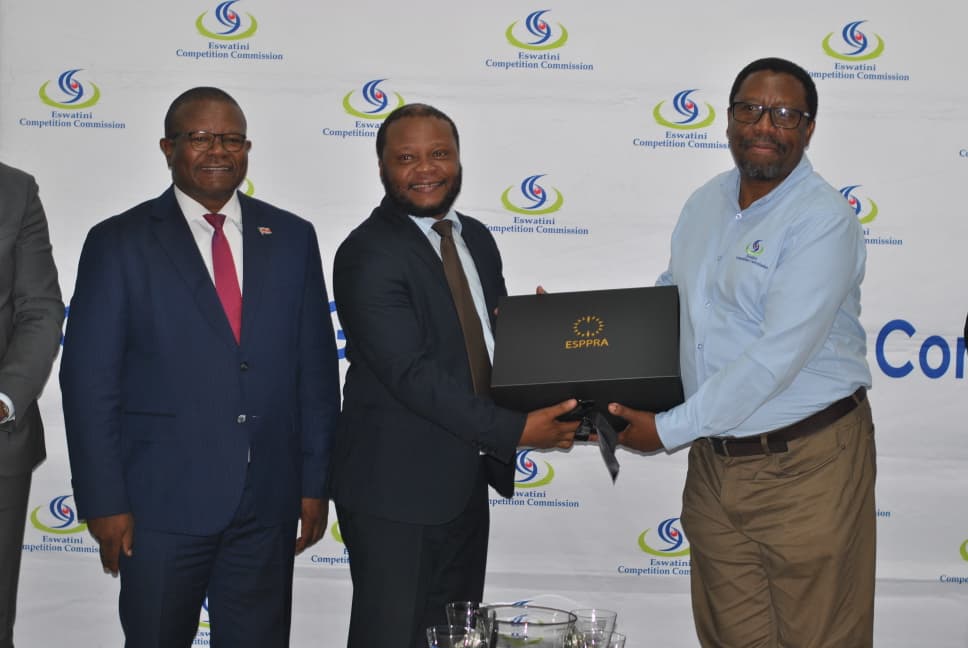
Outgoing Chief Executive Officer of the Eswatini Competition Commission, Muzi Dlamini, says his decision to step down after six years at the helm was guided by a clear understanding of leadership timing and the organisation’s evolving needs.
Dlamini, who officially exits the Commission following a tenure marked by institutional reforms, said effective leadership requires recognising when one’s role in an organisation’s lifecycle has been fulfilled.
“When you have that kind of clarity, nobody has to tell you when it is time to step aside. You just know,” he said during his farewell address.
His departure comes as the Commission transitions into a new phase, following a period in which it has been repositioned from a largely criticised regulator into a more responsive and business-aligned institution.
Minister of Commerce, Industry and Trade, Manqoba Khumalo, credited Dlamini’s leadership with driving this transformation, noting that the Commission had previously faced widespread criticism from industry over inefficiencies, poor communication, and lack of a customer-focused approach.
“There was a feeling that submissions disappeared into a ‘deep, dark hole’, and when feedback eventually came, it was often too late,” Khumalo said, referring to past stakeholder concerns.

According to the Minister, businesses had viewed the Commission as an obstacle rather than an enabler of growth, citing delays in processing merger notifications and a perceived disconnect from commercial realities.
Dlamini’s appointment, he said, was part of a deliberate effort to reform the institution by introducing leadership with strong business acumen and a focus on stakeholder engagement. Within months, Khumalo noted, there was a noticeable shift in both internal culture and external perception.
“We began to hear from businesses that they could finally get things done,” he said, adding that internal challenges such as low staff morale and organisational tensions were also addressed during the period.
In his remarks, Dlamini said one of his first priorities was to improve the visibility and transparency of the Commission, which he identified early on as critical to rebuilding trust.
“At the time, the mandate of the Commission was not widely understood. Increasing visibility became the starting point of our transformation,” he said.
He highlighted key achievements during his tenure, including resolving long-outstanding cases, improving turnaround times for merger approvals to near the Commission’s 30-day internal target, and strengthening stakeholder relations. These efforts, he said, contributed to a shift in how the institution is perceived, with stakeholders now viewing it as more “nimble, flexible and responsive.”
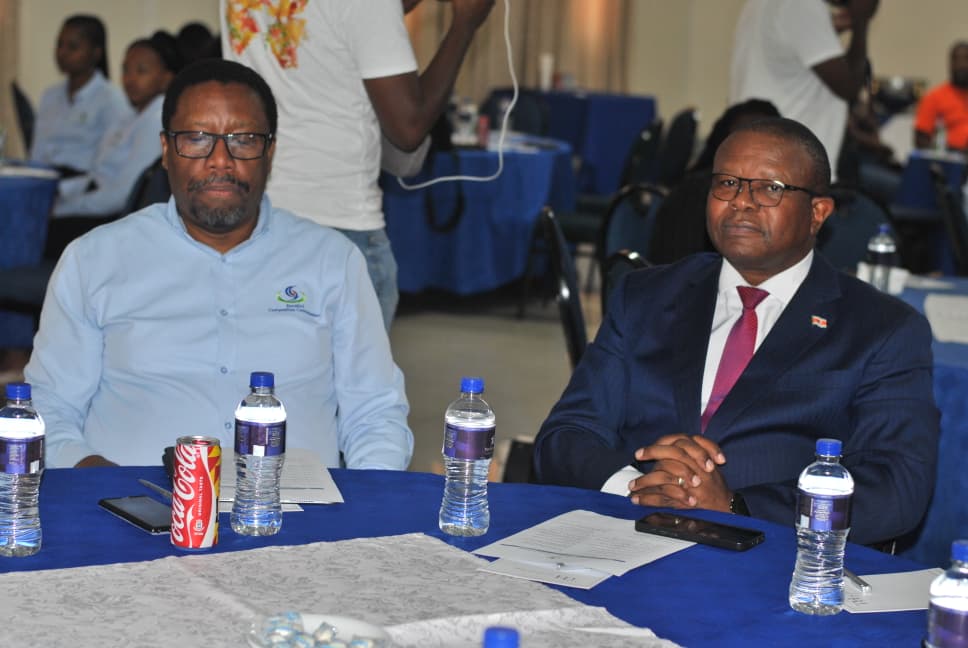
Dlamini also acknowledged the role played by the Ministry and the Board in supporting the transformation, noting that his appointment itself reflected an understanding that organisations require different leadership styles at different stages.
“Organisations go through phases, and each phase calls for a different kind of leadership,” he said.
While some have questioned his decision not to seek an extension, Dlamini said his departure was a conscious choice aligned with this principle.
“The job you hold is not yours, it belongs to the people who entrusted you with it, for a time,” he said.