
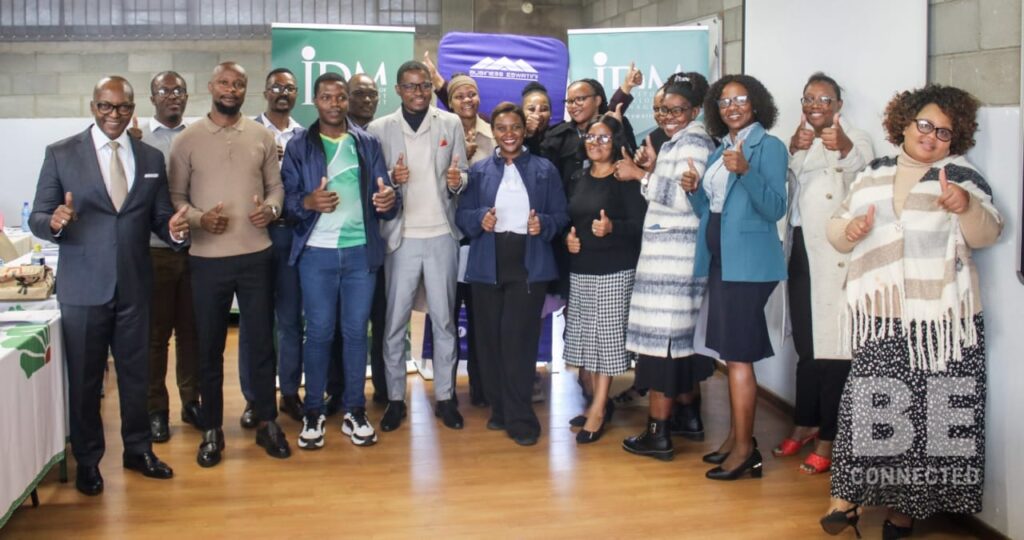
The Institute of Development Management (IDM) Eswatini last week conducted a Collective Bargaining and Negotiation Skills training workshop for staff in partnership with Business Eswatini (BE) as part of efforts to strengthen workplace relations and build institutional capacity following the campus’ transition into an independent institution.
On the surface, it was a standard capacity-building workshop. But for those watching closely, it was a clear signal that IDM is serious about transforming itself into a centre of excellence; starting from within.
This training comes at a pivotal time. As of last year, IDM Eswatini became an independent institution, having originally been established in 1974 as BOLESWA with campuses in Botswana, Lesotho, and Eswatini. Today, under the leadership of an interim Director, Karabo Baipidi from Botswana, the institution is embracing its autonomy with intention.
“IDM is committed to ensuring that students are at the heart of this transformation,” said Baipidi in a recent meeting with Business Eswatini. “We are focused on an employability strategy for our students, establishing an alumni chapter and facilitating a volunteer chapter to expose students to industry, help them gain work experience and thus enhance their employability.”
These are not just aspirations. They require a workplace that is functional, fair and forward-looking. And that is precisely why IDM turned to its membership with Business Eswatini.
The training objectives identified by IDM staff reflected the real-world pressures facing a transitioning institution. Participants sought clarity on:
- The basic principles and best practices of collective bargaining
- The entire negotiation process and what the law requires
- The expectations of both employers and employees during negotiations
- The role of trade unions and shop stewards
- How to negotiate fairly when resources are constrained
- The responsibilities of a chief negotiator
- Agency shop agreements and payment ratios
- Recognition and de-recognition processes for workplace formations
- Different types of conflict management and obstacles to effective negotiations
- The traits of a good negotiator
These are practical concerns. And they require practical, world-class solutions.
The Collective Bargaining and Negotiation Skills course is one of several offerings designed to help employers build stable, productive, and legally sound workplaces. Other available trainings include:
- The Grievance, Discipline & Handling of Fair Appeals
- The Violence and Harassment in the Workplace
- And other tailored programmes for member organizations
What makes this partnership noteworthy is not simply the training itself, but what it represents. IDM is not waiting for its transition to be smooth before investing in its people. They are equipping their staff now; so that the institution can deliver on its promise to students, industry, and the wider community.