
By Inside Biz
The European Union (EU), the International Trade Centre (ITC), and the Government of Eswatini have made significant strides in fostering sustainable economic development in Eswatini, with the creation of about 2,200 jobs through the “Eswatini: Promoting growth through competitive alliances” programme. The project aims to support local businesses, farmers, and artisans while contributing to the Kingdom’s economic transformation.
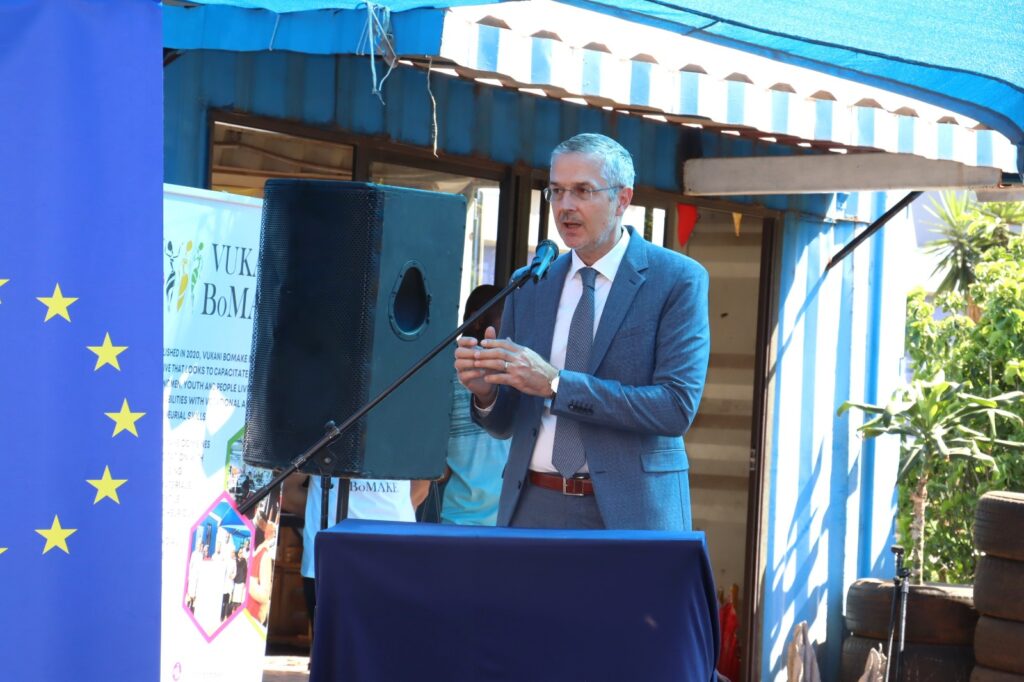
Last week Thursday, the EU Ambassador-designate to Eswatini, Kastern Mecklenburg, and the Minister of Commerce, Industry, and Trade, Manqoba Khumalo, visited various project sites benefiting from this EU-supported initiative.
They were joined by senior officials from the EU delegation, the Ministry of Commerce, Industry and Trade, and local Business Support Organizations (BSOs).
The tour began in Sigcaweni. The delegation then visited Eswatini Coffee’s nursery in Ngculwini, Guba Permaculture Education Centre in Malkerns, Black Mamba Foods in Matsapha, and ended at Far East Textiles also in Matsapha, where several MSMEs under the EU-supported programme were exhibiting.
Speaking at the final event for the tour at Far East Textiles, ITC Head, and Inclusive Agribusiness Systems Hernan Manson praised the programme’s success in improving livelihoods across Eswatini.
“After four years of working under the EU-supported programme, we can already see the positive impact. To date, 2,200 full-time jobs have been created, and 6,000 entrepreneurs, farmers, and artisans are earning better incomes. This programme has reached over 18,000 people indirectly, feeding into the value chain,” said Manson. “The numbers are good, but we’re only halfway through. We’re not done yet. We believe that we can achieve even more by leveraging the current partnerships.”
EU Ambassador-designate Kastern Mecklenburg shared his excitement about the EU’s role in the programme and reiterated that the EU’s support is about long-term investment rather than donations. He stressed the importance of creating opportunities for all, including those who are often marginalized, such as people with disabilities.
“We are not only looking at people who are capable of running their businesses – we are also looking at people who are not capable of running their businesses. We don’t want to leave behind people living with disabilities. What we are doing with Government is an investment in opportunities,” said Ambassador Mecklenburg. “We need people who produce wealth. We need people who grow food – like the coffee farmers we saw today. We need people who create links and networks of like-minded entrepreneurs, feeding into a supply chain.”
Minister Khumalo echoed the EU Ambassador’s sentiments, highlighting the tangible impact of the partnership and the importance of practical, action-oriented policies.
“When I came into office, I assessed that many partnerships focused too much on theoretical aspects. I’m happy that the EU has listened and shifted to a model that focuses on making a real, sustainable difference,” said Minister Khumalo. “The entrepreneurs we saw today – from the lady growing coffee in Sigcaweni to the people roasting coffee and providing seedlings – show that Eswatini’s fortunes will change because of this partnership.”
Far East Textiles Managing Director Tokky Hou, also Chairperson of the Vukani BoMake Project, praised the EU and ITC for believing in their mission. Under the “Eswatini: Promoting growth through competitive alliances” Vukani BoMake has trained over 150 women, many of whom now have stable incomes and skills for life.
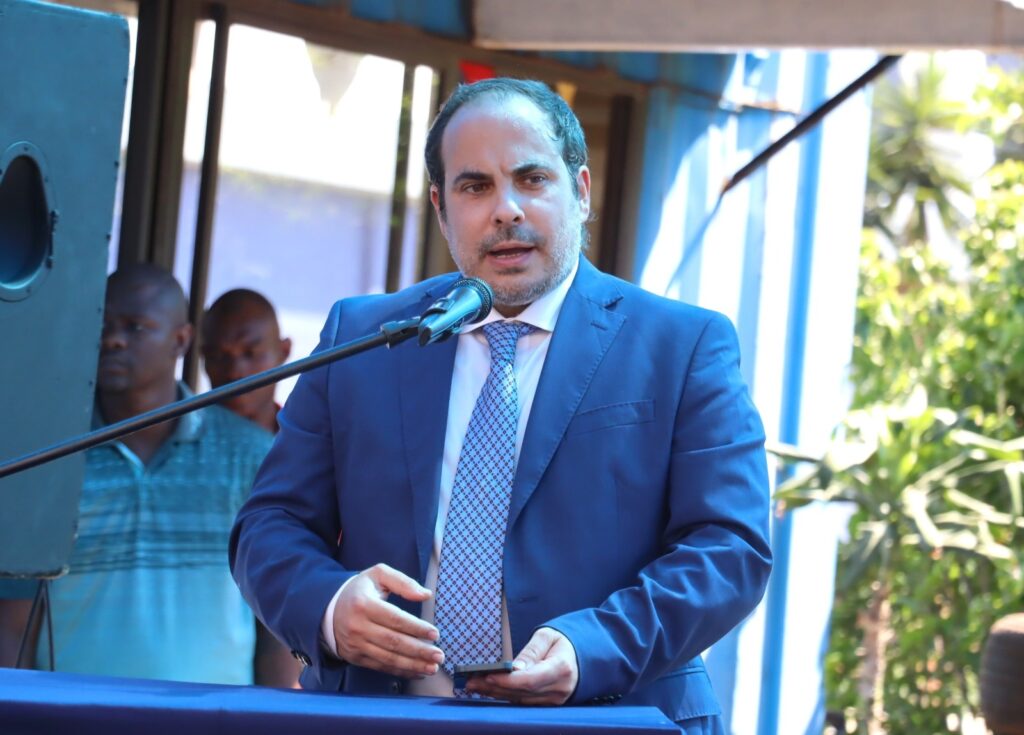
“These are not just numbers. Young people who have been trained now have skills they can rely on. Women who struggled to make ends meet are now providers, and people living with disabilities have found a purpose,” said Hou. “Through collaboration, the EU and ITC have helped us build not just factory cottages, but skills, capacitation, and real opportunities for change.”
Business Eswatini CEO, E. Nathi Dlamini, urged for more investments that focus on long-term social transformation rather than short-term donations.
“We need investments that are looking for a social dividend. The EU and ITC were among the first to invest in Vukani BoMake, and today, we’re about to open the 14th cottage factory in this country,” said Dlamini. “No donations involved, just investments. We’re worthy of investments. Invest with us.”