

Eswatini’s private sector has taken a bold step towards embedding Environmental, Social, and Governance (ESG) principles in business operations, following the launch of the country’s first ESG State of Play Report by Business Eswatini (BE).
The launch of the report marks a major milestone in the private sector’s commitment to sustainable business practices. It was described as a turning point for sustainable and responsible business in the Kingdom.
Speaking at the launch held yesterday, BE Chief Executive Officer, E. Nathi Dlamini, highlighted that the report underscores the growing link between competitiveness and sustainability in Eswatini. “The world is moving towards greater accountability, and companies that align with ESG standards not only protect themselves from risks but also unlock opportunities in trade, investment, and finance,” he said.
The report, researched and compiled by the Eswatini Economic Policy Analysis and Research Centre (ESEPARC), provides a baseline for ESG adoption in the Kingdom, mapping out how businesses can integrate environmental protection, social investment, and governance reforms into their operations. It was supported by the International Labour Organisation (ILO), which also conducted a two-day training for BE staff and partners ahead of the launch.
The CEO also acknowledged the role of the United Nations Development Programme (UNDP), noting that its collaboration with BE is a “key catalyst for progress” in implementing tangible ESG programmes in the country.
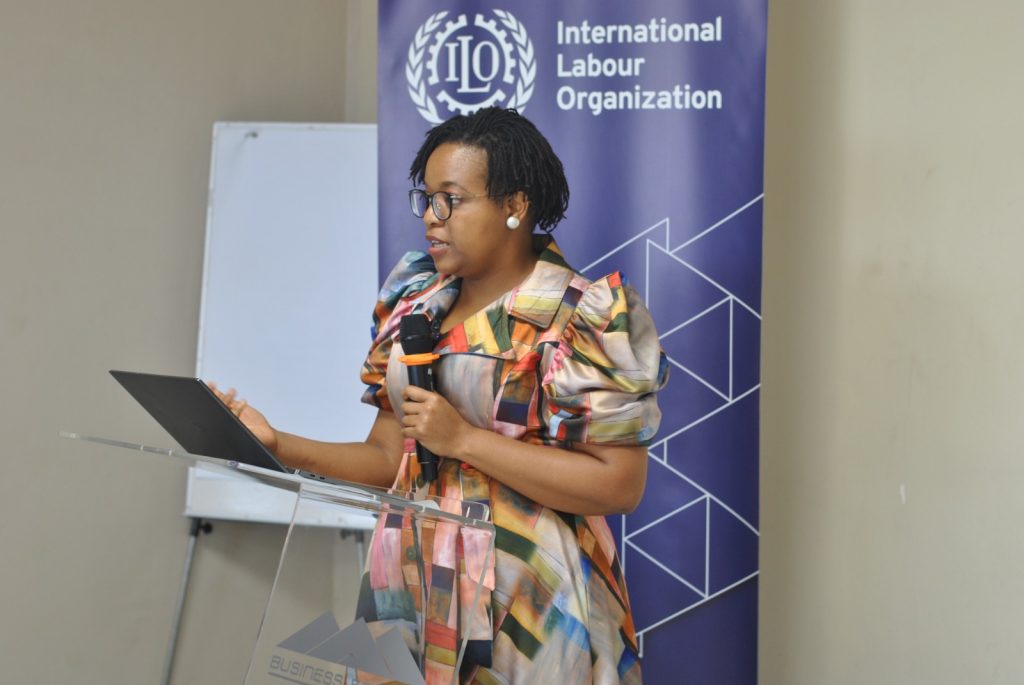

The ILO reinforced the business case for ESG, citing global evidence that companies with strong ESG practices enjoy higher returns, lower risks, and stronger customer and employee loyalty. “Bottom line: ESG is good for business because it lowers costs, attracts capital, inspires employees, retains customers, and builds resilience against future risks,” said Tadiwanashe Dube, ILO representative.
UNDP echoed these sentiments, unveiling details of a landmark partnership agreement with BE to pilot a national ESG programme in Eswatini. Representing the UNDP – Zandile Mthembu, Programme Analyst at UNDP – noted that UNDP and Business Eswatini have recently signed a landmark partnership agreement in ESG, marking a new chapter in collaborative efforts to advance sustainable development in Eswatini.
“This agreement establishes a robust framework for mobilizing private sector resources and expertise through Environmental, Social, and Governance principles, ensuring that business contributions are not only impactful but also coordinated and measurable,” she said. “By piloting a national ESG programme, Eswatini signals to regional and international partners that it is forward-thinking, responsible, and ready for sustainable investment.”


Eswatini has already made clear commitments on the environmental front through its Nationally Determined Contributions (NDCs) under the Paris Agreement and its National Biodiversity Strategic and Action Plan (NBSAP).
“These national frameworks challenge us to reduce greenhouse gas emissions, embrace renewable energy, protect biodiversity, and manage natural resources responsibly,” Dlamini said.
On the social pillar, the report highlights the private sector’s critical role in investing in schools, healthcare, and entrepreneurship, which help lift families out of poverty and build resilient communities. Meanwhile, governance is flagged as the foundation of sustainability, demanding transparency, accountability, and ethical conduct from companies.
The CEO stressed that ESG is not a passing trend; it is the language of modern business and the foundation of sustainable prosperity for Eswatini. the CEO emphasised.
“The private sector cannot afford to remain on the sidelines. From agriculture to energy, textiles to manufacturing, our businesses are deeply interconnected with the environment, and their future viability depends on sustainable practices,” he said.