

The Government of Eswatini has reaffirmed its commitment to modernizing labour standards by prioritizing mental well-being and psychosocial safety as critical components of occupational health across all sectors.
This renewed focus was at the forefront of the World Day for Safety and Health at Work commemoration, held yesterday at the Central Bank of Eswatini (CBE) Complex. Hosted in strategic partnership with the Ezulwini Municipality and Ezulwini Private Hospital, the event served as a high-level platform for stakeholders to evaluate national progress and set a new agenda for holistic workplace safety.
This year’s commemoration aligns with the global theme: “Good psychosocial working environments: A pathway to thriving workers and strong organizations.” The event placed a significant spotlight on the shift from traditional physical safety measures to a more comprehensive model that includes mental and emotional health.
As work environments evolve, the focus has increasingly turned toward mitigating modern threats to productivity, such as chronic stress, job insecurity, and workplace harassment, which are now recognized as primary barriers to organizational success in the Kingdom. The theme comes at a time when stress, job insecurity, long working hours, and workplace harassment are increasingly recognised as major threats to employee health and productivity.
Delivering remarks on behalf of the Minister of Labour and Social Security, Phazi Zwane emphasised that psychosocial risks are no longer secondary concerns but central to occupational safety and health.

“Across sectors, workers are facing immense pressure from evolving work environments. Issues such as stress, fatigue, and job insecurity are becoming more prevalent, and they directly affect both productivity and overall wellbeing,” Zwane said.
She noted that in Eswatini, national data and administrative records continue to show that occupational injuries and work-related health conditions affect workers annually. Importantly, a significant portion of these cases are linked not only to physical hazards but also to stress-related and fatigue-induced factors.
“These realities demand that we shift our focus beyond traditional safety measures. A safe workplace must also be one that protects the mental and emotional wellbeing of workers,” she added.
The Ministry outlined several steps already taken to strengthen Occupational Safety and Health (OSH) systems in the country. Among these are the development of two national policies aimed at enhancing worker protection and promoting healthier work environments. These policies are expected to provide a solid framework for addressing both physical and psychosocial risks in a more integrated manner.
Zwane further explained that Eswatini’s efforts are aligned with international frameworks such as the United Nations Sustainable Development Goals, particularly Goal 3 on good health and wellbeing and Goal 8 on decent work and economic growth. The country is also guided by the International Labour Organization’s Global Strategy on Occupational Safety and Health 2024–2030, which prioritises prevention and stronger national systems.
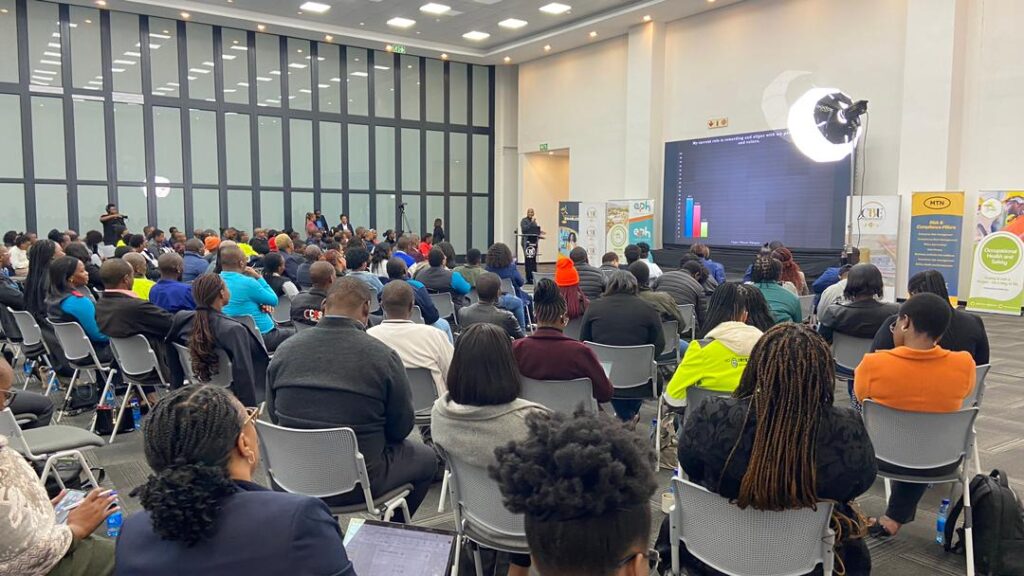
A key milestone highlighted during the event was the implementation of the Decent Work Country Programme (DWCP) 2022–2025, which has recently concluded. The programme has been instrumental in strengthening national OSH systems, improving compliance with safety standards, and enhancing social protection mechanisms.
“Through the DWCP, we have made meaningful progress. We have strengthened labour inspection systems, improved awareness among employers and workers, and expanded outreach programmes that have reached thousands across various industries,” Zwane said.
He added that capacity building for labour inspectors and OSH practitioners has also played a crucial role in improving enforcement and monitoring compliance with safety regulations.
Despite these achievements, the Ministry acknowledged that challenges remain. One of the key priorities moving forward will be strengthening monitoring and evaluation systems, as well as improving data collection to better understand emerging workplace risks.
Zwane called on employers to take a proactive role in addressing psychosocial issues by promoting work-life balance, preventing workplace violence and harassment, and fostering inclusive and supportive work environments.
“Employers must recognise that productivity and employee wellbeing go hand in hand. Investing in the mental health of workers is not just a moral obligation, but also an economic necessity,” he said.
Workers were also encouraged to actively participate in workplace safety programmes, report hazards without fear, and support one another in creating positive work environments.
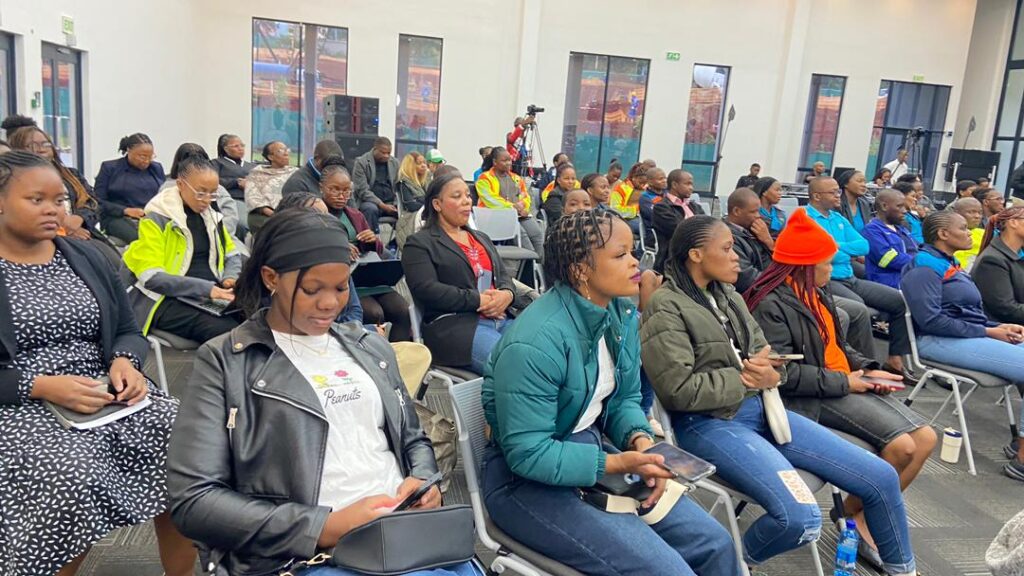
At the same time, the government has committed to strengthening legislation, enhancing coordination among institutions, and promoting evidence-based policymaking to ensure that no worker is left behind.
Zwane also highlighted the role of the private sector in complementing government efforts, noting that some companies have already introduced programmes aimed at addressing psychosocial challenges in the workplace.
“There is growing recognition that collaboration is key. Initiatives by private sector players to tackle mental health and workplace stress are encouraging and must be supported,” she said.
As the country continues to navigate a rapidly changing world of work, the Ministry stressed the importance of adapting policies and practices to meet new challenges.
The commemoration concluded with a call for collective action among government, employers, workers, and social partners to build workplaces that are not only productive but also safe, inclusive, and resilient.
“Safety and health at work is not a privilege, it is a fundamental right. Together, we must ensure that every worker in Eswatini is protected, physically, mentally, and emotionally,” Zwane concluded.