
Eswatini creators are expected to receive the country’s first copyright royalty distributions during the 2026/27 financial year following the expansion of licensing and copyright monitoring systems by the Eswatini Copyright and Neighbouring Rights Society (ESWACOS).
The announcement was made by ESWACOS Executive Director, Mmeli Hlanze, during the World Book and Copyright Day 2026 commemoration held at the George Hotel in Manzini. Hlanze described the upcoming royalty distribution as a historic milestone for the country’s creative sector.
“This first royalty distribution will mark the point where the copyright system completes its first full cycle: registration, documentation, licensing, collection, data processing and payment,” he said.
According to Hlanze, the royalty payments are expected to include public performance royalties, digital mechanical royalties and broadcast royalties. Public performance royalties will apply to music and creative works used in hotels, restaurants, bars, retail outlets, events and other business premises. Digital mechanical royalties will cover content used on digital platforms, while broadcast royalties will apply to content played on radio and television stations.
Hlanze said ESWACOS has already piloted a music monitoring system capable of tracking music played on local radio stations to improve transparency and accuracy in royalty calculations.
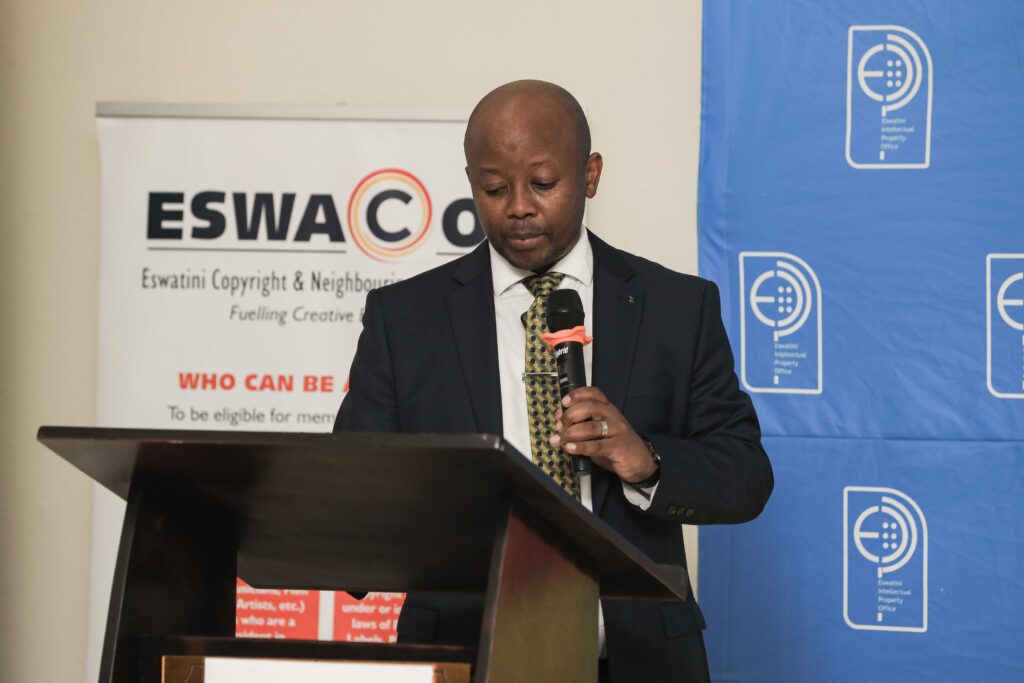
“Royalty distribution will not be based on guesswork. It will increasingly be based on actual music usage data,” he said.
He revealed that the organisation has music usage data dating back to April 2025, meaning broadcast royalties will be calculated starting from the 2025/26 financial year.
The developments follow the approval of music tariffs by the Copyright Office in late 2025, which allowed ESWACOS to officially begin licensing users of copyrighted music and sound recordings in January 2026.
Hlanze said licensing represented one of the most significant milestones in the development of collective copyright management in Eswatini.
“For rights holders, the commencement of licensing means that we are now entering the phase where copyright can begin to produce visible economic value,” he said.

He said the organisation is also pursuing cross-border agreements with regional and international copyright management organisations to ensure emaSwati creators can earn royalties when their works are used outside the country and on digital platforms.
“A song created in Eswatini can be streamed in South Africa, played in Botswana, downloaded in Europe, used in online content, or discovered by audiences across the world,” said Hlanze. “Our goal is to ensure that when Eswatini’s creative works travel across the globe, the value must also travel back home.”
Hlanze further urged creators to formally register their works to avoid missing out on future royalty payments.
“Do not wait until royalties are announced before you register. The time to register is now,” he said.