

To combat an estimated E4.2 billion in tax leakages, the Eswatini Revenue Service (ERS), has launched TaxCore, a real-time e-invoicing solution designed to modernize tax collection.
The system was officially launched on Monday at the ERS Headquarters in Ezulwini by the Minister of Finance, Neal Rijkenberg, alongside ERS Commissioner General Brightwell Nkambule and representatives from Serbia-based technology company Data Tech International, the developers of the TaxCore fiscalisation technology.
Speaking during the launch, Rijkenberg said the Electronic Invoicing Programme was designed to strengthen compliance, improve revenue collection and build a more transparent tax system capable of supporting Eswatini’s growing socio-economic needs.
“A recent tax gap study estimates that Eswatini is losing approximately E4.259 billion in tax revenue due to non-compliance, underreporting, underpayment, non-filing and deliberate tax evasion,” said the minister.
He said the country’s domestic tax collection target for the current financial year stood at E19.48 billion, adding that government could no longer afford continued losses caused by tax evasion and suppressed sales.
“The Electronic Invoicing Programme is therefore a practical intervention designed to help the ERS collect more accurately, detect risk earlier and protect revenue that is due to the country,” he said.
Under the new system, invoice data generated by businesses will automatically and securely transmit to the ERS in real-time or near real-time as transactions occur. The technology captures and digitally secures invoices at the point of sale, while also generating QR codes that consumers can scan to verify transactions.
The system is expected to replace the current largely manual process where businesses prepare invoice schedules manually before uploading them into the TaxEase.
According to Commissioner General, Brightwell Nkambule, the new system forms part of ERS’ broader digital transformation strategy aimed at achieving “100 percent voluntary compliance.”
“At the centre of everything we do at the ERS is our vision of 100 percent voluntary compliance for a better Kingdom of Eswatini,” said Nkambule.
He explained that the ERS compliance framework was built on four pillars namely taxpayer education, superior customer service, technology-driven compliance and enforcement.
Nkambule said the organisation had significantly improved public trust and customer experience over the past three years, with its Net Promoter Score increasing from 6.5% in March 2023 to 83.99% in March 2026.
He said the TaxCore programme represented a practical demonstration of ERS’ commitment to using cutting-edge technology, including artificial intelligence and intelligent digital tools, to detect compliance risks early and improve revenue assurance.
“The new Electronic Invoicing solution changes this completely. Under the new system, invoicing data will automatically and securely transmit to the ERS in real time or near real time as traders issue invoices,” he said.
He further noted that the technology would empower consumers by allowing them to confirm whether VAT paid during purchases had actually reached government.
“One of the challenges we have observed is that not all the VAT collected from consumers by some businesses eventually reaches government,” said Nkambule.
TaxCore has already been implemented in countries such as Rwanda, Fiji, Samoa, Serbia and Bosnia through Data Tech International, a European technology and consultancy company specialising in real-time tax compliance systems.
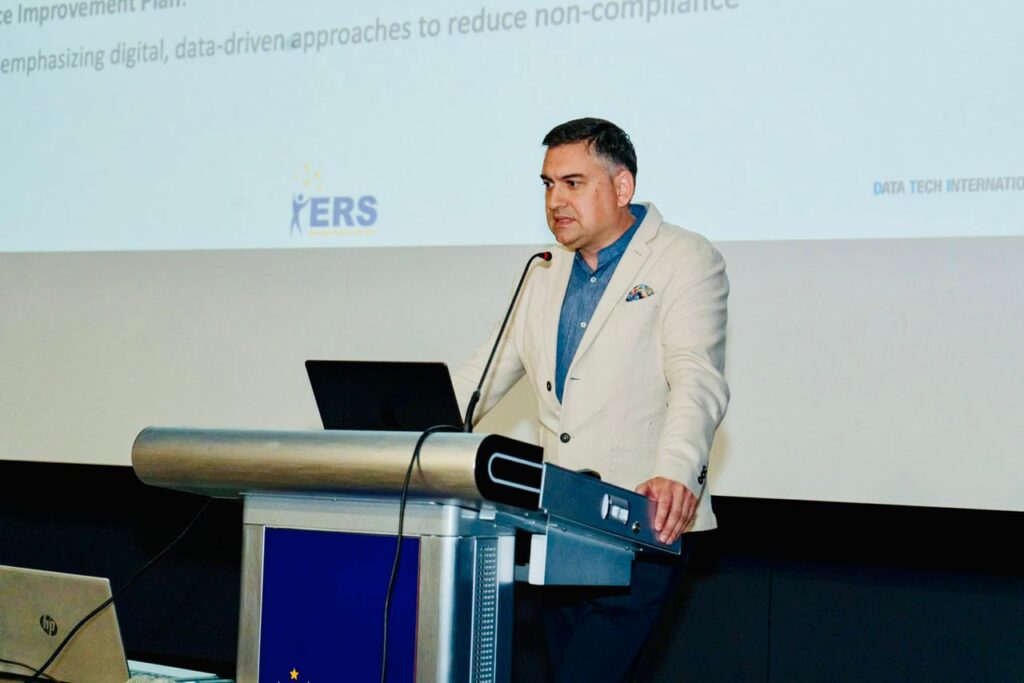
Presenting the technology during the launch, Data Tech International CEO, Goron Todorov, said the platform is capable of operating both online and offline, making it suitable even for businesses in remote areas with unstable internet connectivity.


He highlighted features such as blockchain-based proof-of-audit systems, fraud detection mechanisms, real-time risk analytics and integration with existing point-of-sale and enterprise systems.
Minister Rijkenberg noted that the system will also benefit compliant businesses by reducing manual reporting requirements, improving record accuracy and creating a fairer business environment.
“Businesses that comply should not be placed at a disadvantage by competitors who suppress sales or avoid paying the correct tax,” said Rijkenberg.
The Minister called on the business community, tax practitioners and stakeholders to cooperate with the ERS during the implementation phase by preparing their systems, providing feedback and participating constructively in the transition process.