
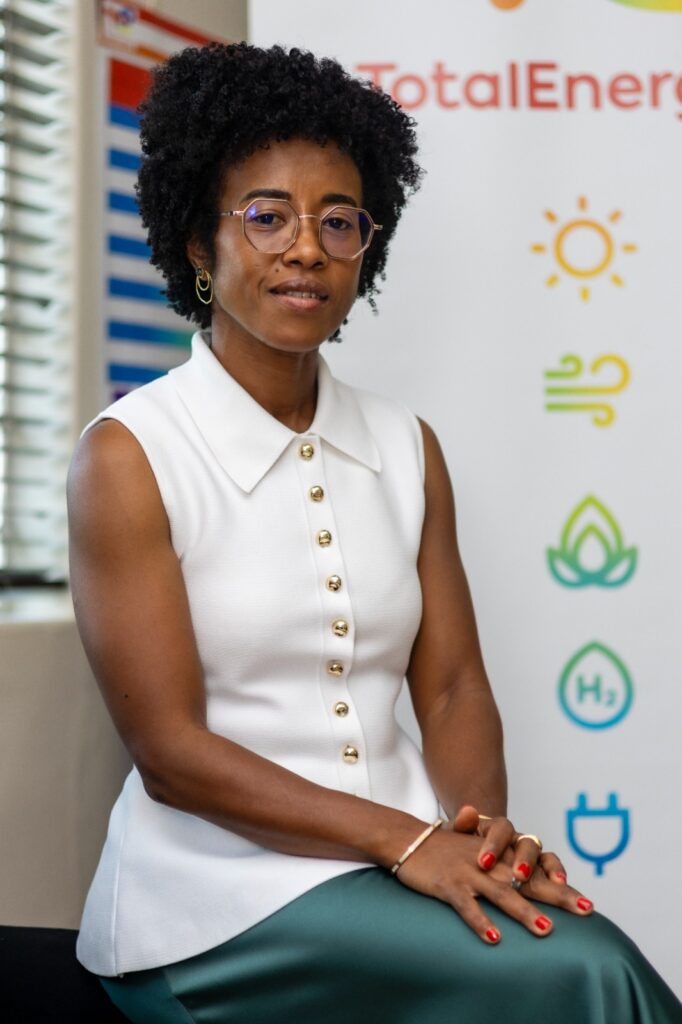
In an industry traditionally dominated by men, TotalEnergies is committed to fostering inclusive leadership across Africa. And Iris Francis is making her mark. Born and raised in Madagascar, she is now the Managing Director of TotalEnergies Marketing Eswatini. She has consistently turned challenges into opportunities, proving that leadership is built through courage and action, not simply titles. Iris, a former Deputy Vice President of TotalEnergies Southern Africa also reflects on her journey, the importance of providing women with access to knowledge, visibility, and responsibility, and how TotalEnergies is paving the way for a future where diverse leadership strengthens business, communities, and the energy sector.
Q: Iris, thank you for joining us. Could you please share with our readers who you are and where you were born?
A: First, welcome to my office. I believe you are the first person I am meeting here outside my immediate business environment, which makes this conversation particularly special. My name is Iris Francis. I was born and raised in Madagascar, a country that shaped my resilience, values, and sense of identity. I am happily married and a proud mother of three wonderful boys. My children keep me grounded and constantly remind me why purpose truly matters. I am deeply passionate about everything I commit to. When something matters to me, I give it my all. I do not believe in doing things halfway; I believe in conviction, discipline, and full engagement.
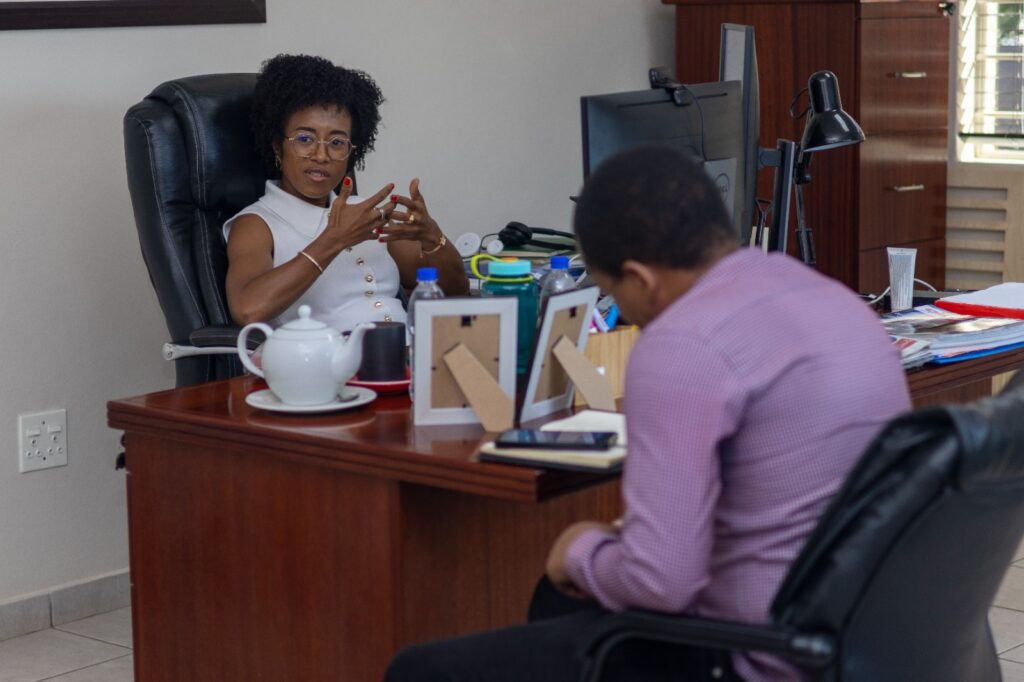
At 23, I left Madagascar to study law in France. What I expected to be a short chapter stretched into nearly a decade of professional growth. I qualified as a tax lawyer and worked with leading firms in France, specializing in tax legislation for African markets. Those years were formative. Working in a highly competitive, male-dominated environment in France demanded discipline, rigor, and resilience. There were moments when I entered boardrooms as the only Black woman present. My voice was sometimes questioned before it was heard. Those experiences taught me that confidence is built through action.
And what makes you different can become your greatest strength once you choose to embrace it.
Q: Interesting. How did you join TotalEnergies Marketing Eswatini?
I joined TotalEnergies in 2018 as Senior International Tax Manager for Africa in the Marketing & Services branch. For five years, I worked closely with affiliates and tax administrations across the continent, overseeing tax strategy and governance. I later decided to transition into operational leadership as Deputy Vice President for the Southern Africa zone, based in Johannesburg. In that role, I supported affiliates in South Africa, Namibia, Mozambique, Eswatini, Botswana, Malawi, and Angola. These experiences broadened my perspective and prepared me for greater responsibility. In September 2025, I was appointed MD of TotalEnergies Marketing Eswatini. I often say that I was not born into leadership; I was groomed for it through experience, challenge, sometimes discomfort, and continuous growth. This journey reflects TotalEnergies’ commitment to developing talent through mobility, exposure, and progressive responsibility.
Q: You previously served as Deputy VP of TotalEnergies in Southern Africa. How have you found leading TotalEnergies Marketing Eswatini?
A: Moving from a regional role to MD in Eswatini has been deeply meaningful. At the regional level, my role was strategic and broad. Affiliates were accountable for their performance, and my responsibility was to support and guide them. Here in Eswatini, accountability is direct. I carry full responsibility for our results and our footprint in the country. The decisions I make have immediate consequences for people, customers, and communities. That changes how you lead. What has impressed me most about Eswatini is the spirit of the market. There is pride, care, and responsibility in how people work. Relationships truly matter here. Trust comes before transactions. It reminds me of Madagascar, where tradition and community shape how business is done. Because of that, I lead closely and personally. I spend time on site, meet customers, and listen not to respond but to understand. Leadership, for me, is not about distance or title. Impact comes from relationships and authenticity.
Q: As the leader of TotalEnergies Marketing Eswatini, what is your vision for the brand in the country?
A: TotalEnergies has been present in Eswatini for many years. It is a well-established brand, and people know us. But recognition alone is not enough. My vision for TotalEnergies in Eswatini is for it to be a brand people trust instinctively. Not just because of the products we sell or the network we operate, but because of who we are. For me, trust is built when people genuinely feel the company cares about their safety, dignity, future, and rights. It is also about understanding and embracing the role we play in the country.
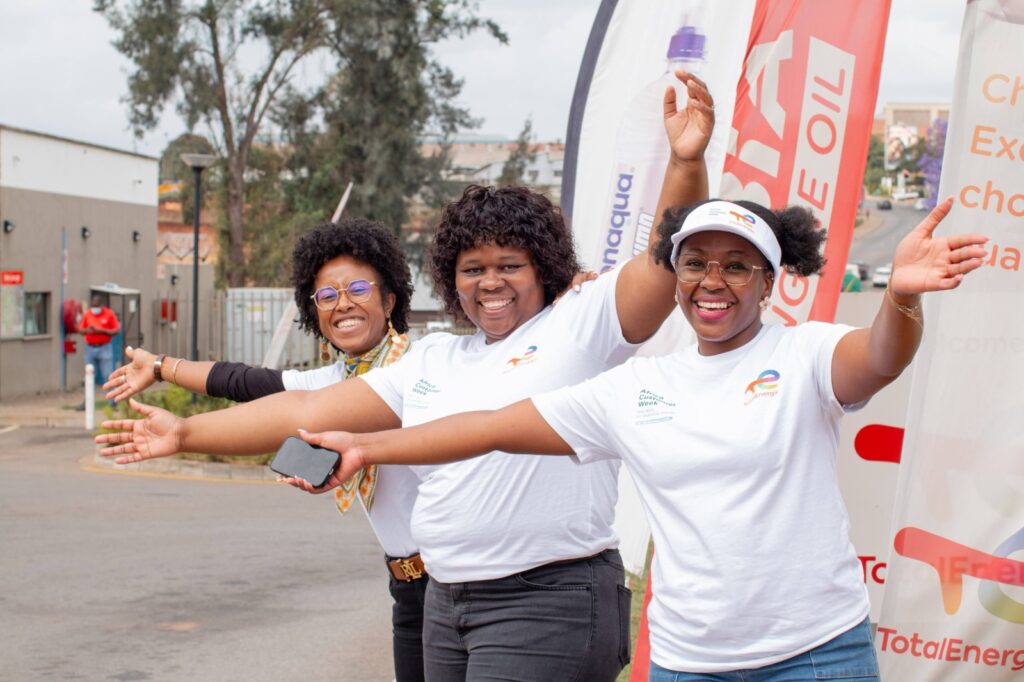
At TotalEnergies, we are guided by five core values: Safety, Respect for Each Other, Pioneer Spirit, Stand Together, and Performance-Minded. In Eswatini, my vision is to see these values lived on the ground. They should guide how we operate our service stations, serve general trade and final customers, support our teams, and engage with communities and partners. For me, performance is not only about financial results. It is about being a reliable, responsible energy company that delivers consistently and ethically. This philosophy is also reflected in what we offer our customers. For example, many people may not know that our petrol in Eswatini includes Excellium, an advanced additive technology that improves engine efficiency, cleans internal engine components, and enhances performance. In many markets, customers pay a premium for this formulation. Here in Eswatini, we offer it at no additional cost. That is a deliberate choice. It reflects our commitment to delivering value, not just visibility, and to building trust through action, not words.
Q: Tell us about your leadership style. How do you lead, and what influences it?
A:Leadership evolves. It grows with you and is shaped by lived experience. As a female leader, I have had moments of doubt (like anyone), but those moments have also brought growth and learning. I lead with empathy because I know what it feels like to be underestimated, to walk into a room where your presence is questioned before your ideas are heard. That experience shaped how I treat others. I also lead with clarity and respect. Early in my career, I had a manager who did not just tell me what decisions had been taken; he explained why. That transparency created trust and a sense of ownership. It shaped the kind of leader I wanted to become. For me, respect means giving people responsibility and space to take ownership. When people understand the bigger picture, they perform better. Silence and confusion can be unsettling, especially when teams are doing their best.
Listening is central to my leadership, especially listening to voices that are often quiet or overlooked. Every idea contributes to stronger decisions. At the same time, I am disciplined and driven. I believe empathy and high standards go hand in hand.
We can be compassionate without compromising integrity, accountability, or performance. My leadership has been shaped by the people who believed in me before I fully believed in myself, the women and men who mentored, challenged, and championed me. That trust is something I carry forward. At its core, my leadership is human. It is about clarity, courage, and creating space for others to grow, just as others once did for me.
Q: How important has working in different countries been to your corporate career?
A: Working across France, South Africa, and now Eswatini has been one of the defining experiences of my life. Each move meant entering a new culture with different expectations, and that discomfort taught me adaptability, patience, and the power of listening before acting. International exposure has strengthened my confidence and sense of self. It showed me that competence has no boundaries and that succeeding in unfamiliar environments builds courage, curiosity, and resilience. I encourage young women to embrace these international experiences not just to grow their CVs but to expand what they believe is possible.
Q: According to the International Energy Agency (IEA) 2024 report, women now hold 22% of senior roles at major international oil companies. What is your take on that statistic, and what steps should be taken to improve it?
A: The statistics show progress, but they also remind us that representation doesn’t happen by chance; it requires intention. In Africa, particularly in Southern Africa, leadership roles demand resilience, cultural and emotional intelligence, and strong proximity, all areas where women already excel. Yet they remain underrepresented at the highest levels of decision-making. At TotalEnergies, diversity is both a leadership and a business imperative. The Company adopted in 2003 a proactive policy aimed at gradually increasing the presence of women across all its professions and enabling more equitable access to senior technical and managerial positions.
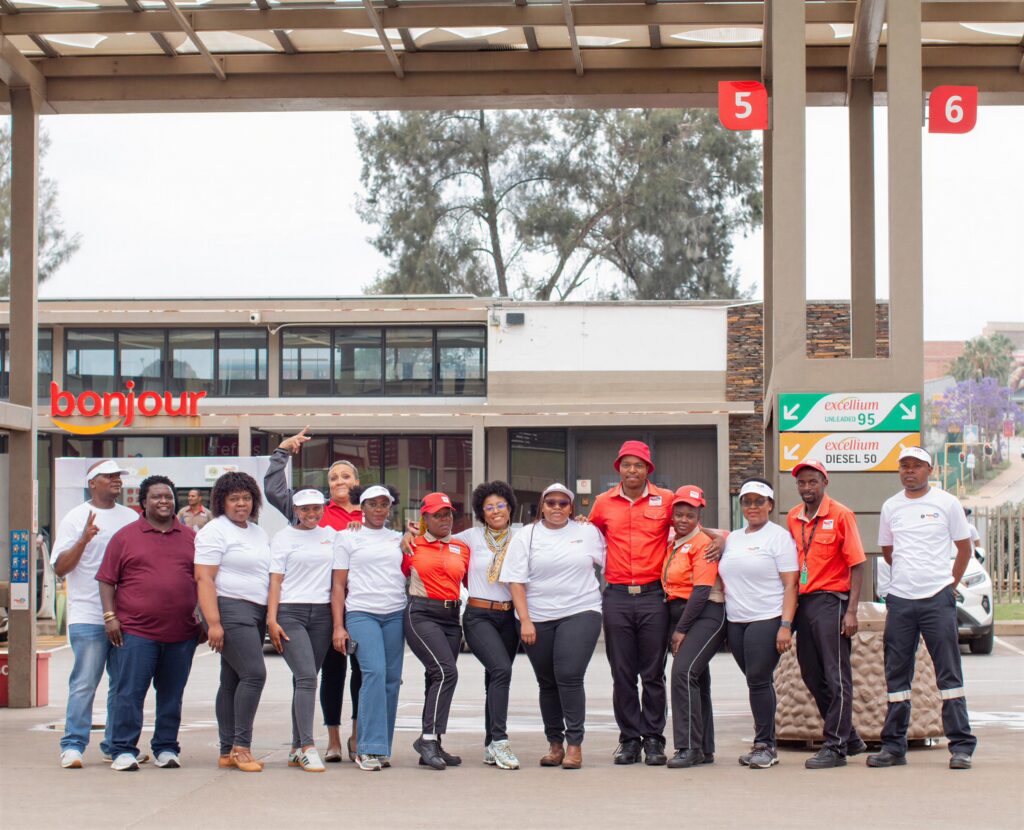
True progress goes beyond recruitment; it requires deliberately developing, retaining, and sponsoring talent. Sponsorship is key: someone advocating for you when you’re outside the room ensures that inclusion translates into real opportunity. Women leaders should no longer be exceptions but part of the norm, leading operations, shaping strategy, and running businesses across the continent.
Women often carry dual responsibilities, balancing leadership roles with family commitments. There’s often a conflict between career progression and personal responsibilities, from raising children to caring for parents – what we call “valim-babena” in Malagasy. Motherhood does not stop when a woman becomes a CEO or MD; it remains a full-time role alongside professional leadership. Women lead while holding families and generations together. The challenge is not women’s ability to lead, but whether organizations recognize and support the realities they face.
Q: This year’s International Women’s Month theme, “Give to Gain,” emphasizes investing in women through resources, knowledge, and visibility. How do you personally interpret this theme?
A: The theme resonates deeply with me because my journey reflects the power of someone choosing to invest in me at a moment when I may have lacked confidence. I still remember a manager who insisted I present to senior management (mostly men in a huge boardroom) even though I didn’t feel fully ready. That act of trust gave me visibility and courage, and ultimately changed how I saw myself. When women are given access to knowledge, visibility, and decision-making power, the return is extraordinary, not just for the individual but for organizations, teams, and society at large. Giving to women is never a loss; it’s a multiplier. That’s why I make it a priority to mentor women, sponsor talent, and intentionally create spaces where they can speak freely in my day-to-day environment.
Beyond the workplace, I’m deeply committed to advocating for girls’ education, especially in countries like my home country, Madagascar, where traditions can limit opportunities. Investing in girls strengthens not only their lives but also families, communities, and the future. For me, “Give to Gain” is more than a slogan; it’s a responsibility. On International Women’s Day, it’s a reminder that when we lift women, the world rises with them.
Q: Your predecessor, Nalini Naicker, is a woman. We also note that at the group level, TotalEnergies has a healthy number of women in influential positions. Talk to us about the group’s intentional drive to ensure women are always represented in the top seat.
A: What you didn’t mention is that before Nalini, there was another woman, Phumzile. This continuity reflects a long-term commitment by TotalEnergies to gender diversity, rather than driven by short-term initiatives. Following women in this role is deeply meaningful to me. I am deeply committed to gender equality, and the continuity of women in leadership roles demonstrates that leadership is a legitimate and sustainable pathway, not a one-time achievement.
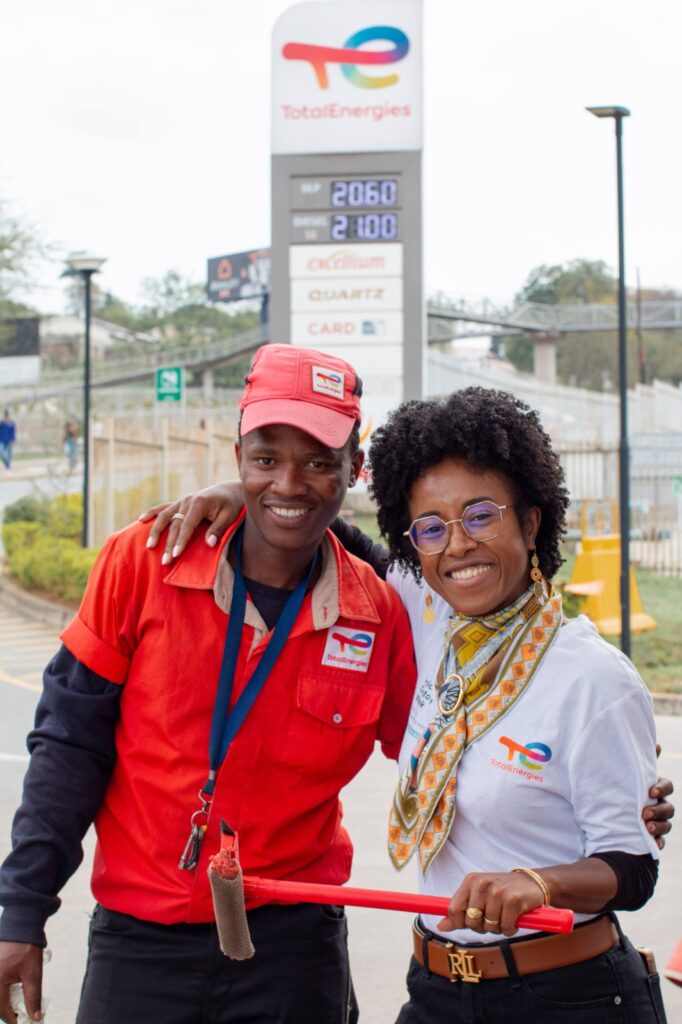
It sends a strong message to young women inside the Company and beyond. At TotalEnergies, this continuity is intentional. Representation at the highest levels doesn’t happen by chance; it happens by design. Through our diversity and inclusion policies, we identify and develop talented women early, preparing them for executive roles. True inclusion is not just about representation; it’s about creating an environment where women can thrive, be heard, and lead authentically with real responsibility and authority. I’m proud to be part of a company that understands that inclusion strengthens performance. Diverse leadership teams make better decisions, manage risk effectively, and are better equipped to navigate complex challenges, like the energy transition.
Q: How do you plan to elevate the TotalEnergies brand in Eswatini further to meet international standards?
A: Taking the brand further isn’t about doing more; it’s about doing better, with consistency and responsibility. My focus rests on three fundamentals: professional excellence, people development, and customer experience, all underpinned by our core value: safety. Professional excellence means never compromising on safety, reliability, or compliance. Safety at TotalEnergies isn’t a priority; it’s our program. We rigorously enforce safety standards across all operations, from service stations to the supply chain. People development is where true brand innovation begins. Engaged, capable, and accountable teams are key to maintaining international standards. That’s why we invest in training not only our employees but also service station personnel and subcontractors, raising the overall level of professionalism across everything we do.
Finally, customer experience is where our standards are most visible. At any TotalEnergies station, customers should encounter the same level of service, hygiene, reliability, and attention, from the forecourt attendant to every interaction. Our Excellium fuel additive, offered at no extra cost, is one way we deliver consistent premium value. Elevating the brand means combining global standards with local insights. This means understanding Eswatini’s market, culture, and expectations, and embedding our values of Safety, Respect, Performance-Minded, Pioneer Spirit, and Stand Together meaningcollaboration into every operation. When these values consistently guide our operations, brand excellence becomes the norm, not just an aspiration.
Q: TotalEnergies is evolving into a “multi-energy” company, recently expanding into solar and diversified services. How does this expansion serve as tangible “proof of concept” of the company’s vision to become a full-service energy and convenience hub?
A: In Africa, TotalEnergies’ multi-energy approach is a long-term strategy, not a single fixed model. Here in Eswatini, it’s still in an early stage: only four service stations have been solarized. We plan to expand solarized service stations gradually and strategically. The full TotalEnergies multi-energy model hasn’t been implemented in Eswatini yet because it depends on several factors: market readiness, regulatory frameworks, infrastructure, and economic viability. For example, as you mentioned earlier, there’s only one electric vehicle in the country, part of a pilot project. While we prepare for a future in which service stations could integrate solar energy, electricity, and other sustainable solutions, the market and regulations need to mature first. Over time, as conditions allow, service stations in Eswatini could evolve from traditional fueling points into broader energy and convenience hubs. But for now, this remains a forward-looking vision, driven by opportunity and demand.
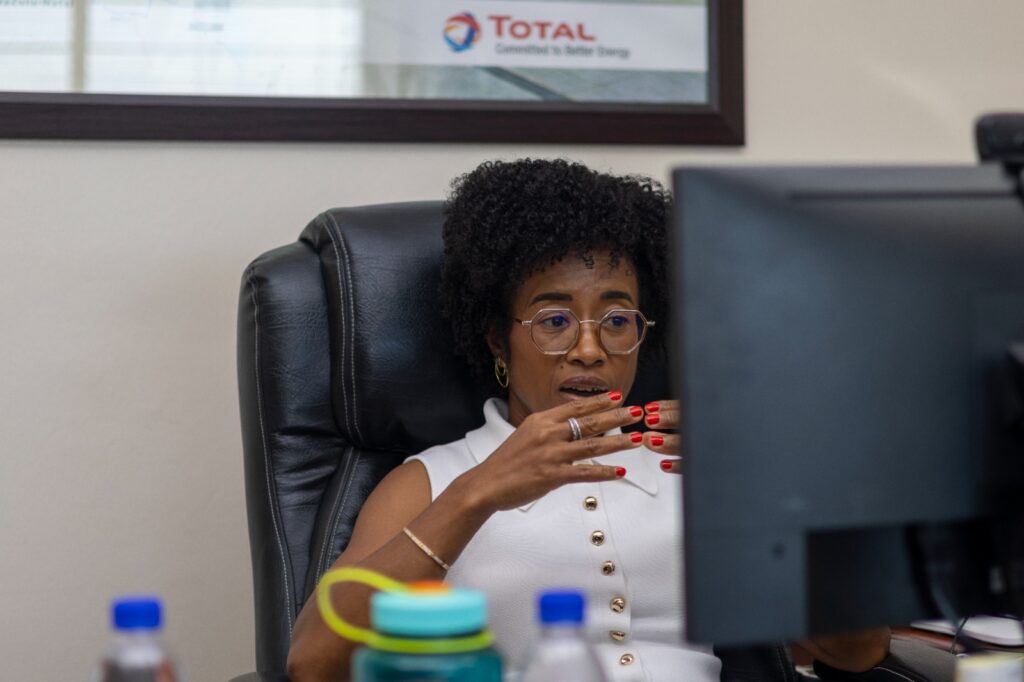
Q: From your perspective, how can a focus on long-term sustainability and risk management accelerate green initiatives, such as solar-powered stations, in Eswatini?
A: At TotalEnergies, we approach the energy transition with a long-term, progressive mindset. Sustainability isn’t a short-term goal; it’s a framework for reducing environmental and social risks while ensuring today’s decisions remain compatible with future needs. Each green initiative must be carefully assessed for technical feasibility, economic viability, regulatory alignment, and operational practicality. On a personal level, I see sustainability as more than environmental responsibility; it’s also about social responsibility. Many think in terms of legacy: what we leave for our children and grandchildren. For me, sustainability is about ensuring that future generations inherit opportunities, not just risks.
Q: What is your message to young women in Eswatini who look to your career and wonder whether they, too, can lead in the energy sector?
A: When I was younger, I longed to see someone who could represent my future, a “future me.” Today, I want to send that message to young women and young men who feel different or out of place: you have the right to be here, even if you don’t feel fully prepared. I’ve shared before that I entered rooms where my voice was silent and I doubted whether my presence mattered. The turning point came when I decided to speak and act, not because I was confident, but because I knew my voice mattered. Leadership doesn’t require full confidence at the start. confidence grows through action. My message is simple: embrace opportunities, ask questions, take on challenges, and step forward even when it feels uncomfortable. Growth begins at the edge of discomfort. Leadership isn’t about perfection; it’s about purpose, perseverance, and showing up consistently. So, my dear sister, the energy sector needs your intelligence, integrity, courage, and responsibility. Take your space, step into your potential, and do not apologize for it. By doing so, you shape a better future and shine in your own right.
This has been an interesting conversation, I am certain our readers will love it. Thank you very much for your time Iris.
You are most welcome.