
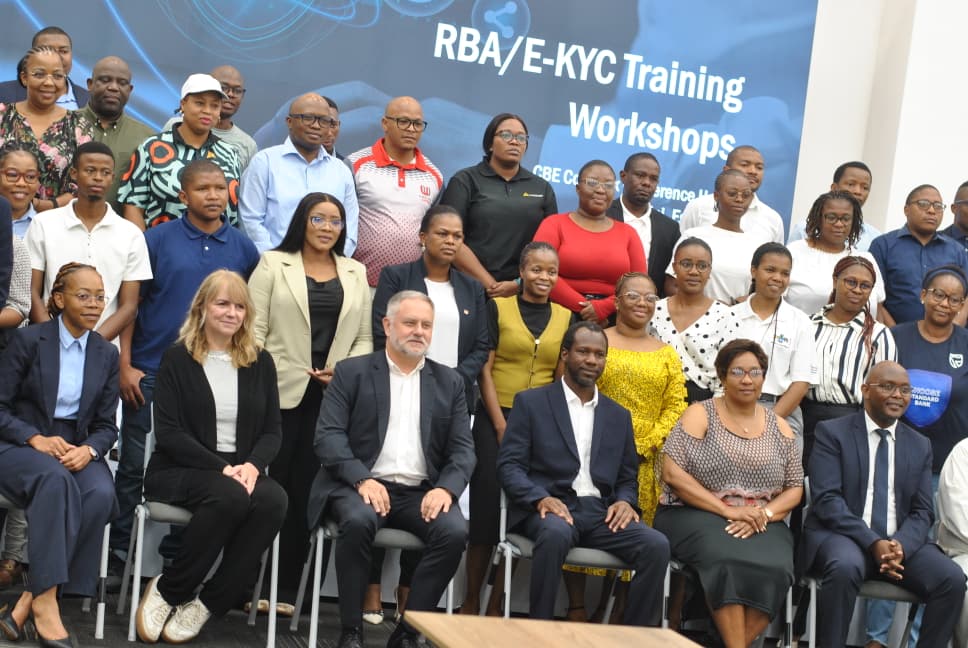
The Central Bank of Eswatini has intensified efforts to strengthen the country’s anti-money laundering and counter-terrorist financing (AML/CFT) framework by convening regulators, financial institutions, and government stakeholders for a high-level national training workshop focused on Anti-Money Laundering, Combating the Financing of Terrorism, Counter Proliferation Financing, and e-Know Your Customer (e-KYC).
Delivering the welcome remarks on behalf of Deputy Governor Felicia Dlamini-Kunene, Director of Financial Regulation Beverly Mavuso underscored the importance of coordinated oversight to safeguard the integrity of Eswatini’s financial system.
“We are greatly honored to have such a diverse and committed group of stakeholders gathered here today,” she said, calling the training timely and critical for enhancing financial integrity and strengthening customer due diligence systems.
The workshop brought together representatives from the Eswatini Financial Intelligence Centre (EFIC), the Financial Services Regulatory Authority (FSRA), banks, mobile money operators, foreign exchange service providers, and other financial institutions.

Regional and technical partners, including the Eastern and Southern Africa Anti-Money Laundering Group (ESAAMLG), FinMark Trust, and Cenfri, are supporting the initiative.
Mavuso emphasized that well-coordinated regulatory oversight strengthens Eswatini’s AML/CFT framework and ensures that financial innovation advances without compromising compliance or customer protection.
The training aligns with key reforms in the country’s legal and regulatory framework. Amendments passed in 2024 to the Money Laundering and Financing of Terrorism Prevention Act, 2011, embedded risk-based obligations directly into law, reinforcing the requirement that institutions assess and mitigate risks proportionate to their exposure.
In addition, the 2023 National Risk Assessment deepened understanding of Eswatini’s vulnerabilities to money laundering and terrorist financing. Key gaps identified included weaknesses in beneficial ownership transparency, risks stemming from the misuse of identity documents, and the need for a more risk-informed national AML strategy.
The 2022 Mutual Evaluation Report by ESAAMLG further underscored the need to strengthen national, sectoral, and institutional understanding of money laundering and terrorist financing risks, improve sectoral coordination, and enhance the application of risk-based supervision.

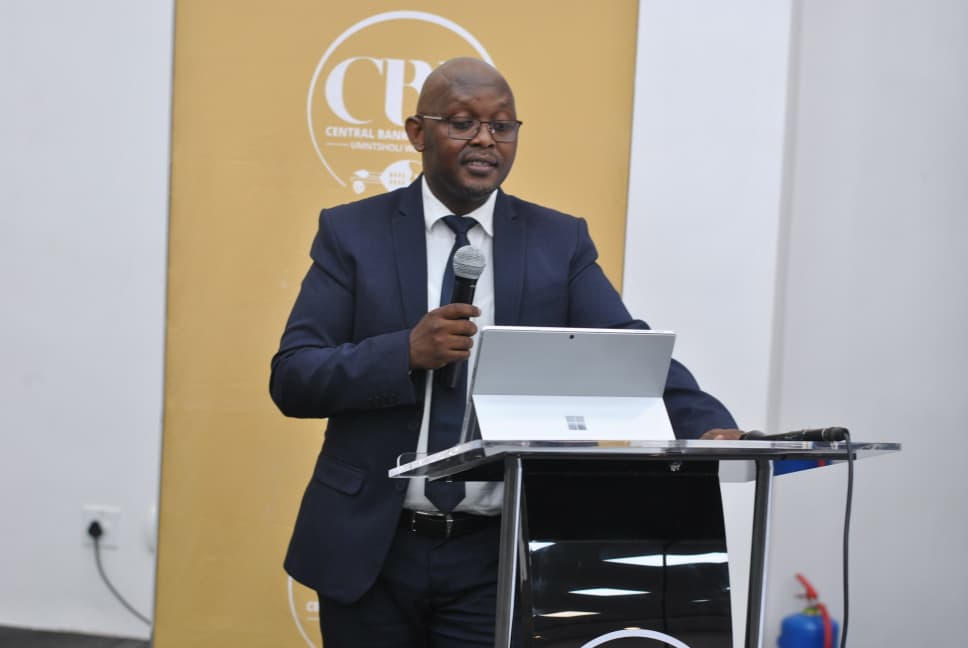
“These assessments were not merely diagnostic; they were a call to action,” said Calvin Dlamini, Director Compliance and Prevention at EFIC, during his keynote address. “Today’s workshop forms part of our response.”
He noted that as digital financial services expand across the SADC region, regulators and institutions must ensure that financial systems remain secure, trusted, and aligned with global standards established by the Financial Action Task Force (FATF).
The training sessions examined the findings of Eswatini’s National Risk Assessment, sector-specific vulnerabilities, and practical steps institutions must take to embed risk-based frameworks into governance structures, customer onboarding processes, and compliance systems.
The Central Bank made it clear that strengthening AML/CFT compliance is not solely a regulatory mandate but a shared responsibility across the financial ecosystem.