
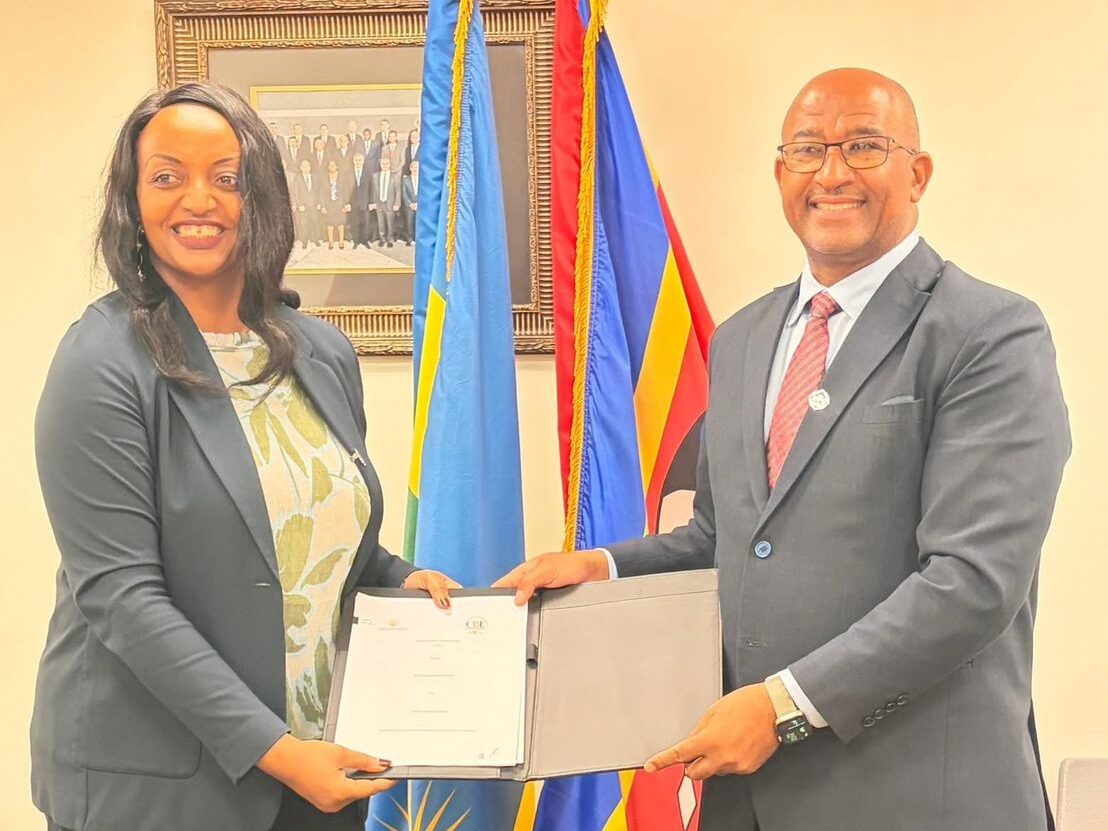
On the sidelines of the IMF and World Bank Spring Meetings in Washington, D.C., the Central Bank of Eswatini (CBE) and the National Bank of Rwanda (NBR) formalized a partnership that promises to rewire how both nations approach monetary policy and financial stability.
The agreement was signed by CBE Governor Dr. Phil Mnisi and his Rwandan counterpart, Governor Soraya M. Hakuziyaremye, marking a milestone achieved during a marathon week of high-level engagements and signaling Eswatini’s aggressive move to position itself as a “Central Bank of Reference” on the continent.
The Memorandum of Understanding (MoU) establishes a rigorous framework for cooperation aimed at strengthening the delivery of core mandates for both regulators. CBE is tapping into a pool of shared interests and regional expertise by aligning with Rwanda, a nation widely recognized for its rapid digital transformation and ease-of-business reforms. Through this partnership, both institutions will enhance their capacity to effectively deliver their mandate of monetary policy and financial stability, ensuring that their institutional standing is bolstered by cross-border collaboration.
The scope of the agreement is exhaustive, covering the entire spectrum of modern central banking while leaning heavily into the future of finance. The collaboration will see a deep exchange of knowledge in research and economics, financial regulation, and supervision. Furthermore, the two institutions will work together to share frameworks for fintech and innovation, modernize payment systems for seamless fund transfers, and develop strategies to reach unbanked and underserved populations. A critical component of the alliance involves the optimization of reserves management, focusing on the national “emergency funds” that guard against global economic shocks.
Beyond the technicalities of reserves and regulation, the inclusion of consumer protection and capacity building suggests that both Governors are prioritizing the human element of finance. This ensures that as systems become more sophisticated, they remain accessible and safe for the average citizen. This move comes at a time when the CBE is increasingly vocal about its “Centre of Excellence” vision, demonstrating that the “Nkwe” agenda extends far beyond the Kingdom’s borders and into the realm of international policy-making. As both nations return from the Spring Meetings, the focus shifts to an implementation phase that represents another brick in the wall of Eswatini’s economic sovereignty.