
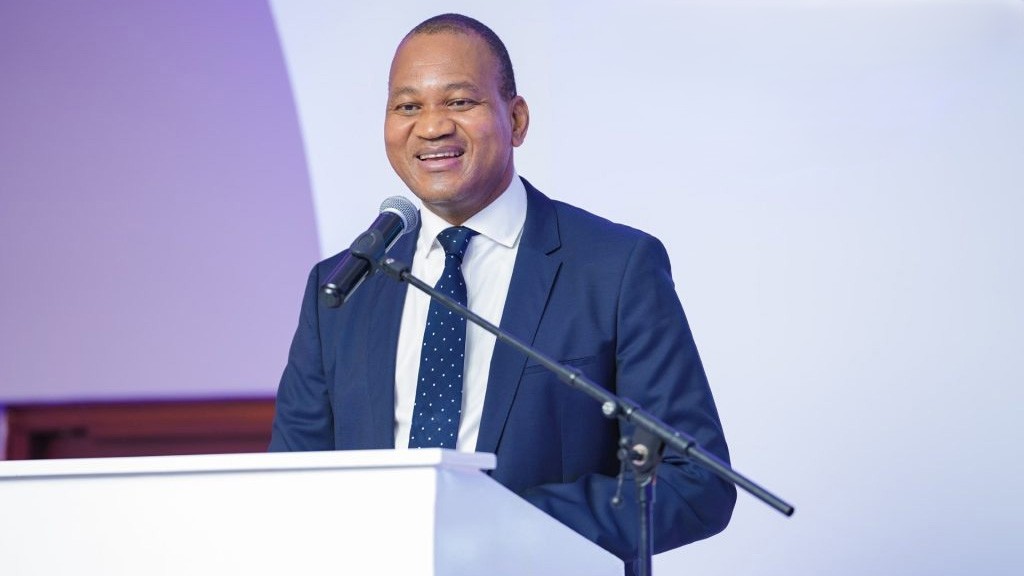
The Board of Directors of Business Eswatini (BE) convened for their final statutory sitting of the 2025/26 financial year last week, concluding with a firm resolve to protect the interests of the private sector.
While the meeting celebrated significant advocacy wins and the private sector’s generous contribution to national heritage, it was overshadowed by what the Board described as a dangerous “quagmire” surrounding the Eswatini National Provident Fund (ENPF).
In a spirited session that touched on trade, productivity, and industrial relations, the Board struck a delicate balance: praising progress on healthcare reforms while drawing a line in the sand on pension fund governance.
The most urgent item on the agenda was the prolonged stand-off regarding governance and operational issues at the ENPF. The Board expressed unanimous frustration over the failure of relevant authorities to resolve the matter speedily.
In a pointed statement aimed at correcting public misconceptions, Business Eswatini laid out the financial reality of the fund.
“The ENPF is exclusively a private sector fund,” the Board resolved. “It is funded entirely by private sector companies and their employees. Government does not contribute a single lilangeni to ENPF.”
The Board warned that the continued instability poses an existential threat not to the state, but to the very employers and workers who fuel the economy.
“If governance principles continue to be compromised, the potential demise of this institution will only affect private sector employers and their workers – not government,” read the resolution. The Board admitted that the matter has reached a tipping point, resolving unanimously to escalate the issue to the next appropriate forums, signalling potential high-level intervention or legal scrutiny in-the-near future.

Contrasting the gloom of the ENPF debate, the Board noted incredible milestones achieved regarding the Swazi-Med scheme. While details remain sensitive, the secretariat updated members on significant developments that suggest a path toward stabilizing this critical healthcare access point for private sector employees.
The Board acknowledged the complexity of the medical scheme environment but commended the negotiating teams for steering the matter toward a more sustainable footing. Business Eswatini reaffirmed its commitment to ensuring that private sector workers do not become collateral damage in administrative disputes.
In a lighter but equally significant moment, the Board took time to reflect on the nation’s recent Ruby Celebrations. The BE President Mr. Mvuselelo Fakudze, noted with exceptional pride the private sector’s overwhelming contribution to the national events.
“The business community stepped up,” the President said, describing the contributions as “highly commendable.” From sponsorship to logistical support, BE members demonstrated that the engine of the economy is also the heart of the nation. The Board highlighted that without private sector investment, national milestones of this magnitude would be impossible to execute. This, they noted, is the true definition of a public-private partnership in action.
Demonstrating its forward-looking mandate, the Board turned its attention to the future of work., They noted that discussions on the platform economy (e.g., ride-hailing, freelance digital platforms, delivery services) will be prioritized at the International Labour Organization (ILO) Conference next week.

Business Eswatini acknowledged that expert knowledge in this area remains “glaringly weak” locally. To that end, the Board has issued specific views and wishes to the private sector delegates attending the ILO Conference in Geneva.
The goal is clear: ensure that when the ILO produces its impending Convention on the platform economy, Eswatini’s private sector is not caught off guard. The Board committed to bridging the knowledge gap through aggressive capacity building in the coming fiscal year.
As the Board adjourned, the message to the broader Eswatini public was one of stewardship.
Business Eswatini wants the private sector to know that their secretariat is not sleeping. They are prosecuting the ENPF matter with urgency because the retiree, the worker, and the employer cannot afford a collapse. They are fixing Swazimed because health security is job security. And they are going to Geneva to ensure that Eswatini’s digital future is not written for, but with Emaswati’s contribution and participation.