

In a press conference held at the Ministry of Agriculture on yesterday , Minister Mandla Tshawuka revealed a security breach that threatens to derail the nation’s fight against Foot and Mouth Disease (FMD).
The Minister confirmed that law enforcement and veterinary officials intercepted 3.4 tonnes of meat, a haul worth over E200,000, being moved illegally across the country’s borders.
“They don’t even get them from abattoirs. They get them from wherever they can and stuff them into vehicles,” said Tshawuka. He further noted that the seizure raises alarming questions regarding how much smuggled meat has successfully bypassed interception.
The Minister identified the perpetrators as repeat offenders who have consistently exploited porous points along the Kingdom’s borders. Specifically, these syndicates have utilized crossings in Sondlane and the Oshoek border gate to transport meat products without the necessary health certifications or movement permits.
A key point of frustration for the Ministry is the current legislative framework. Minister Tshawuka highlighted that existing fines for livestock and meat smuggling are too lenient to act as a genuine deterrent for high-value syndicates.
“The law against such crimes is currently not strong enough,” the Minister stated. “While our current measures have worked to catch these individuals, the penalties do not match the scale of the economic risk they pose to the nation.”
Despite these legal hurdles, the Minister assured the public that the government is already working on reforms to sharpen the Ministry’s legal teeth. The goal is to ensure that future offenders face penalties that reflect the billions of Emalangeni in trade value at stake whenever an FMD outbreak occurs.
The Minister’s address served as both a warning and a plea for national cooperation. He emphasized that every illegal crossing undermines the strict zonal slaughtering and vaccination protocols currently enforced to lift existing movement bans.
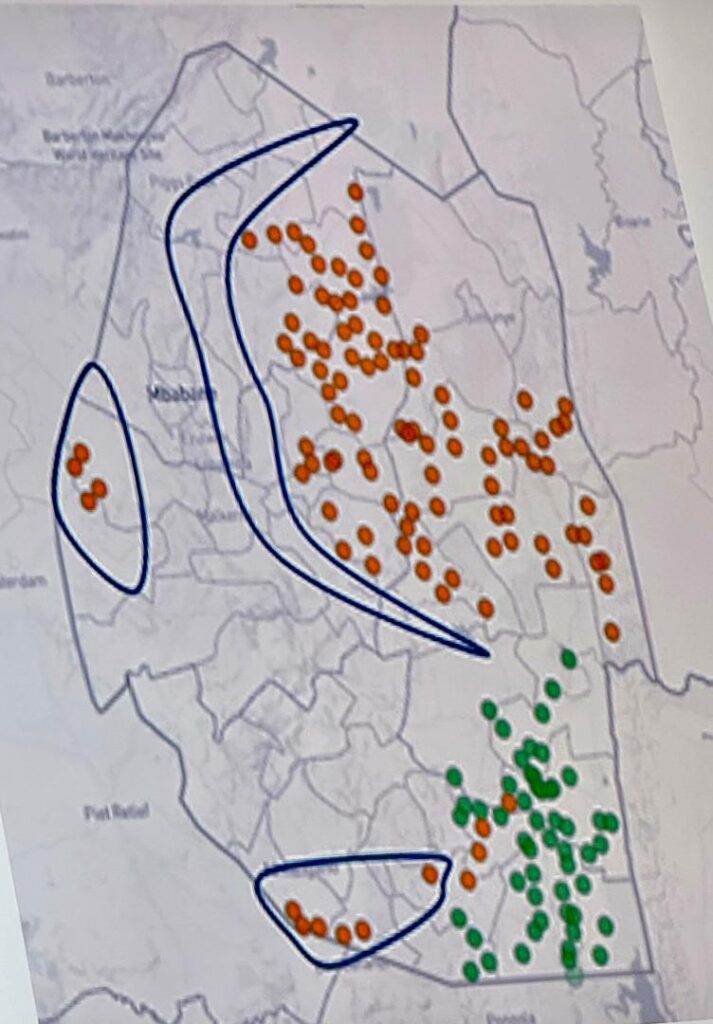

“We should stop doing this because it undermines the whole point of trying to deal with the FMD situation,” Tshawuka said firmly. He explained that a single kilogram of infected beef moved from a “Red Zone” to a “Clean Zone” can reset the clock on Eswatini’s efforts to resume international beef exports.
The 3.4 tonnes of seized meat represents a significant volume of trade, equivalent to approximately 10 head of cattle. In the current Eswatini market, this volume carries a wholesale value of over E200,000, but the rreal cost is far higher. If this meat were to trigger a new outbreak in a previously clean zone, the resulting trade bans could cost the Eswatini economy hundreds of millions in lost SACU receipts and export revenue.
As the Ministry intensifies its approach to disease eradication, the Minister called on all citizens to act as whistleblowers to protect the nation’s agricultural integrity.