
The government of Eswatini is set to make one of the largest investments in its road infrastructure in recent history, allocating nearly E2 billion in the 2026/27 national budget to repair, upgrade, and expand roads nationwide.
The move comes in response to damage caused by extreme climate events and the need to strengthen connectivity between urban and rural communities.
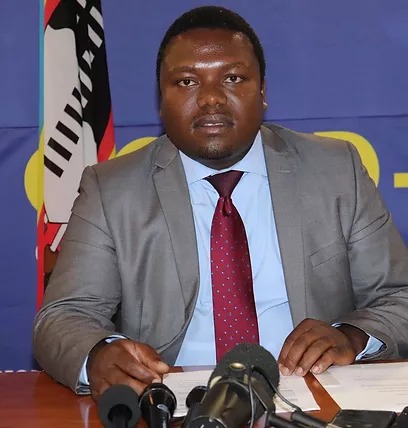
During his budget speech in Parliament, the Minister of Finance, Neal Rijkenberg, noted that the country’s asphalt road network now covers 51% of gazetted roads, with a medium-term goal of increasing paved roads to nearly 60% in partnership with development partners. “It is necessary to repair damaged roads to a level where climate change does not destroy them annually,” he said, underscoring the urgency of the investment.
Key budget allocations include E164 million for the rehabilitation and maintenance of feeder roads, E70 million for roads, bridges, and crossings, and E364 million for the construction of main and district double-sealed tarred roads. The Siphofaneni-Nsoko MR14-MR21 road project alone has a budget of E880 million, while E450 million will be made available through the Roads Authority Fund to maintain and upgrade roads nationwide.
The establishment and operationalization of the Roads Authority in 2026 will help streamline planning, ensure proper maintenance schedules, and implement climate-resilient engineering standards to reduce annual road damage.
“The government also remains committed to improving road safety and will continue to align interventions with the African Road Safety Charter and the National Road Safety Strategy, which aim to reduce road accidents and fatalities by 50 percent by 2030,” the Minister said.
Transport experts say the investment is a critical step for Eswatini’s economic growth. “Improved road infrastructure will not only reduce travel times and transport costs but also enhance trade flows, support agricultural supply chains, and boost tourism,” said a senior civil engineering consultant who requested anonymity.
The allocation also demonstrates the government’s commitment to balancing urban and rural development, ensuring that even remote areas benefit from modern infrastructure.
With nearly E2 billion earmarked for roads, bridges, and crossings, Eswatini is making a strategic push to ensure its road network is both extensive and resilient to climate change and population growth pressures.
In addition, the Minister noted that the condition of most government buildings is deplorable. “This must be improved to ensure that buildings used to access public services, as well as those used as residences, are in a decent state,” he said.
In that regard, he revealed that the government is in the final stages of negotiations with the Development Bank of Southern Africa (DBSA) for a E2.4 billion loan for the Eswatini Housing Board, of which E368 million will be drawn down this year to build additional institutional housing and to renovate government houses and build infrastructure. This loan request has not yet been presented to Parliament for approval.