
By Tlalane Dlamini
On January 20, 2025, the Government of Eswatini, in partnership with the United Nations Development Programme Eswatini (UNDP), officially launched the development of the Long-Term Low Emission Development Strategy (LT-LEDS).
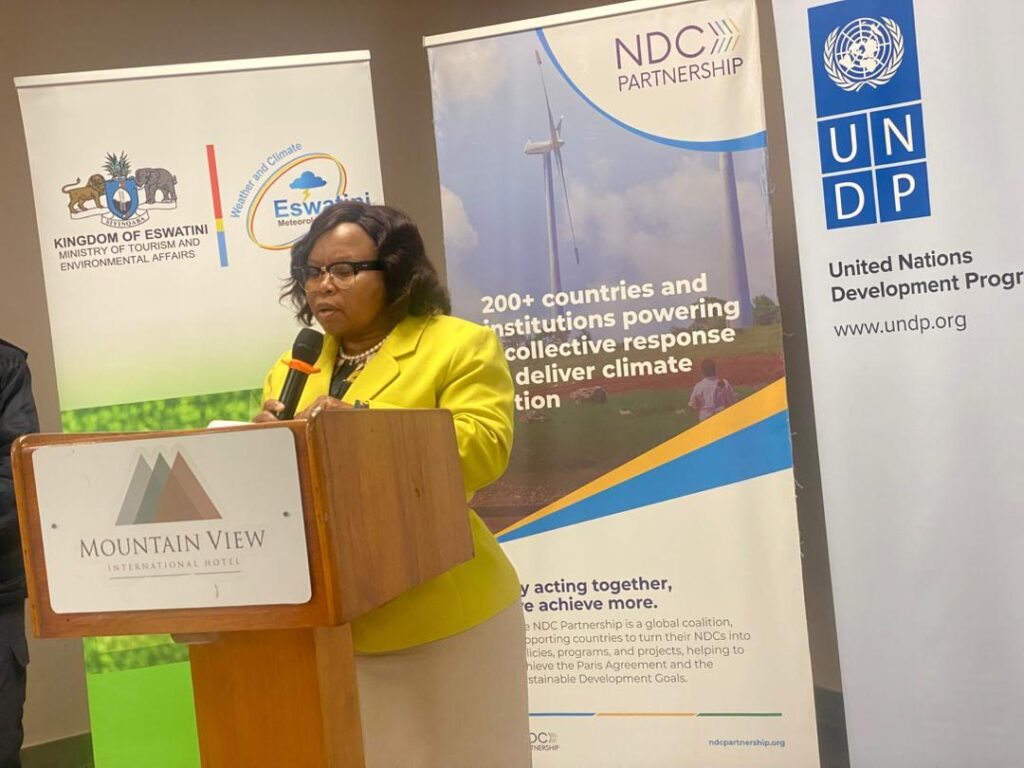
Presiding over the national stakeholder workshop at the Mountain View Hotel, the Minister of Tourism and Environmental Affairs, Jane Mkhonta-Simelane, described the strategy as a “national necessity” that provides the policy certainty required for long-term economic stability.
In the private sector, the LT-LEDS serves as a strategic “north star,” aligning current operations with a mid-century net-zero emissions target. Minister Mkhonta-Simelane emphasized that this 25-year roadmap is essential to “prevent the risk of stranded assets,” investments that may lose value as global markets transition away from high-carbon industries.
She noted that while economic growth remains the priority, the nation must ensure that development pathways are “low-carbon, climate-resilient, and sustainable”.
The strategy focuses on transforming key sectors, including energy, agriculture, and infrastructure, to drive economic recovery and create sustainable livelihoods. “By working together, we ensure that our pathway to net-zero is not just a document on a shelf, but a practical roadmap that creates jobs,” the Minister stated.
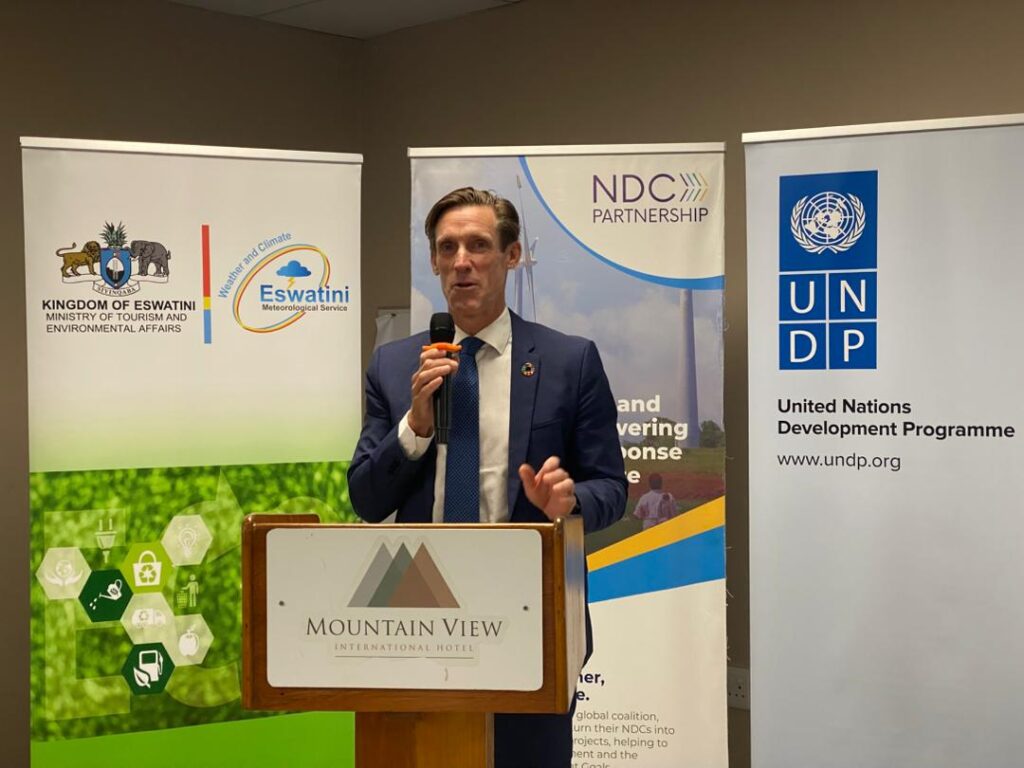
From a global perspective, UNDP Resident Representative Henrik Franklin highlighted the economic risks of climate inaction, noting that it could reverse decades of development progress.
He described the LT-LEDS as an “investment blueprint” capable of attracting international climate finance and partnerships. Franklin challenged business leaders to imagine a 2050 economy featuring smart industries, robotics, and circular economies.
“The success of this strategy depends on collaboration,” Franklin noted, urging the government and the private sector to “work hand in hand to transform these plans into action.”
Supported by the UNDP Climate Promise, this joint initiative aims to position Eswatini as a competitive, climate-smart leader in the region.