
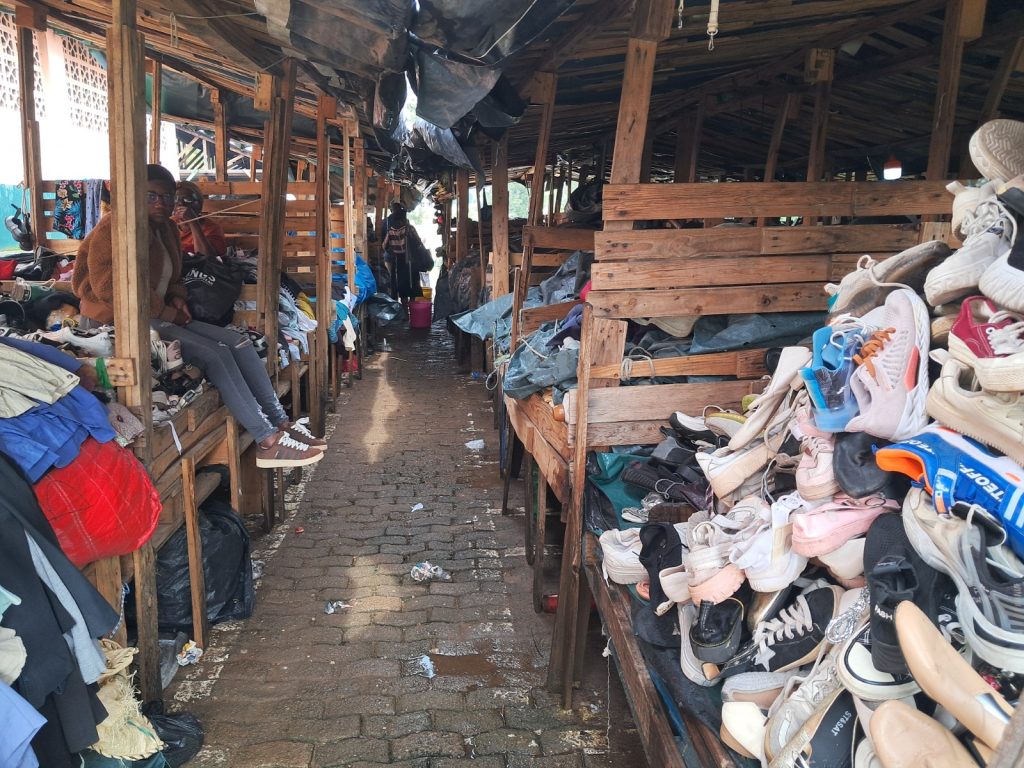
A growing environmental threat in Africa arrives neatly baled, affordable and often framed as charity.
Across Southern Africa, second-hand clothing imports are promoted as a social safety net, supplying low-cost garments and sustaining informal livelihoods. Yet mounting evidence shows that a significant share of these clothes quickly becomes waste, raising environmental, health and governance concerns that mirror the very risks African states sought to prevent through the Bamako Convention.
In Eswatini, a small landlocked country with limited waste-management capacity, imports of second-hand clothing are substantial. While many garments are resold in markets, an increasing volume is unsellable because of poor quality, contamination or damage. Once discarded, these clothes are dumped in open spaces, burned, or sent to landfills ill-equipped to manage complex textile waste.
Modern textiles are rarely benign. They often contain synthetic fibres, chemical dyes and heavy metals. Exposure to heat, rain and flooding accelerates their breakdown, releasing microplastics and toxic substances into soil and water systems.
South Africa presents a parallel but more industrialised case. As a major regional entry point for used clothing, it is struggling with landfill pressure, informal dumping and pollution. Its experience shows how second-hand clothing flows can overwhelm waste systems even where regulatory capacity is stronger, with downstream impacts for neighbouring countries through informal trade routes.
Similar patterns are visible across the continent. In Ghana, vast accumulations of clothing waste clog drainage systems and wash into the ocean. In Kenya, textile waste has been linked to polluted rivers and increased flooding risks. From West to Central Africa, open burning of unsellable clothes contributes to air pollution and respiratory illness.

Together, these cases point to a broader reality that Africa is absorbing the environmental costs of global fashion overproduction.
A hazardous mix
Dr Wisdom Dlamini, a senior lecturer and environmental scientist at the University of Eswatini, describes unsellable second-hand clothing as “a complex hazardous matrix, not benign organic waste”.
“While natural fibres made up about 95 per cent of textiles in 1960, synthetic petroleum-based polymers like polyester and nylon now account for around 68 per cent of the global market,” he said.
These fibres, he explained, are persistent sources of microplastics and can contain more than 8,000 industrial chemicals, including carcinogenic Azo dyes, water-repellent “forever chemicals”, and bioaccumulative heavy metals such as lead, cadmium and mercury.
“In Eswatini, where only 17 per cent of waste is formally collected and 43 per cent is subject to open burning, the risks are acute,” Dr Dlamini warned.
He pointed to improper disposal around the Matsapha industrial hub, where pollutants leach into the Usushwana and Great Usuthu river systems, disrupting aquatic ecosystems and reducing water quality.
“Open burning of synthetic textiles at low temperatures releases unintentional Persistent Organic Pollutants, including dioxins and furans. These are among the most lethal substances known,” he said, adding that fine particulate matter from such fires contributes to respiratory and cardiovascular disease.

Dr Dlamini argues that scientific evidence supports reclassifying non-wearable textile waste as hazardous under the Bamako Convention, to which Eswatini is a signatory.
“This waste meets the criteria for Annexe I and II under the Convention,” he said, calling for life-cycle assessments, chemical fingerprinting and Extended Producer Responsibility schemes to shift end-of-life costs to importers and manufacturers.
Eswatini is beginning to pilot some of these approaches through a US$5.4m GEF–UNDP project running from 2025 to 2030, aimed at reducing toxic pollutants and supporting circular enterprises.
Government officials acknowledge that policy questions remain unresolved. The Ministry of Trade, Commerce and Industry said further internal review was needed to assess whether existing import rules align with any future hazardous-waste classification of used clothing.
The Eswatini Environment Authority (EEA) says unsellable but uncontaminated clothes are treated as general solid waste, not hazardous by default. Director for Environmental Assessment and Compliance Mxolisi Maphanga said only clothing contaminated with blood, infectious material or toxic chemicals qualifies as “special” or hazardous waste.
“Eswatini does not import hazardous waste,” he said, adding that such waste is prohibited under national regulations and managed, when necessary, through export procedures governed by the Basel Convention.
However, second-hand clothing is classified as a tradable good, not waste, meaning it is not routinely screened under hazardous-waste controls- a regulatory gap that sits uneasily with the precautionary intent of the Bamako Convention.
Livelihoods and limits
For traders, the issue is survival. In Mbabane, vendors describe second-hand clothing as a vital source of income.
“I am happy because second-hand clothes put food on the table for my family and me,” said Nelisiwe Matimba.
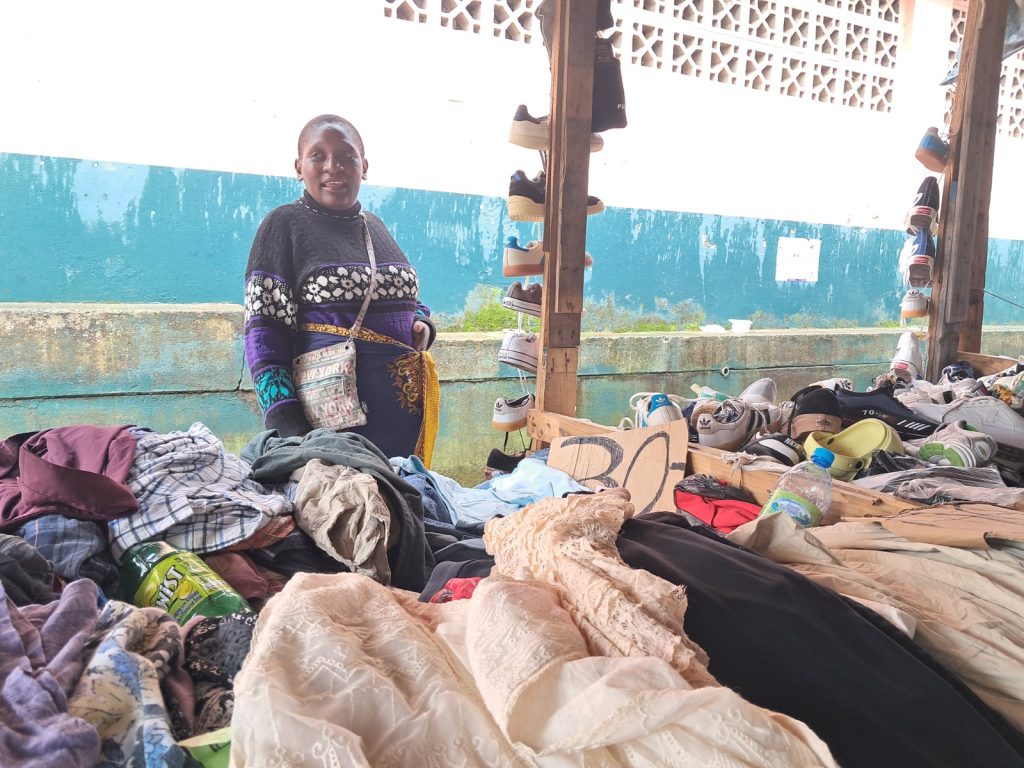
“I try by all means to sell everything. Sometimes I sell each item for less than a dollar just so nothing is left behind.”
Few vendors are aware of the environmental or health risks associated with unsellable textiles, highlighting low public awareness and limited access to information.
UNDP Resident Representative Henrik Franklin said waste management support in Eswatini responds to the “triple planetary crisis” of climate change, pollution and biodiversity loss.
“Where regional instruments such as the Bamako Convention are relevant, we ensure that the principles, particularly the protection of communities and ecosystems from hazardous waste risks, are reflected in project design,” he said.
Adopted in 1991, the Bamako Convention bans the import of hazardous waste into Africa and obliges states to ensure environmentally sound management. While second-hand clothing is not always classified as hazardous, its end-of-life reality challenges the assumption that it is simply reusable goods.
Applying Bamako principles more rigorously would mean stricter screening of imports, clearer definitions of when goods become waste, and shared responsibility between exporting and importing countries.
As textile waste continues to accumulate across African landscapes, the question is no longer whether second-hand clothing can become hazardous, but whether governments will act early enough to prevent another slow-moving environmental crisis.