

The Eswatini Water and Agricultural Development Enterprise (EWADE) has signed Memoranda of Understanding (MoUs) with the Eswatini Environment Authority (EEA), the National Maize Corporation (NMC), the Ministry of Tourism and Environmental Affairs (MTEA), and the Ministry of Tinkhundla Administration and Development (MTAD) to strengthen coordination and enhance the implementation of the Smallholder Agricultural Productivity Enhancement and Marketing Project (SAPEMP).
The signing ceremony took place during a breakfast meeting at the Hilton Garden Inn in Mbabane earlier today. Speaking at the event, EWADE Chief Executive Officer Dr. Samson Sithole noted that the agreements formalize strategic partnerships, shifting collaboration from informal interactions to structured, accountable efforts aimed at producing tangible results for smallholder farmers.
“This historic event transforms our cooperation from good intentions to organized action,” Dr Sithole said. “The challenges facing smallholder farmers, including low productivity, limited market access, climate vulnerability, and knowledge gaps, cannot be tackled alone.”
Role of Strategic Partners

Under the MoUs, the National Maize Corporation (NMC) will play a key role in improving market access for smallholder farmers by supporting the identification and screening of anchor enterprises, facilitating structured markets, and guiding value chain interventions, particularly in maize and legumes such as sugar beans.
The Eswatini Environment Authority (EEA) will provide regulatory oversight and technical support for environmental and social safeguards, ensuring that agricultural investments under SAPEMP are sustainable, climate-resilient, and socially inclusive. Through its Environment Fund, EEA will also work with the project to establish a Green Challenge Fund to promote green innovations and enterprises among youth, women, and resource-poor farmers.
The Ministry of Tourism and Environmental Affairs (MTEA), through its Department of Meteorology and environmental agencies, will improve climate and weather monitoring and early warning systems to support climate-smart agricultural practices. The Ministry will also provide technical guidance on climate change adaptation and environmental management to reduce vulnerability across the SAPEMP project areas.
The Ministry of Tinkhundla Administration and Development (MTAD) will support community-level implementation by assisting with Tinkhundla profiling, coordinating access to community sites through Community Development Officers, and strengthening bottom-up planning methods. The ministry’s role is expected to enhance inclusive participation, verify project sites, and align with community development priorities.
Dr. Sithole said the MoUs signed are part of the second batch of strategic agreements under SAPEMP, following earlier MoUs signed in September 2025 with the Ministry of Agriculture, the Deputy Prime Minister’s Office, and NAMBoard. He noted that the partnerships align with SAPEMP, which was officially launched in March 2025 by Minister of Agriculture Mandla Tshawuka.

He explained that the MoUs provide a practical framework for translating policy commitments into coordinated action, ensuring the national program delivers tangible benefits to farmers, communities, and the economy.
SAPEMP aims to boost smallholder farmers’ production, nutrition, and incomes while enhancing resilience to climate change. The project is built around three main components: increasing production and efficiency, strengthening market linkages and access to finance, and creating a supportive environment for promoting and marketing local produce.
As the implementing agency, EWADE is organising farmers into clusters, rehabilitating and constructing multi-purpose collection centres for aggregation, grading and storage, integrating farmers into digital platforms such as the Agricultural Integrated Information System (AIIS), and facilitating market contracts to secure offtake and promote commercial farming.
The project is supported by the Government of Eswatini, the International Fund for Agricultural Development (IFAD), and the Green Climate Fund. It is expected to benefit more than 19,600 smallholder households, reaching approximately 117,700 people across all four regions of the country.

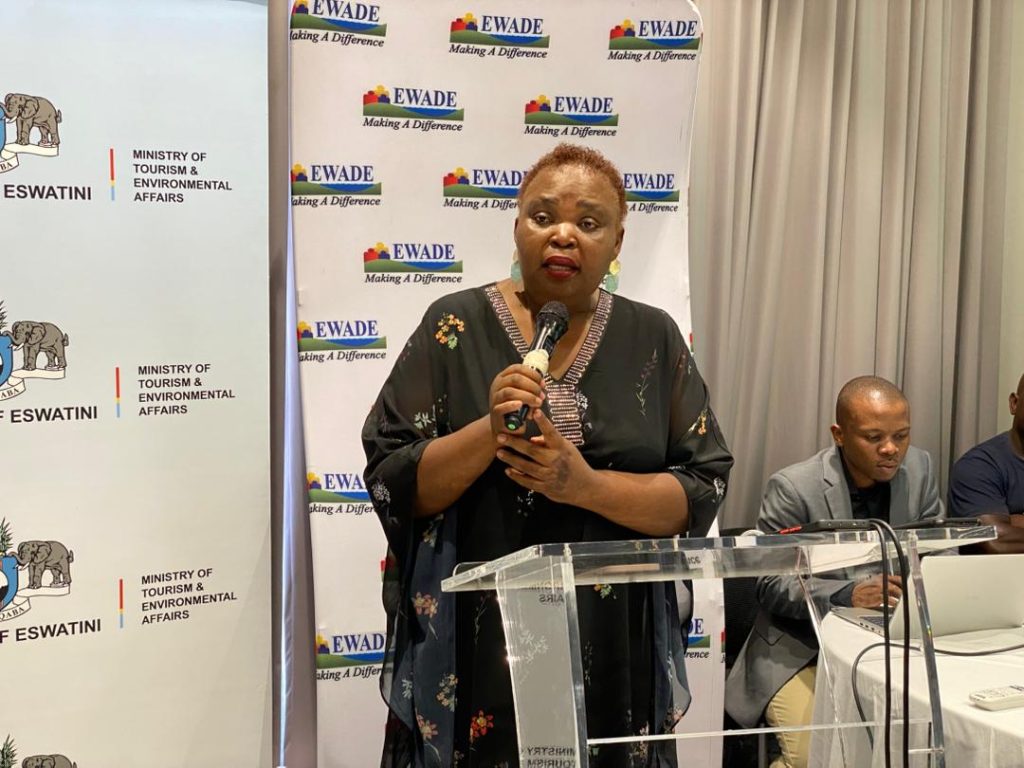
Acting Principal Secretary in the Ministry of Tourism and Environmental Affairs, Hlobisile Dlamini, said the MoU strengthens collaboration on climate change, meteorology, and environmental management, underscoring the strong link between climate systems and agricultural productivity.
Principal Secretary in the Ministry of Tinkhundla Administration and Development, Nonhlanhla Dlamini, welcomed the partnership, calling it a vital tool for promoting bottom-up development planning and enabling communities to identify and prioritize their own needs through Tinkhundla-level engagement.
Representing the Eswatini Environment Authority, Chief Financial Officer Thabiso Nzuza said the agreement underscores the need to ensure that agricultural development under SAPEMP is environmentally sustainable, climate-resilient, and socially inclusive. He stated that the partnership would promote compliance with environmental safeguards and support community-based natural resource management and green enterprises, particularly for youth and women.