
Eswatini has achieved approximately 67% household internet coverage as Government intensifies efforts to accelerate inclusive digital transformation and expand access to connectivity across the country.
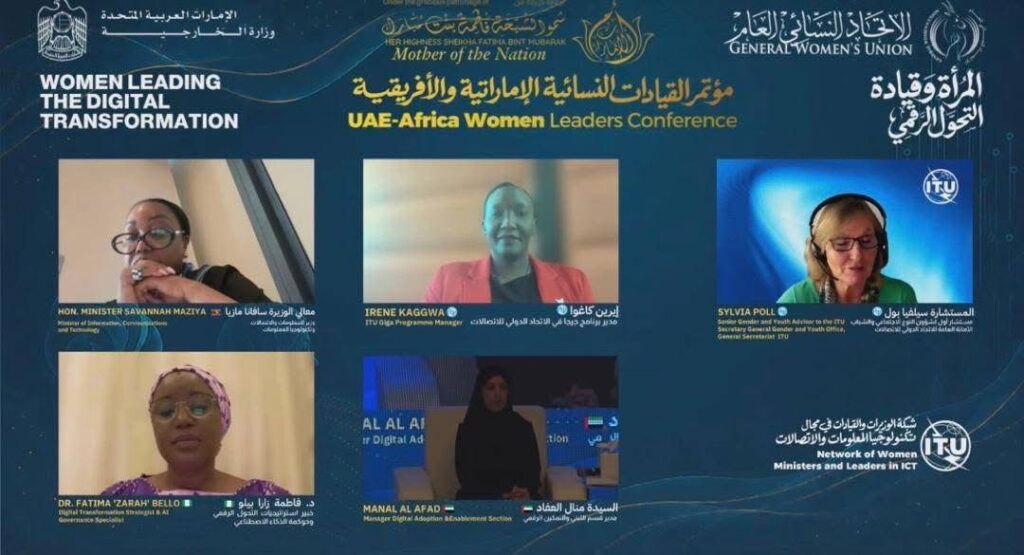
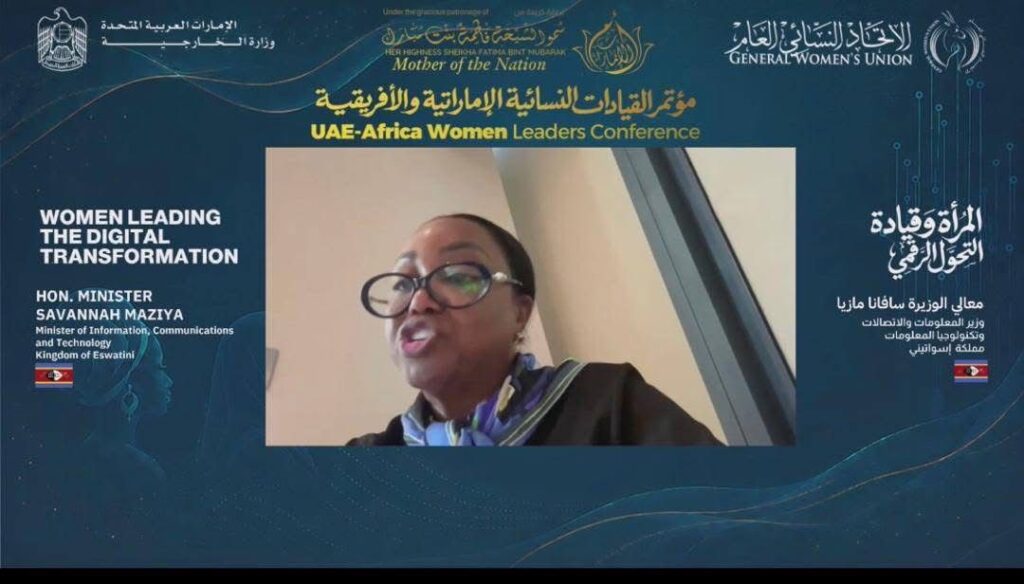
This was revealed by the Minister of Information, Communications and Technology, Savannah Maziya, during the UAE-Africa Women Leaders Conference, where she participated as a discussion leader on digital transformation.
According to Maziya, Eswatini’s internet coverage currently stands at approximately 70% in urban areas and 63% in rural communities, reflecting continued progress toward reducing the digital divide.
The Minister said Government’s digital transformation agenda is now increasingly focused not only on expanding infrastructure, but also on ensuring meaningful digital participation for all citizens.
“Eswatini recognises that digital transformation must be measured not only by connectivity statistics, but by the extent to which it improves the lives of people in underserved and marginalised communities, particularly women and girls in rural areas,” she said.
Maziya noted that through the Universal Access and Service Fund (UASF), Government has shifted emphasis toward affordability, accessibility, digital literacy, and inclusion.
Among the interventions currently underway are the expansion of digital skills programmes through community centres and libraries, establishment of community ICT hubs and rural public access centres, digital literacy programmes targeting women and girls, and the rollout of assistive technologies for persons with disabilities and vulnerable groups.
The Minister also highlighted the implementation of the Learning Passport Programme, which supports inclusive digital education and broader access to learning opportunities through technology.
Speaking during the discussions, Hon. Maziya emphasised that technology and innovation must directly improve the lives of citizens and create practical solutions to everyday challenges.
“Technology should not exist simply for digitisation’s sake. It must solve human problems, create convenience, dignity, and improve work-life balance. Digital transformation must ultimately serve humanity,” she said.