
By Ayanda Dlamini
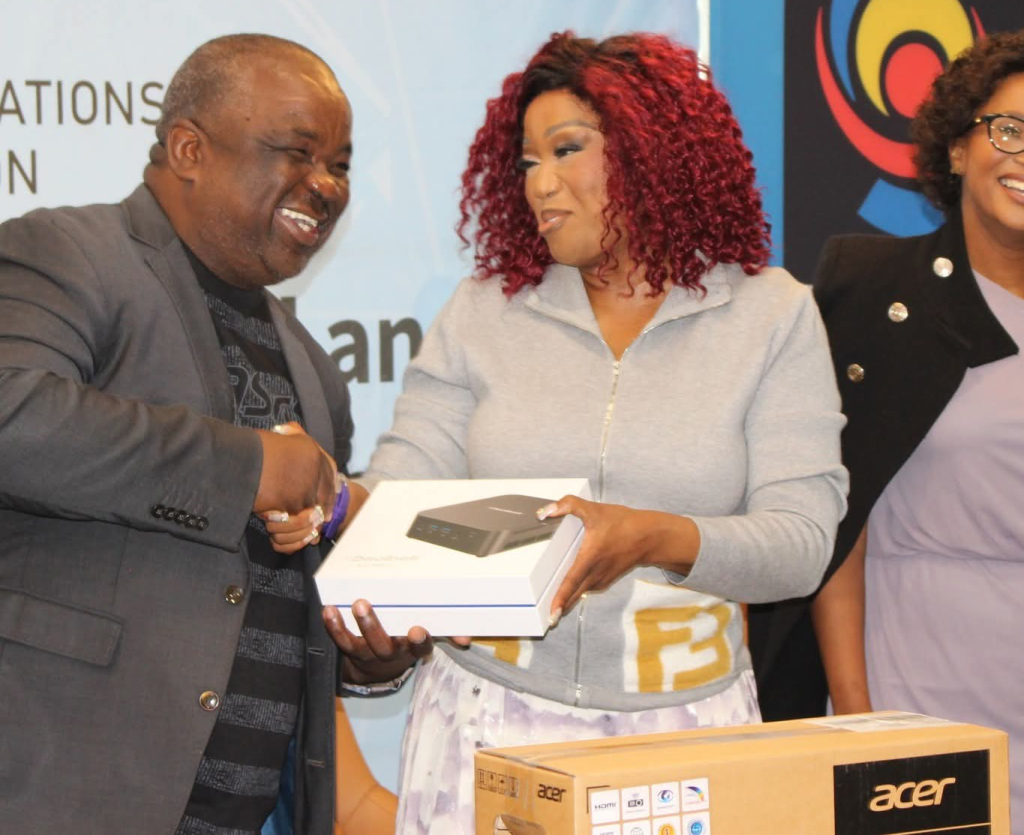
In a landmark display of national teamwork and shared goals, the Eswatini Communications Commission (ESCCOM), through the Universal Access and Service Fund (UASF), officially transferred a range of ICT equipment to the Ministry of Education and Training (MoET) in support of the Eswatini Learning Passport (ELP).
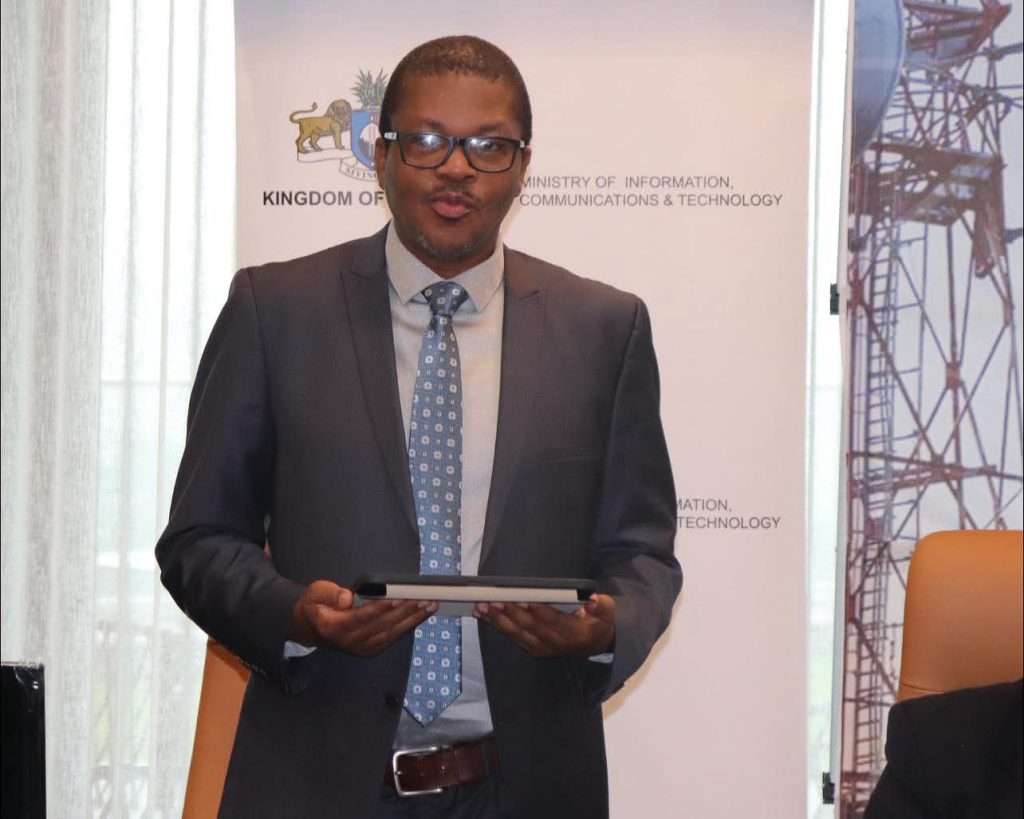
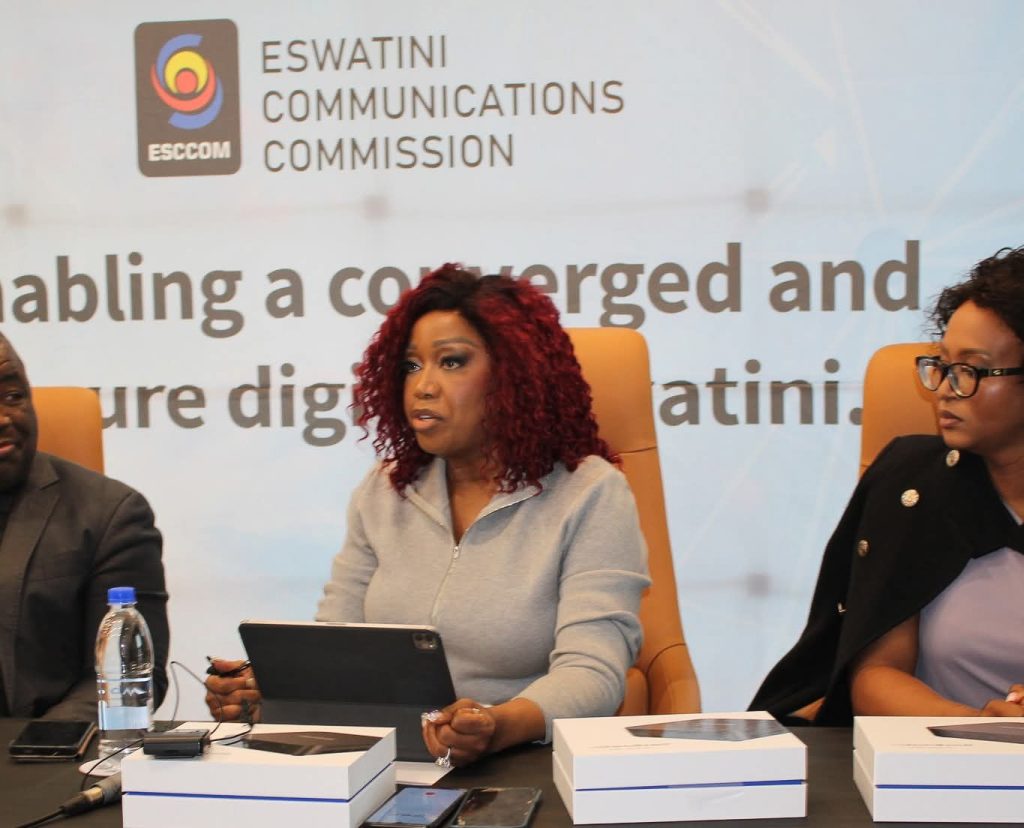
The handover ceremony, held at the ESCCOM Headquarters and attended by the Minister of ICT, Savannah Maziya, the Minister of Education, Owen Nxumalo, and other key digital development stakeholders, marked an important milestone in Eswatini’s ongoing pursuit of a modern, inclusive, and technology-driven education system.
Speaking during the handover, ESCCOM Chief Executive Mvilawephi Dlamini described the moment as more than just a ceremonial gesture. Instead, he said, it is “a celebration of partnership, vision, and the unwavering belief in the potential of every child in Eswatini.”
The equipment being handed over includes desktop computers, laptops, and projectors designed to enhance the National Curriculum Centre (NCC) as it spearheads the digitization of Eswatini’s national curriculum.
“These devices carry a purpose far greater than their physical form,” Dlamini said.
“They are tools of empowerment, tools that amplify the voices of teachers, strengthen the work of curriculum developers, and bring the Learning Passport to life in classrooms and communities.”
For ESCCOM and the UASF, the initiative reflects years of investment in digital transformation.
The Commission has already deployed mobile computer labs, each equipped with 45 laptops, to more than 20 secondary schools.
It has boosted connectivity for rural and underserved schools and embedded digital inclusion into the country’s regulatory and developmental agenda.
Driving a Nation Towards Digital Learning
The Eswatini Learning Passport, developed through a strategic partnership among the MoET, ESCCOM, and UNICEF, has quickly become a transformative national platform redefining how learners access, engage with, and benefit from the curriculum.
The initiative has already digitised the full senior secondary curriculum, uploaded content for the junior secondary phase, begun foundational work toward primary-level digitisation, and established specialised content development teams comprising practising teachers and curriculum experts.
Through these efforts, schools are increasingly being positioned as hubs for blended and remote learning, ensuring that digital access becomes a standard component of modern education.
With each new upload, Eswatini deliberately works to reduce the digital divide and ensure fair learning opportunities for all children.
Minister of ICT Savannah Maziya commended the progress, emphasizing that the Learning Passport demonstrates how “technology can advance curriculum reform, improve teaching and learning, and prepare young people for a world where digital skills are as fundamental as reading and writing.”
A Cross-Ministerial Commitment to Digital Transformation
Minister Maziya emphasized that her ministry’s mandate goes beyond expanding broadband and digital infrastructure to include ensuring that policy frameworks actively foster safe, equitable, and productive learning environments.
This involves expanding last-mile connectivity to reach rural and remote schools, working with operators to explore affordable access models and the zero-rating of educational resources, maintaining strong child online safety and data protection standards, and supporting offline or low-data alternatives for communities with limited connectivity. “Infrastructure alone does not transform education,” she noted.
Transformation happens when technology, curriculum, policy, and people unite with a common purpose.
The Minister praised ESCCOM for “putting learners at the center of Eswatini’s digital transformation agenda” and commended UNICEF for its ability to adapt global innovations to suit local needs and contexts.