

The Eswatini National Trade Facilitation Committee (NTFC) on Monday launched a two-week in-country workshop at the Eswatini Revenue Service (ERS) conference room to develop an Inter-Agency Cooperation Framework, a major step toward modernising the country’s borders and boosting trade efficiency.
The initiative, supported by the World Customs Organization (WCO) and funded by His Majesty’s Revenue & Customs (HMRC) of the United Kingdom, aims to strengthen Coordinated Border Management (CBM) and enhance Eswatini’s competitiveness in regional and international trade.
The workshop is part of the Accelerate Trade Facilitation Programme, directly implementing a key objective of the NTFC Roadmap (2023–2026). It also responds to recommendations from the Maersk consultancy report, which advised establishing a formal framework to harmonise border operations among agencies.
The NTFC, co-chaired by the Ministry of Commerce, Industry and Trade, the Commissioner General of the ERS, and the CEO of Business Eswatini (BE), opened the session with strong calls for collaboration between government and the private sector to drive this reform.
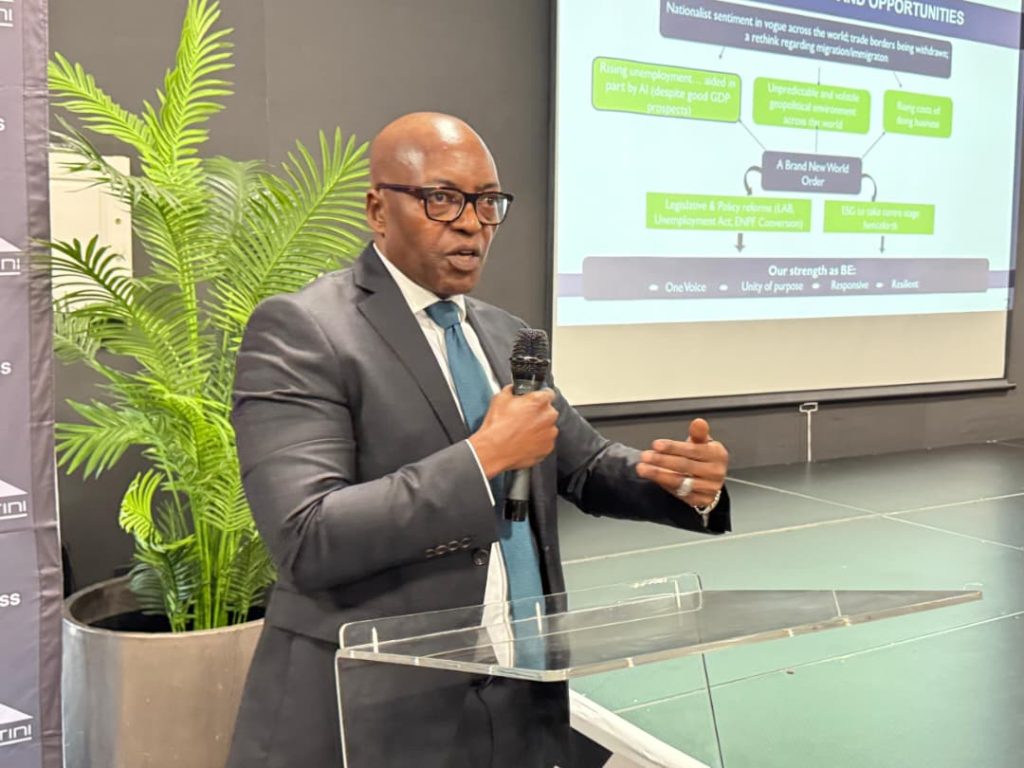
In his opening address, the CEO of BE, E.Nathi Dlamini, emphasised the tangible benefits for the private sector.
“For our traders, exporters, and importers, delays at the border are a direct tax on competitiveness,” he stated. “This initiative is about embedding the voice of business into the very DNA of our border management. The output of this workshop will be a standardised regulatory framework with clear Business Processes and Standard Operating Procedures, creating a predictable and efficient trading environment that drives investment and growth.”
The CEO also highlighted Eswatini’s proactive track record, noting, “The recommendations of the Bilateral Time Release Study with South Africa are already being implemented, affirming that while ‘Borders divide, Customs connects’.”
Gugu Mahlinza, Commissioner of Customs & Excise at ERS, welcomed the WCO experts and underscored the national importance of the mission. “The efficiency of our borders is a matter of national interest. This Framework is necessary to ensure our policies and practices are complementary, making it easy for compliant trade while safeguarding our nation,” she said.
The Commissioner explained that the framework would be part of a ‘whole-of-government’ approach, essential for initiatives like the Authorised Economic Operator programme and a nationwide risk management strategy. “We are fully committed to putting this Framework into practice. We will monitor results through disciplined project management, ensuring accountability and delivery on every commitment,” she added.
The intensive workshop will focus on two core deliverables:
Business Process Modelling (BPM): Mapping and re-engineering existing border procedures to eliminate redundancies and bottlenecks.
Inter-Agency Standard Regulation: Creating a unified framework that harmonises how all regulatory agencies operate at the border.
This work, aligned with Article 8 of the WTO Trade Facilitation Agreement, is expected to directly impact and improve the clearance process, risk management, data exchange, and border infrastructure planning.
The active leadership of BE in this critical national project signals a new era for public-private collaboration. By institutionalising coordination, Eswatini is not just simplifying trade processes but strategically positioning itself as a gateway for trade and development in the region.