
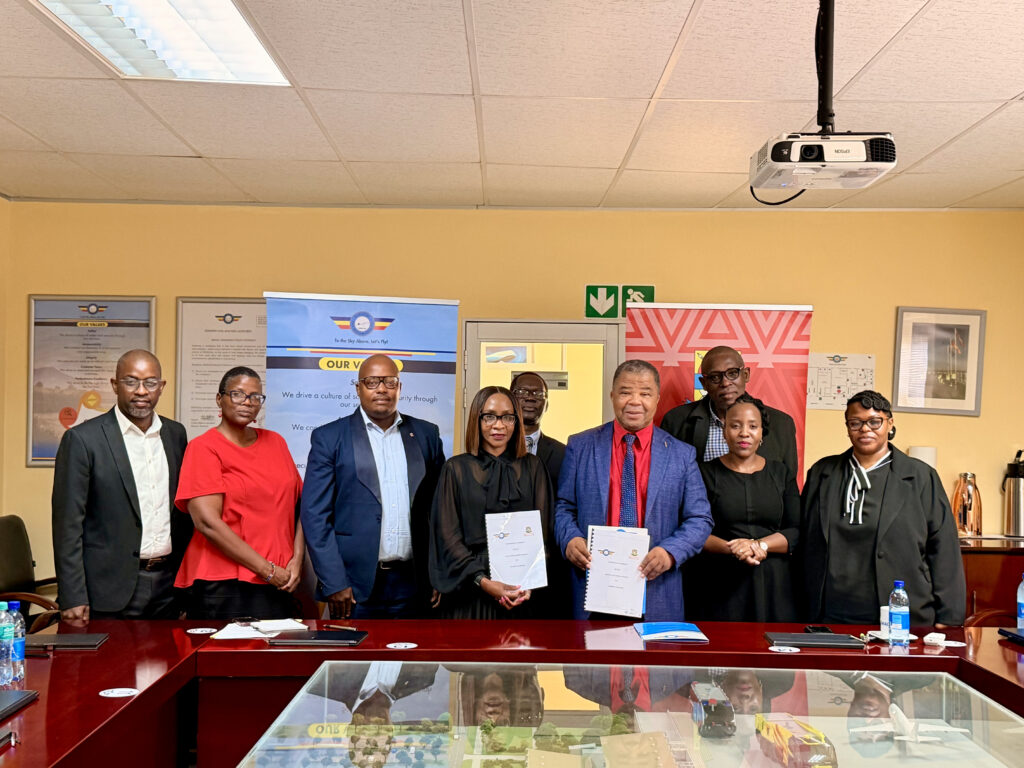
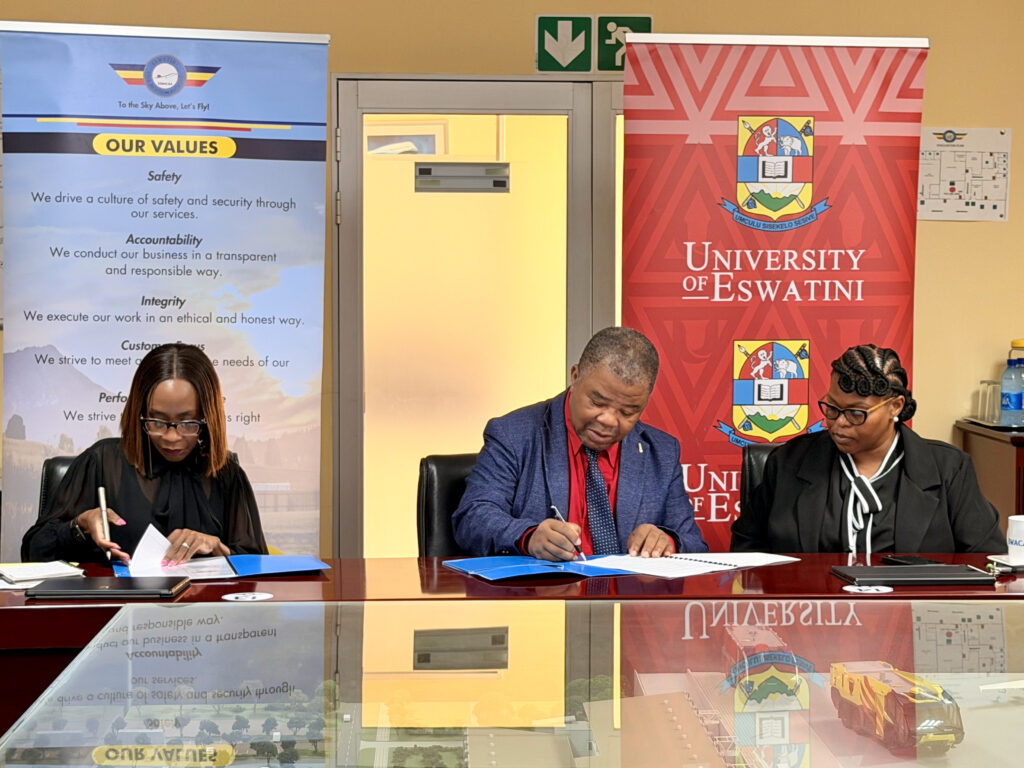
Eswatini Civil Aviation Authority (ESWACAA) has taken a decisive step toward strengthening the country’s aviation ecosystem through a landmark Memorandum of Understanding (MoU) with the University of Eswatini.
More than a symbolic partnership, the agreement signals a deliberate shift toward building a sustainable talent pipeline that aligns academic training with industry demands.
At its core, the collaboration addresses a critical challenge facing many developing aviation markets: the gap between technical expertise and leadership capability. As the authority responsible for airport operations, air navigation services, and regulatory oversight, ESWACAA operates in an increasingly complex global environment where agility, innovation, and strategic foresight are essential. This partnership positions the organisation to proactively develop these competencies from within.
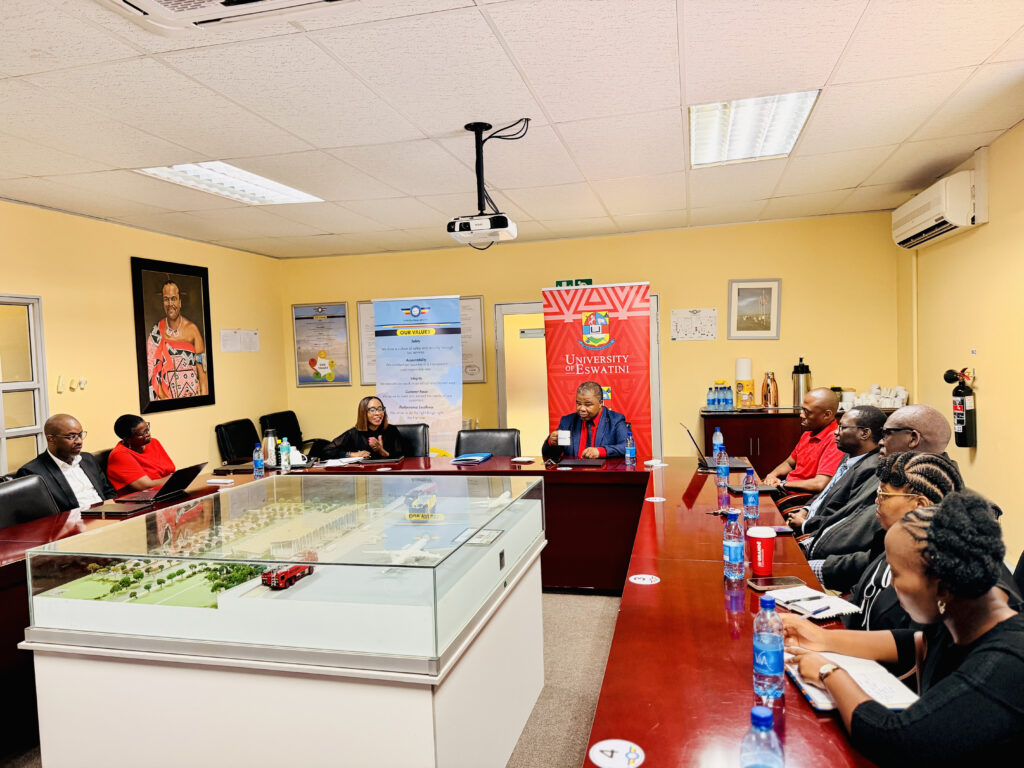
Central to the MoU is a tailored Management Development Programme designed specifically for ESWACAA employees. The programme will focus on leadership development, governance, financial management, and strategic decision-making. These areas are vital for institutional resilience and long-term growth. By embedding these skills within its workforce, ESWACAA is not only enhancing operational efficiency but also strengthening its capacity to respond to evolving global aviation standards.
A standout feature of the programme is the integration of generative artificial intelligence training, reflecting a forward-looking approach to workforce development. As AI continues to reshape industries worldwide, its inclusion highlights a shared commitment by both institutions to future-proof skills and ensure that Eswatini’s aviation sector remains competitive. The blending of digital competencies with traditional management training marks a progressive shift in how capacity building is approached in the country.
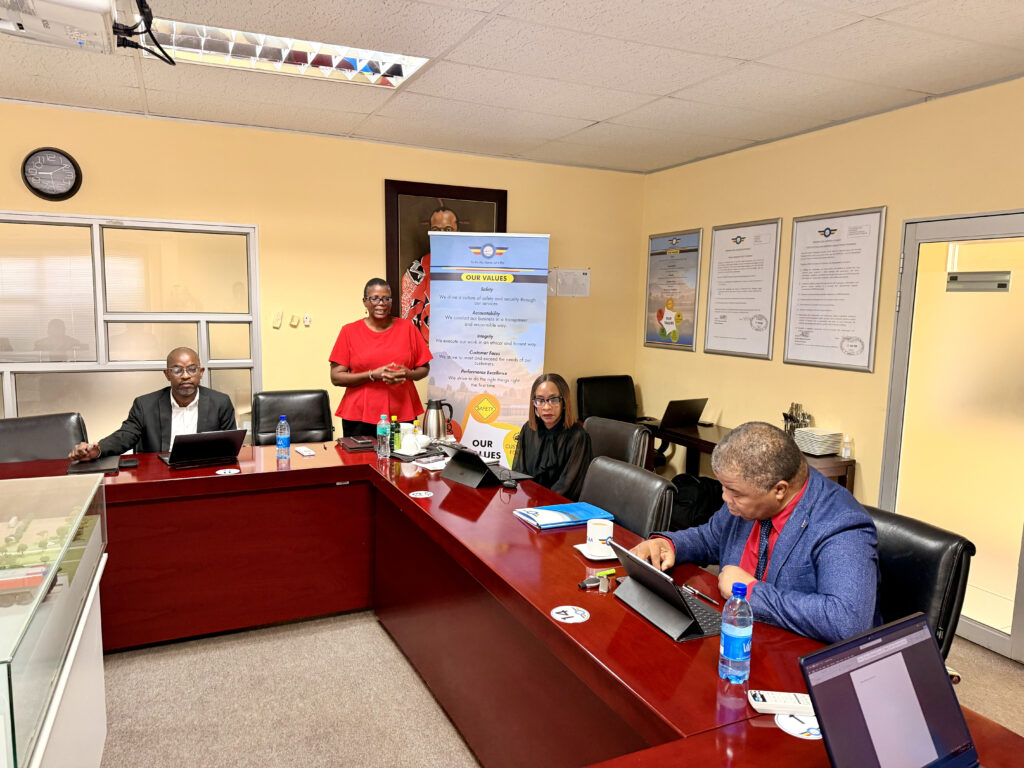
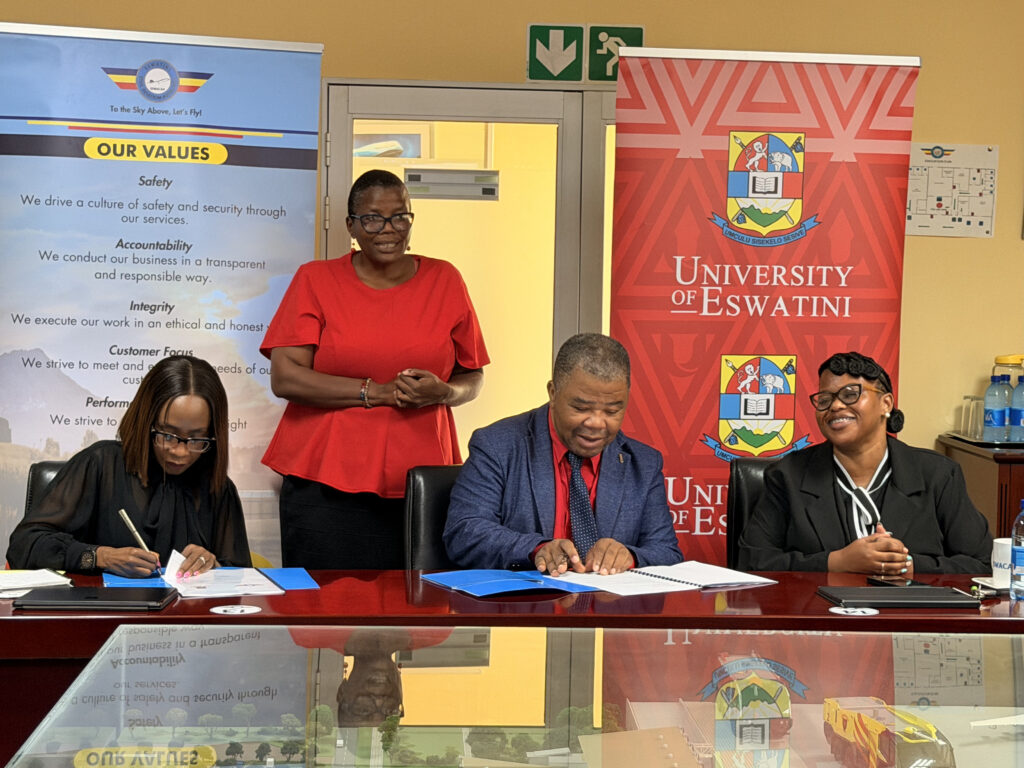
Speaking at the signing ceremony, ESWACAA Director General Andile Mtetwa-Amaeshi emphasized the strategic importance of such collaborations. She noted that the partnership is designed to ensure training programmes are both relevant and impactful, bridging the gap between theory and real-world application.
From the academic perspective, UNESWA Vice Chancellor Justice Thwala highlighted that the MoU extends beyond professional development. It opens doors for broader innovation, including potential collaboration on the university’s planned drone academy. With ESWACAA’s regulatory expertise, such initiatives could position Eswatini as a regional player in emerging aviation technologies.
Ultimately, this agreement reflects a shared vision of transformation and national development. By aligning education with industry needs, ESWACAA and UNESWA are laying the groundwork for a more resilient, innovative, and future-ready aviation sector, one that not only meets today’s demands but is equipped to lead tomorrow’s opportunities.