
By Ayanda Dlamini
The Eswatini Communications Commission (ESCCOM) has officially opened applications for new broadcasting licenses, signalling a transformative moment for the country’s media sector.
The announcement was made at a press conference held at ESCCOM’s headquarters in Ezulwini, where the Commission issued Invitations to Apply (ITAs) for both commercial and community television and radio broadcasting licenses.
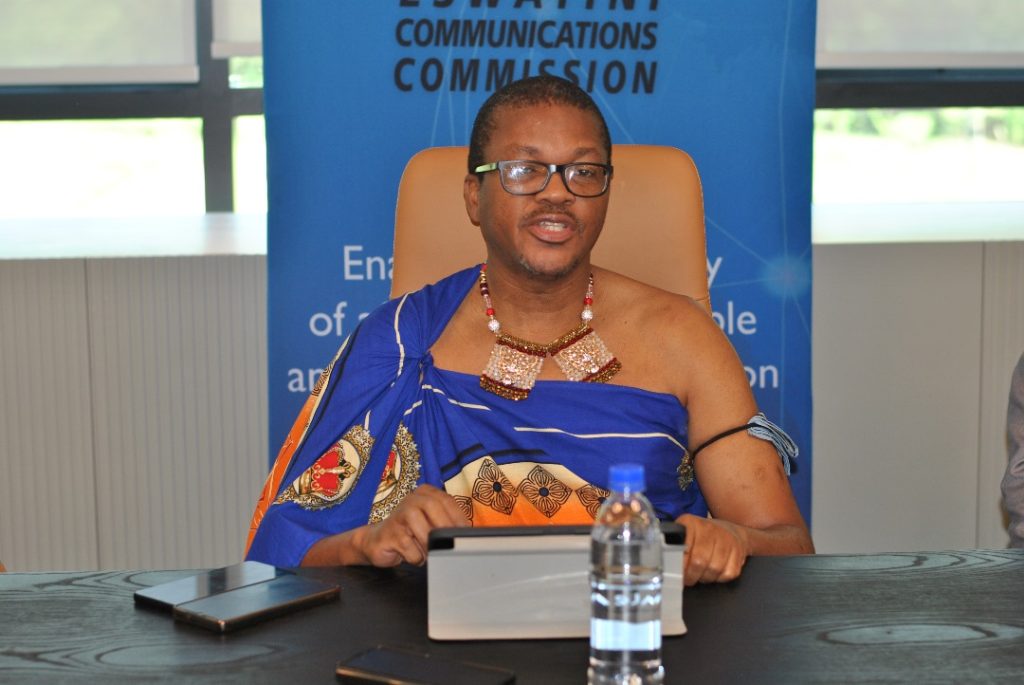
Speaking during the launch, ESCCOM Chief Executive Mvilawemphi Dlamini called the development a milestone not only for the regulator but also for the entire nation. He highlighted that the ITAs mark a new chapter for Eswatini, one that broadens opportunity, deepens diversity, and boosts local storytelling.
“Today, we come together to mark a significant moment in Eswatini’s history, a time of opportunity, growth, and vision. This goes beyond a regulatory announcement. It signals the start of a new chapter, where more voices will be heard, new storytellers will emerge, and Eswatini’s creativity will shine brighter than ever before,” Dlamini noted.
Dlamini noted that since the passage of the Eswatini Broadcasting Act of 2023, the Commission has worked with determination and purpose to develop the frameworks and regulations necessary to enable the licensing process.
He said the newly published licenses have been designed with a clear goal: to create a modern, diverse, and dynamic broadcasting environment that reflects the identity and aspirations of the Swazi nation. “These licences are an invitation; an invitation to dream bigger, to innovate, to build, and to serve,” he continued.
“They open doors for new content creators, producers, engineers, journalists, and visionaries. They offer opportunities for new jobs, new ideas, and new voices to emerge.”
Dlamini encouraged aspiring broadcasters to seize the moment, noting that the development has the potential to reshape the country’s media ecosystem for generations to come.
“To all potential applicants: this is your moment. Step forward with courage and conviction. Prepare your applications with care and ambition. The future of Eswatini’s media will be shaped by those who dare to take this step.”
Seven New Licences to Be Issued
Providing technical clarity, ESCCOM’s Director of Technical Services, Thulane Fakudze, outlined the licence categories and the legislative provisions guiding the process. The ITAs are issued under Section 11(1) (e) of the Electronic Communications Act, 2013, and Section 28 of the Broadcasting Act, 2023, giving ESCCOM the authority to invite and process applications.
Fakudze confirmed that a total of seven broadcasting licenses will be issued under the newly issued ITAs, marking one of the most significant expansions of Eswatini’s media sector to date. These include two television licenses —one for Commercial TV and one for Community TV —and five radio licenses—one for Commercial Radio and four for Community Radio.

He emphasized that this carefully structured distribution is designed to balance commercial growth with community empowerment, ensuring that both national broadcasters and grassroots voices gain meaningful access to the airwaves.
He stressed that this allocation represents a “lifetime opportunity” for Eswatini’s creative sector, particularly those aspiring to establish new broadcast platforms. The deadline for submission of applications is 27 January 2026, while the issuance of licences to successful applicants is scheduled for 21 April 2026.
Fakudze further revealed the licence fees applicable to each category:
• Commercial Television: E25,000
• Commercial Radio: E5,000
• Community Television: E5,000
• Community Radio: E1,500
Commitment to transparency and public good
Meanwhile, the CE assured the public that ESCCOM will handle the licensing process with the highest standards of transparency and integrity. He emphasized that broadcasting bears a national responsibility, serving as a tool for unity, education, and cultural preservation.
“Broadcasting is more than communication; it is a powerful force for unity, education, and national pride,” he said. “We therefore seek partners who will honour this responsibility with integrity, creativity, and a commitment to the public good.”
He also expressed gratitude to the government, industry stakeholders, media practitioners, and the public for their support. “Let us embrace this moment as a national opportunity, a chance to reimagine and rebuild the future of broadcasting in Eswatini.”


Current Broadcasting Landscape
To date, ESCCOM has issued licences to only five institutions in the country:
• Eswatini Broadcasting & Information Services (EBIS)
• Eswatini Television Authority (ESTVA)
• Channel Yemaswati TV Investments (Pty) Ltd
• Voice of the Church
• University of Eswatini (UNESWA FM)
The upcoming licensing window is expected to expand participation and boost diversity in the sector significantly.
As Eswatini enters a new era of media growth, the Commission’s message is clear: the future of broadcasting is open, and the country is prepared to embrace new voices, visions, and ideas.