
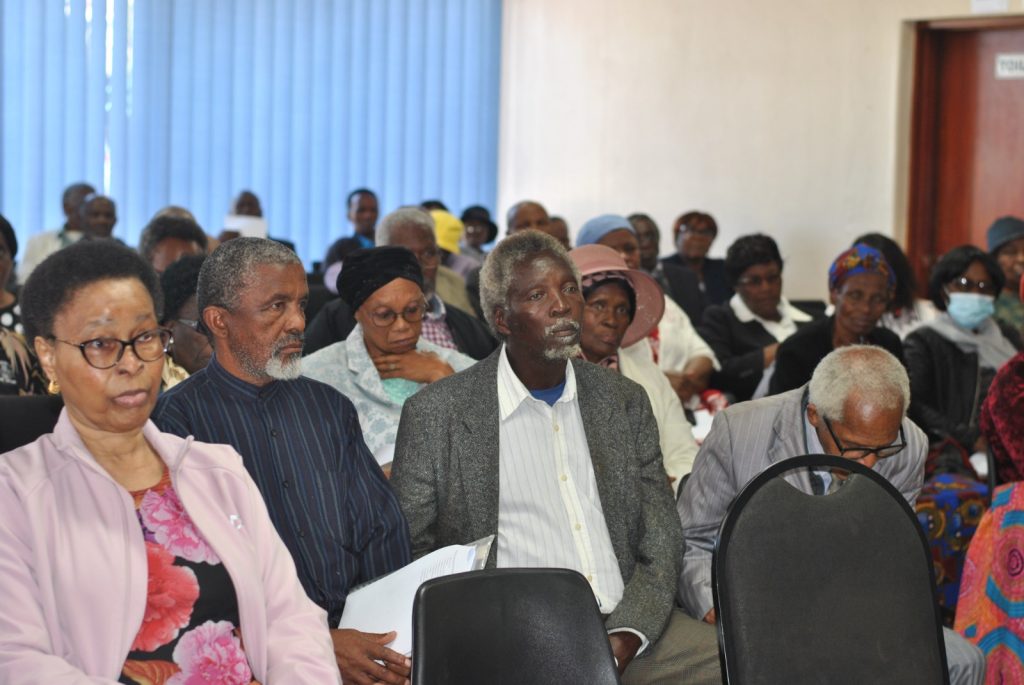
In a proactive effort to protect senior citizens from rising cyber threats, the Eswatini Communications Commission (ESCCOM) today conducted a Cybersecurity Awareness Session for members of the Swaziland Public Service Pensioners Association (PSPA), Mbabane branch
The session formed part of the national Cybersecurity Awareness Month campaign themed “Secure Eswatini. Stay Safe Online. Asichumane Siphephile,” which seeks to educate emaSwati on safe online practices and foster a culture of digital security across all generations.
The awareness session was facilitated by ESCCOM’s Assistant Director of Cybersecurity, Nokuthula Hlophe, who delivered an insightful presentation highlighting the most common online threats targeting pensioners, including phishing, impersonation scams, and identity theft.
Hlophe noted that pensioners are often targeted by scammers due to perceived vulnerability and lack of technical knowledge.

“Cybersecurity is everyone’s responsibility. As more services move online, pensioners become frequent targets for fraudsters posing as banks, relatives, or government agencies,” said Hlophe. “We want our elderly citizens to feel confident and safe as they navigate the digital world, whether they are using mobile banking, social media, or messaging apps.”
Hlophe’s presentation introduced the basics of cybersecurity and digital hygiene, covering topics such as creating strong passwords, enabling multi-factor authentication, updating software, and identifying suspicious messages or websites. She also emphasized the importance of reporting cyber incidents to the National Cybersecurity Incident Response Team (NCSIRT) via nscirt.org.sz, 116, or 999.
The awareness drive comes at a time when cybercrimes such as impersonation, financial scams, and data theft are becoming increasingly common. Hlophe went on to educate the senior citizens about the Computer Crime and Cybercrime Act of 2022.
Under this act, offences such as illegal access, harassment via electronic communication, and identity-related crimes carry penalties of up to E1 million or 10 years imprisonment, depending on the severity.
“The elderly are often trusting and unfamiliar with the tricks cybercriminals use,” Hlophe noted. “By learning to question suspicious requests, verify calls, and protect personal information, pensioners can become their own first line of defence.”
The session also encouraged pensioners to take advantage of official platforms for verifying digital information, such as checking the numbers registered under their identity using MTN’s 1212# and Eswatini Mobile’s *252# service, and to avoid downloading apps or clicking links from untrusted sources.

Beyond awareness, the event underscored the government’s commitment to building a secure and inclusive digital society, ensuring that vulnerable groups are not left behind in Eswatini’s digital transformation journey.
Speaking at the same event, Minister of Information, Communications and Technology (ICT), Savannah Maziya, reaffirmed the government’s dedication to ensuring that all emaSwati, including the elderly, benefit from digital inclusion initiatives.
“We want to ensure that our policies and laws protect citizens while attracting both local and international investors,” said Maziya. “It is our responsibility to continuously educate the public, especially senior citizens, on how to protect their personal information online because cybercriminals are becoming more sophisticated every day.”
The Minister further emphasized the need for personal responsibility in protecting digital identities. “Do not share your private information with anyone. Always verify before you act. Cybersecurity is a shared responsibility, and we must all take part in keeping our country safe online,” she said.