



By Tlalane Dlamini
The opening day of the 10th Eswatini Customer Experience Conference commenced with great momentum, setting an inspiring and strategic tone for this milestone edition. The event convened influential leaders from the public and private sectors, including business executives, policymakers, and technology experts, to explore how Eswatini can accelerate a customer-first transformation across industries.
Organized by the Eswatini Customer Experience Practitioners (ECxP) under the theme “Mission Possible: Customer Experience Evolution,” the two-day conference celebrates a decade of advancing excellence in customer engagement, institutional performance, and service delivery innovation.
Day 1 underscored the shared belief that customer experience (CX) is a central pillar of national development and business sustainability. Presentations and panel discussions throughout the day examined how leadership, innovation, and organizational culture must intersect to redefine service standards in both government and corporate institutions.
Nomahlubi Matiwane: Building a Culture of Care through the “Blue Culture”

The conference spotlighted transformative leadership in service delivery through an insightful presentation by Nomahlubi Matiwane, Director: Business Enablement and Corporate Affairs at the Eswatini Water Services Corporation (EWSC). Her presentation, titled “Blue Culture: Embedding Customer Centricity into Organizational DNA,” showcased how EWSC has successfully aligned its internal culture with service excellence.
Matiwane described the “Blue Culture” as more than a corporate initiative; it is a living philosophy that integrates customer centricity into the daily fabric of the organization. “At EWSC, we believe customer experience is not a campaign, it is our way of working,” she emphasized.
She elaborated that the initiative empowers employees to become ambassadors of care, consistency, and accountability. “When staff members feel valued and inspired, they deliver that same energy to the customer,” she added.
Through this internal transformation, EWSC has recorded measurable improvements in customer satisfaction, operational efficiency, and employee engagement. Matiwane attributed this success to transparent communication, strong accountability mechanisms, and leadership that models the values it expects from employees.
She concluded by stressing that customer-centricity must be both strategic and sustainable. “True transformation happens when we design our organizations to align employee engagement, technological innovation, and accountability to both customers and the environment,” she stated.
Her remarks received strong engagement from delegates, who commended EWSC for demonstrating how a deeply rooted culture can become a competitive advantage and a catalyst for organizational excellence.
Vusi Matsebula: Transparency and Service Quality as Catalysts for National Growth
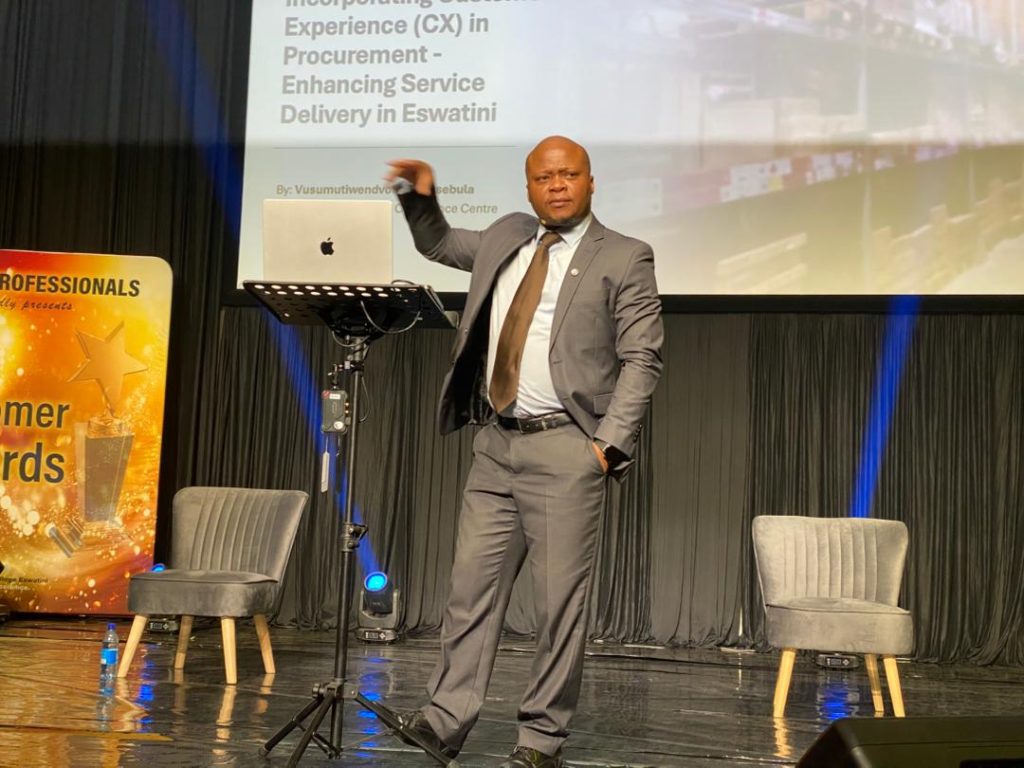
The focus then shifted to public sector transformation, with a presentation by Mr. Vusi Matsebula, Chief Executive Officer of the Eswatini Public Procurement Regulatory Agency (ESPPRA). His address underscored how transparency and value for money in public procurement directly influence customer trust, institutional integrity, and national development outcomes.
Matsebula noted that customer experience in the public sector is shaped by citizens’ perceptions of fairness, efficiency, and accountability within government systems. “Every interaction with a public service institution shapes citizens’ trust in government,” he said.
He highlighted ESPPRA’s continued commitment to enhancing transparency and competitiveness in procurement processes, ensuring that public resources are used efficiently to deliver high-impact services.
“We aim to create a procurement environment that is transparent, competitive, and customer-focused. This not only supports good governance but also strengthens confidence among suppliers, investors, and citizens alike,” he explained.
Matsebula further emphasized that service quality within public institutions cannot be detached from customer satisfaction. “Transparency is the foundation of trust and trust is the currency of good governance,” he concluded.
His message reinforced the vital role of institutional integrity in shaping positive citizen experiences and in building a responsive, accountable public sector that delivers meaningful outcomes.
Sibusiso Mngadi: Artificial Intelligence as a Strategic Partner
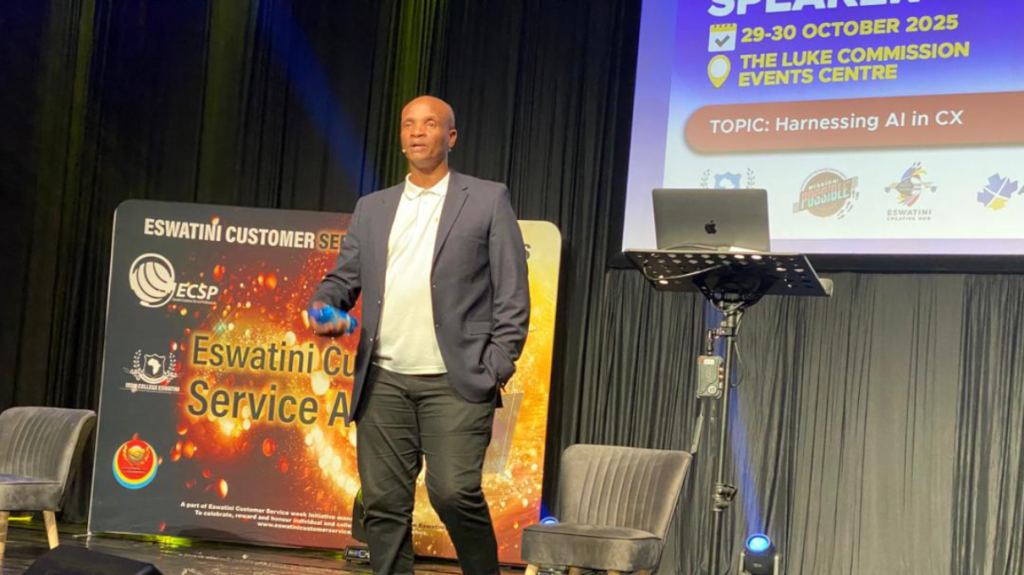
Concluding the technical sessions for Day 1, Mr. Sibusiso Mngadi, Chief Executive Officer of Stratcom, delivered a thought-provoking presentation on the role of Artificial Intelligence (AI) in shaping the future of customer experience management.
Mngadi framed AI not as a replacement for human capability but as a strategic partner that enhances productivity, decision-making, and innovation.
“From sentiment analysis to content automation, AI is helping organizations simplify complex tasks and make smarter, faster decisions,” he explained.
He demonstrated how AI-driven insights can enable businesses to anticipate customer needs, personalise services, and continuously improve their operations. “AI ensures that organisations remain responsive, efficient, and innovative, even in the face of changing customer expectations,” Mngadi noted.
His address generated robust discussion on how Eswatini’s institutions can leverage emerging technologies to bridge efficiency gaps, strengthen competitiveness, and deliver data-driven solutions that enhance the overall customer journey.