

The Central Bank of Eswatini, acting on behalf of the Government of the Kingdom of Eswatini, has officially opened the doors for investors to participate in a major new government bond issuance totalling 350 million Emalangeni. The auction, scheduled for May 27, 2026, features a diverse lineup of five fixed-coupon bonds ranging from short-term notes to a long-term fifteen-year infrastructure-style bond. Yielding up to 12.25%, the issuance is strategically designed to meet national budgetary requirements, facilitate robust domestic financial intermediation, and deepen liquidity in the local secondary markets.
According to the Central Bank, this coordinated issuance serves a vital dual purpose. Beyond securing necessary fiscal funding for state projects, the auction aims to establish a fair market price that effectively compensates both the borrower and investors for interest rate risks. The institution hopes to stimulate active secondary market trading on the Eswatini Stock Exchange under its five billion Emalangeni Note Programme of 2021. A key feature of this tender is the greenshoe overallotment option, meaning the government reserves the right to allocate an additional amount of up to 100% of the initial offer on each bond, potentially doubling the total capital raised if institutional demand proves strong.
The issue splits the 350 million Emalangeni across five distinct maturities, allowing retail, corporate, and institutional investors to align their portfolios according to preferred time horizons. The SG144 tranche offers a 10.00% coupon maturing on March 31, 2029, while the SG145 tranche offers 10.25% maturing on March 31, 2031. For longer horizons, the SG146 tranche stands at 10.50% maturing on March 31, 2033, and the SG147 tranche offers 11.00% maturing on March 31, 2036. The longest paper on offer is the SG150 tranche, which boasts a 12.25% coupon maturing on June 1, 2041. Interest payments will be distributed semi-annually on March 31 and September 30 for the first four bonds, while the SG150 bond will pay interest on June 1 and December 1 of each year using an actual/365 day count convention. In an attractive move for income-focused investors, the Central Bank has confirmed that interest income from these bonds is not subject to any withholding tax.
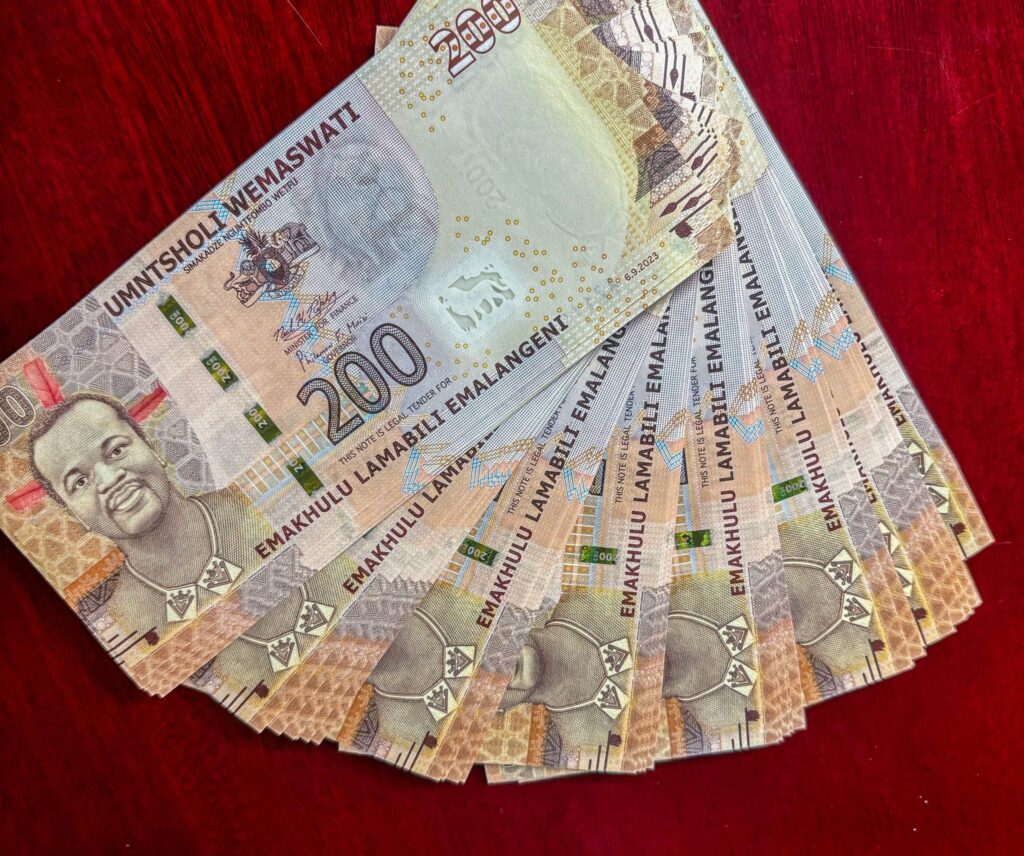
The Central Bank will utilize a competitive multiple-bid auction model where the local currency, the Eswatini Lilangeni, will be used. The auction is fully digital and paperless, managed through the Central Securities Depository System. While the auction is open to the general public, including individual savers, corporate entities, and institutional asset managers, all investors must submit their application forms through their designated Primary Dealers, which comprise the four local commercial banks in Eswatini. Investors are urged to submit their paperwork early to ensure all bids are captured on the system before the hard cutoff time of 10:00 AM on Wednesday, May 27, 2026.
The financial entry points have been structured to accommodate different tiers of market participants. Individual non-competitive bidders can enter the auction with an accessible minimum bid size of 10,000 Emalangeni, whereas institutional direct bidders face a minimum threshold of five million Emalangeni. For all participants, the yield to maturity must be quoted in multiples of 0.005%. Following the auction, successful bidders must prepare for a settlement date on June 1, 2026. Secondary market trading in multiples of 10,000 Emalangeni is scheduled to commence shortly after on Monday, June 8, 2026. The Central Bank has issued a strict penalty clause for settlement failures, noting that successful bidders who fail to honour their financial obligations on time will face immediate disqualification from participating in the subsequent government bond auction.
Auction results will be published on the Central Bank of Eswatini website immediately following the conclusion of the bidding process. For application forms, interested parties should contact their respective commercial banks. For technical, compliance, or deeper bidding inquiries, investors are invited to contact the Central Bank’s Financial Markets Department directly via their official telephone lines, mobile channel, or through their dedicated domestic markets email address.