

In a clear endorsement of the Kingdom’s economic trajectory, Paul Kenward, CEO of Associated British Foods (ABF) Sugar, has lauded Eswatini as a premier destination for global capital. Kenward emphasized that the nation’s enduring political stability and its commitment to fostering strategic public-private partnerships have created a highly attractive environment for large-scale, long-term investments.
The CEO’s remarks coincide with ABF Sugar’s record-breaking E2.3 billion pledge to expand its Eswatini operations through Ubombo Sugar Limited at the Eswatini Investment Conference 2025. This capital injection is a direct response to the Kingdom’s business-first approach, which Kenward noted provides the predictability necessary for multinational corporations to commit significant resources. This investment is split into two pillars: E1 billion to increase the factory’s sugar production capacity and E1.3 billion for a state-of-the-art cogeneration power plant.
As a major London-listed entity with the ability to deploy investment anywhere in the world, ABF has chosen to anchor significant operations in the region, a decision the CEO attributes to a strategically sound environment and a leadership team that inspires trust and respect. “This is a great country as an investment destination,” said Kenward in the interview at Ubombo Sugar Limited offices in Big Bend on Tuesday.
The CEO pointed to the country’s unique blend of traditional stability and modern macroeconomic management as a key differentiator. “I think the monarchy provides stability and I can see that the country feels settled,” he noted. “I think the government that His Majesty has put together has created real wealth and stability for the people.” This sentiment is backed by hard data. Kenward specifically cited Eswatini’s strong macroeconomic indicators, saying, “The country is doing well as you see in the macroeconomic indicators, you see good economic growth, you see low inflation, you see low debt as a proportion of GDP. It feels like a well-governed country from a macroeconomic perspective.”
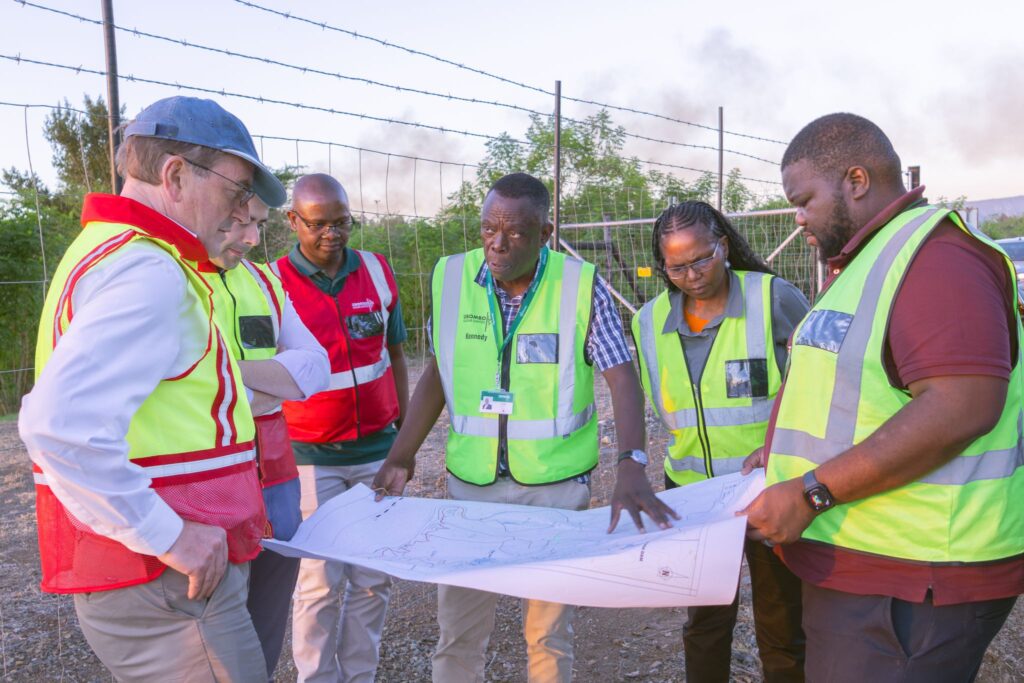
A cornerstone of this success is the seamless partnership between the private sector and the state. With Tibiyo Taka Ngwane (TTN) holding a 40% stake in Ubombo Sugar Limited alongside ABF’s 60%, the relationship is one of shared goals and mutual listening. The CEO described a high level of access to key decision-makers, including the Prime Minister and various cabinet ministers, stating, “It’s great to be able to have that access and people really listen to us. I think the government sees us as a partner and we see the government as a partner.”
This partnership is yielding tangible results, most notably in the energy sector as Ubombo Sugar Limited is developing a landmark E1.5 billion (~USD 88.2 million) biomass cogeneration project in Nkilongo, Eswatini, featuring a new 40-megawatt (MW) power plant to supply renewable energy to the national grid. This facility is designed to convert cane fiber into renewable energy, more than doubling Ubombo’s supply to the national grid from 17MW to 40MW, a move that directly supports Eswatini’s goal of energy self-sufficiency by 2028. “That’s a great example of where we work with government to put together a power purchase agreement, to sign contracts which are good for the country, good for the government and good for the business.”
The new power project at is set to make the country less dependent on patchy regional power imports while utilizing a green source from sugarcane. “The power project is a very obvious one, where I think we’re doing something which will be a profitable enterprise for Ubombo Sugar, but will also mean that the country is less dependent on power inputs. That has to be good for the country.” he said. “It means you need less forex, it means that you’re less dependent on other countries’ power generation capacity.”
The CEO also lauded the Minister of Commerce, Industry and Trade Manqoba Khumalo, saying, “The minister helps us think through issues on trade.”

“So the fact that Minister Khumalo went to organize a conversation with the South African Minister for Trade to look at how they were enforcing the dollar-based reference price in South Africa, which effectively sets the price that we get here in Eswatini, that’s a fantastically powerful thing that the government can do,” said Kenward. “The fact that MK is leading discussions in the US and the EU to get further TRQs for our tariff-free exports from Eswatini, that’s hugely powerful for us, that will be a real help to our revenue line. And then, I think, providing the basic services that any state needs to provide, so law and order, making sure that we have educated people that we can hire.”
Furthermore, government has been proactive on the diplomatic front, making representations within SACU to speed up trade decisions and working to capitalize on Eswatini’s 16,500-tonne tariff-free quota in the US market. “President Trump sees the kingdom as an ally,” the CEO declared. “I think that has taken really careful positioning and I think the government is trying to capitalize on that and we really hope that they’re able to extend that tariff-free quota. That would create real commercial opportunities for the sugar industry which will flow into more profits for TTN, through dividends and more tax. There are opportunities for us to do more by growing more sugar, by paying more money to our growers locally.”
However, according to Kenward, the true measure of success is found in the improved living standards of ordinary citizens. “I’m really inspired and a little humbled by the impact that you can see where LUSIP I and LUSIP II have brought water. You see, and you’ve seen it, big pivots.”
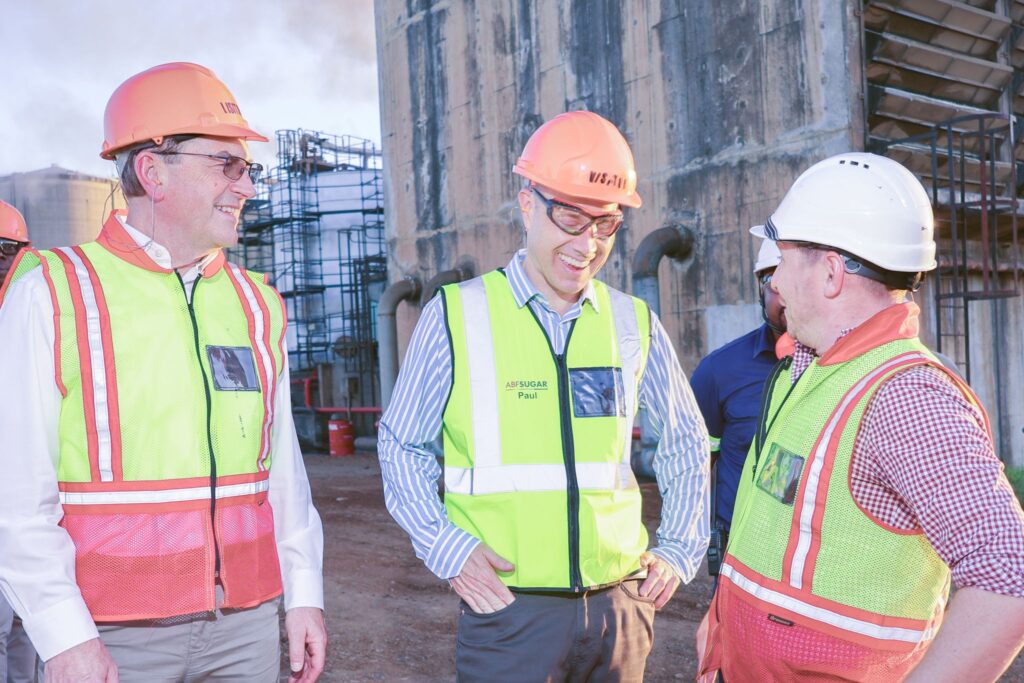
The impact of these investments is perhaps most visible in the rural heartlands. The CEO remarked on the transformative power of irrigation projects like Lower Usuthu Small-holder Irrigation Project (LUSIP), which have turned barren land into lush fields of sugarcane, bananas, and maize. Ubombo Sugar Limited (USL) operates as a primary commercial partner to the Eswatini Water and Agricultural Development Enterprise (EWADE) in both phases of the Lower Usuthu Smallholder Irrigation Project (LUSIP). This partnership is designed to transform subsistence land into a commercially viable sugar-growing region by integrating rural smallholders into the formal economy.
USL manages the actual establishment of sugarcane on targeted hectares and provides the technical expertise required for smallholder farmer companies to produce at a commercial scale. “You see plants growing where there weren’t plants before. So you see the agriculture come through and it’s not just sugarcane. You see bananas, you see maize, you see all sorts of crops,” he pointed out. “You go from very poor standard housing to new houses with satellite dishes on the roofs and electricity… really attractive homes and this has happened over 2 years.”
Kenward further noted how the country’s model of sharing rewards among small growers and families is working effectively. “So I think the model that the country has adopted where the benefits of that irrigation get shared amongst small growers, where families and chiefs decide how to allocate those rewards with people as well, really well. I think we’re always aware a sugar company should make a profit. A profit is not a bad thing, but we need a licence to operate.”
As one of Eswatini’s top two taxpayers and a major source of export revenue, ABF Sugar remains committed to its role as a good neighbour. From funding clinics that serve the broader community to transferring significant wealth to local growers, the company views its presence as a long-term commitment to national prosperity. “So the clinic that we fund and provide probably serves more people that don’t work for us than those that do. And we’re happy to do that. That’s something that makes us proud to be part of the Eswatini community,” he concluded.