

Too many solar energy projects in Eswatini are failing to meet their projected financial returns.
This was a key concern raised by the Chief Executive Officer of the Industrial Development Company of Eswatini (IDCE), Fairlie Mabuza, during the recent Solar Indaba convened by the IDCE. Speaking at the IDCE Solar Indaba, Mabuza revealed that the trend of underperforming projects has become increasingly evident, raising red flags for both investors and financiers.
“We have grown concerned by rising statistics: too many solar projects are failing to meet their projected returns,” Mabuza said.
He attributed the problem to what he described as “information asymmetry” between contractors and project owners, where technical knowledge is concentrated on the supply side, leaving investors without the necessary insight to make fully informed decisions.
According to Mabuza, this imbalance often results in over-specified and unnecessarily expensive solar systems that are not aligned with the actual energy needs of businesses, ultimately affecting profitability.
“This gap allows for systems that serve the contractor’s bottom line rather than the client’s operational requirements,” he said.
The issue is particularly significant for IDCE’s client base, which is largely drawn from the agricultural sector, where businesses are increasingly turning to solar energy to reduce electricity costs and improve operational efficiency.
However, the shift toward renewable energy, while promising, is proving more complex than anticipated, with some projects failing to deliver expected savings and returns due to poor design, lack of technical understanding, and insufficient feasibility analysis.
In response, IDCE has convened stakeholders, including the Eswatini Energy Regulatory Authority (ESERA) and the Eswatini Electricity Company to provide guidance on regulatory, technical, and financial aspects of solar investments.
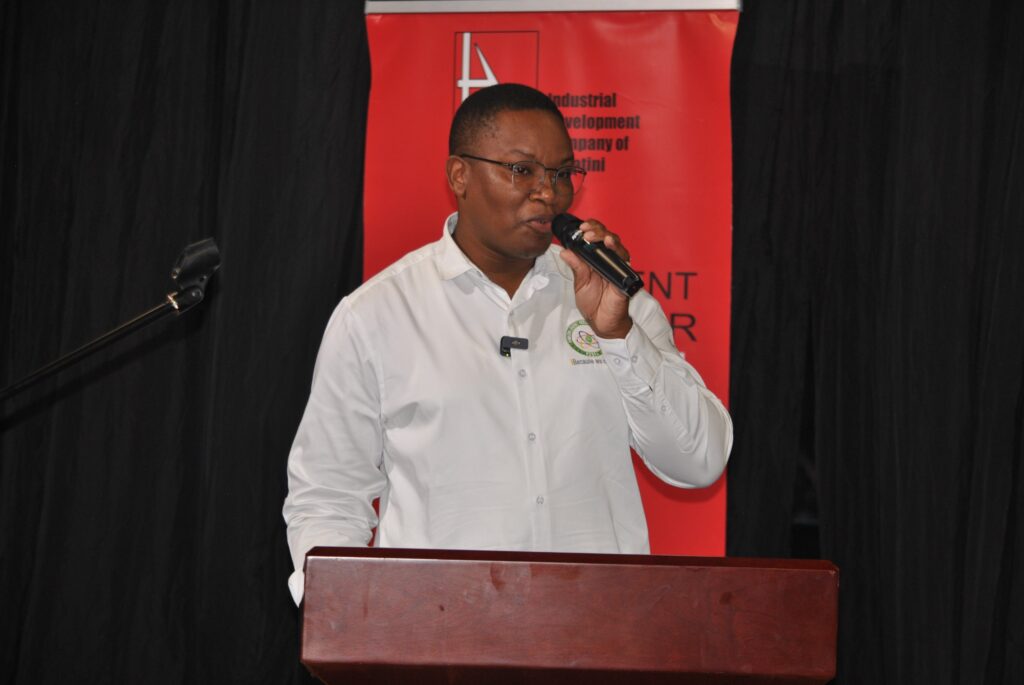


In this engagement, Ncamiso Nkambule, an Electricity Regulation Engineer at ESERA, advised the participants to fully commit to the project and understand it before investing in it.
“Make sure you do the Math,” he said. “The contractor will tell you what you want to hear but at the end of the day, you’re the one who will make a loss if the solar does not perform as expected.”
Mabuza emphasised the importance of thoroughly assessing project economics before implementation, warning against ignoring key financial indicators such as a negative net present value (NPV).
“If a feasibility study indicates that a project is not viable, that should not be ignored. It should be used as a basis to refine the project until it becomes bankable,” he said.
He further cautioned that while solar energy remains a valuable tool in addressing energy challenges, it is not universally suited to all business models and must be carefully evaluated within the context of specific operational needs.