
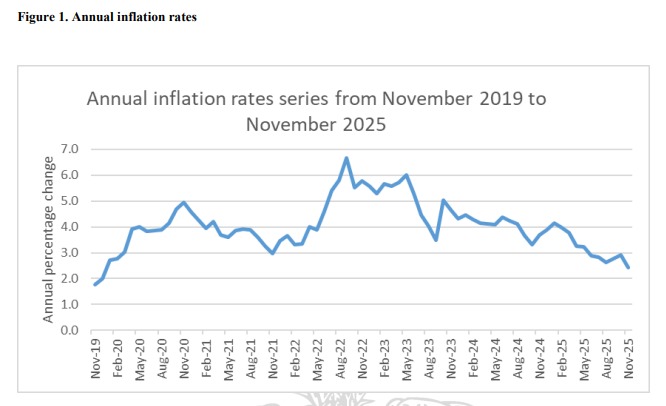
Eswatini’s inflation rate slowed further in November 2025, easing to 2.4% year-on-year, as food prices stabilised and overall price pressures softened, according to the November 2025 Consumer Price Index (CPI) Report released by the Central Statistical Office (CSO).
The November figure marks a 0.5 percentage point decline from the 2.9% recorded in October 2025. It is 1.3 percentage points lower than the 3.7% inflation rate recorded in November 2024, underscoring a sustained downward trend in price growth.
On a month-on-month basis, inflation remained unchanged at 0.0%, compared to a 0.4% increase in October, indicating broad price stability across the economy as the year draws to a close.
The slowdown was largely driven by easing food inflation. Prices for food and non-alcoholic beverages recorded zero annual inflation, down sharply from 3.6% a year earlier, reflecting slower price increases in dairy products, beverages, fruits and vegetables, alongside declining prices for bread and cereals.
Inflation for goods stood at 2.5%, marginally higher than the 2.4% recorded for services, signalling balanced price movements across consumer categories.
However, price trends varied across sectors. Restaurants and hotels recorded deflation of 5.2%, a dramatic reversal from the 29.4% inflation rate observed in November 2024, driven by falling prices in both accommodation services and restaurants and cafés. This suggests subdued demand conditions within the hospitality sector.
Meanwhile, inflation in alcoholic beverages, tobacco, and narcotics slowed to 4.3%, from 12.2% a year earlier, as price growth moderated in beer and wine products.
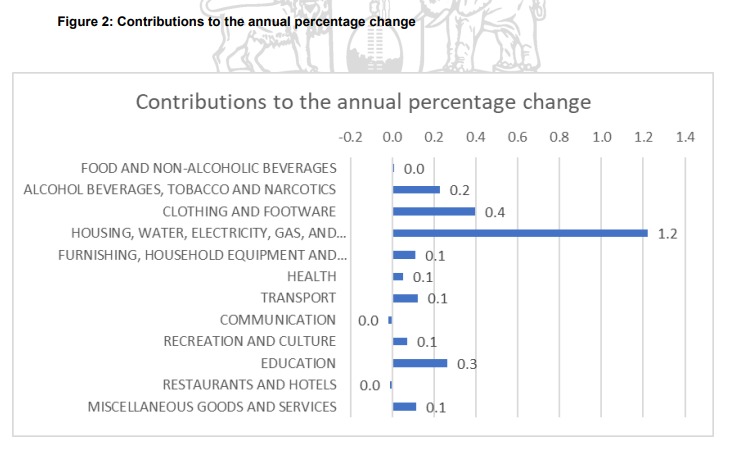
Despite the overall moderation, some categories continued to exert upward pressure on inflation. Housing, water, electricity, gas, and other fuels remained the largest contributor, accounting for 1.2 percentage points of the headline inflation rate, followed by clothing and footwear (0.4 percentage points) and education (0.3 percentage points).
Clothing and footwear prices rose sharply, recording 6.9% annual inflation, while education costs increased by 4.7%, reflecting continued pressure on household budgets in essential spending areas.
The CSO notes that administered prices rose faster than non-administered prices during the period, with administered inflation at 3.2%, compared to 2.2% for non-administered prices, highlighting the role of regulated costs in shaping inflation outcomes.