
By Ayanda Dlamini
The Leadership Growth Forum (LGF) has sparked a national awakening by honouring four pioneers whose courage, intelligence, and dedication to public service transformed Eswatini’s modern institutions.
In a night filled with emotion, reflection, and powerful storytelling, LGF celebrated the legacies of Dr. Sishayisamadoda Nxumalo, Michael “Waqunga” Dlamini, Stanley Matsebula, and Professor Lydia Phindile Makhubu; leaders who turned adversity into nation-building and left behind systems that continue to empower generations.
The event, rooted in a respectful yet forward-looking spirit, marked the official launch of detailed case studies presented by researcher and writer Mancoba Mabuza, whose work traced the significant impact these visionaries left on education, governance, economics, and science.
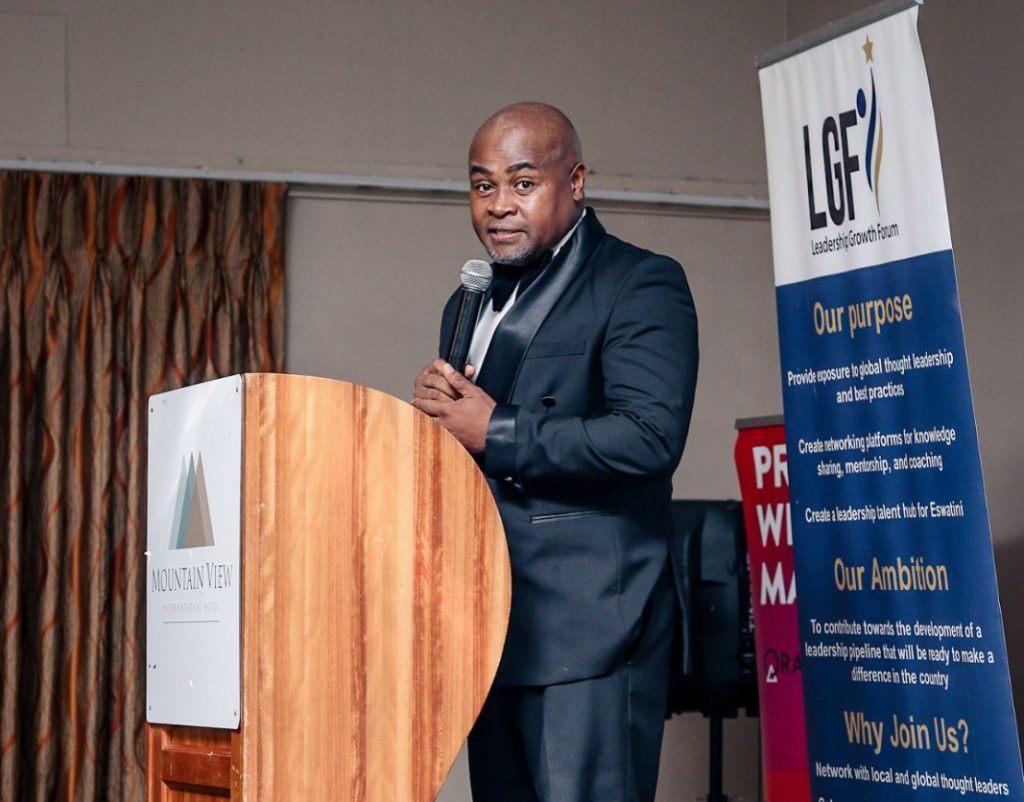
Programme Director Clement Dlamini kicked off the evening with a powerful reflection on the country’s need to preserve the stories of its builders while they are still alive.
“Let us build a nation where greatness is celebrated in real time,” he said. “Let us give flowers while hands are still warm.”
His words resonated throughout the room, emphasizing LGF’s mission—to reshape national culture by honoring leadership not just in memory, but in the present, where it can still motivate action.
The Four Torches Of Leadership

The four honorary awards presented at the inaugural LGF ceremony recognised individuals whose contributions form the very backbone of Eswatini’s modern development.
Honoured as the Torch of Nation Building, Dr. Sishayisamadoda Nxumalo was celebrated for shaping national systems and advancing public service. Michael “Waqunga” Dlamini received the Torch of Leadership Development for nurturing leaders and strengthening civic responsibility.
The Torch of Economic Impact was awarded to Stanley Matsebula for catalyzing opportunities that transformed the country’s economic landscape, while Professor Lydia Phindile Makhubu, honored with the Torch of Knowledge, was recognized for her lifelong dedication to advancing education and intellectual growth.
Presenting the four case studies, Mancoba Mabuza highlighted that the honorees’ collective legacy can be summarized as a powerful leadership formula: Vision, Service, Resilience, and Institution-building.
These icons, he emphasized, stood out not just because they held positions of authority but because they used those roles to uplift communities, create opportunities, and shape lasting national structures. “They didn’t just occupy positions,” Mabuza said. “They used those positions to change lives. Everything rises and falls on leadership.”
Dr. Sishayisamadoda Nxumalo: The Man Who Saw The Future Before It Existed
Born in 1936 in Nkambeni, Dr. Nxumalo rose from rural Eswatini to become one of the country’s most influential institution-builders. Mabuza described his defining trait as principle, the courage to walk away from power when values were compromised.
When the school he helped create at Mhlume was shut down, he resigned immediately.
“That is the principle,” Mabuza said. “That moment shaped his destiny.”
It pushed him into literacy activism, leading him to establish the Sebenta National Institute, which later taught over 100 000 EmaSwati to read and write.
“He did not wait for change; he became the change. Dr. Nxumalo was a visionary who imagined an industrialised Eswatini long before it was fashionable. The Matsapha Industrial Site, Simunye, SEDCO, and what became SIPA (now ENIDC) were all established because of his belief that Eswatini could do more than just agriculture. He planted trees whose shade he knew he would never sit under.”
His son, Mondli Nxumalo, offered a poignant reflection on his father’s boldness.
“There has never been a person who worked underground in the mines and in the same lifetime led a delegation to the United Nations General Assembly.”
He also remembered a funny moment when a schoolboy shouted “Sishayi!” thinking it was his last name, showing how well his name was known across the country.
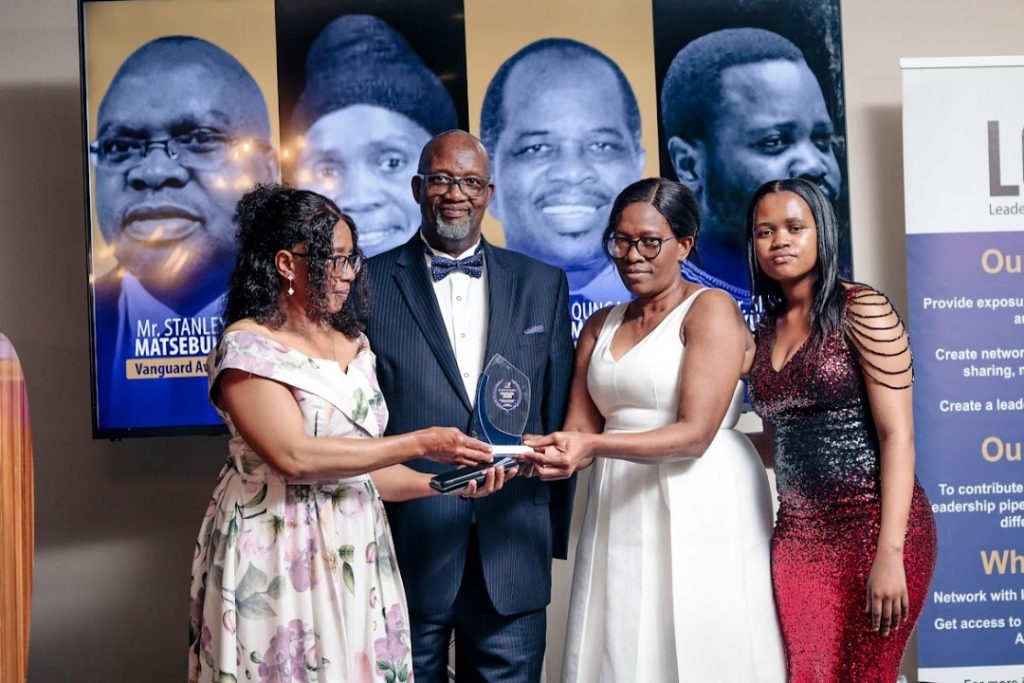
Accepting the award, Mondli said:
“We receive this honour with both hands. May his story help the next generation serve with kindness, courage, and humanity.”
Michael “Waqunga” Dlamini: The Disciplinarian Who Led With Heart
Michael “Waqunga” Dlamini, the legendary headteacher of Mhlatane High School, was remembered as a leader of striking contrasts—strict but caring, demanding yet deeply compassionate.
To researcher Mancoba Mabuza, his influence was deeply personal: “This man is like my father. If it wasn’t for him, I don’t think I would have finished school,” he reflected.
Dlamini saw poverty not as a barrier but as a challenge to be overcome, creating a school environment where no child was ever sent home for lack of fees or a uniform.
Under his leadership, students built a strong culture of mutual support, and Mhlatane became a regional example for discipline, excellence, and educational innovation. Dlamini did more than operate a school; he helped shape responsible citizens.
Leadership Training Under the Big Tree
Every Wednesday, he would sit with students under a tree to discuss life, values, and the world. These sessions became sacred moments in which they debated, argued, and found courage.
“We do not have memories of mathematics,” Mabuza said. “We remember how he shaped our character.”
“This community-first leadership extended to funerals. Students would organise buses, attend ceremonies, cook, and support the grieving all on their own initiative. It taught responsibility, dignity, and collective compassion. He demanded excellence, but also celebrated bravery. One defender was asked to score within five minutes of a match. He did, and Dlamini rewarded him with E100 and public praise.””
He punished failure, but rewarded boldness. That balance made Mhlatane unstoppable—academically, culturally, and in sport.”
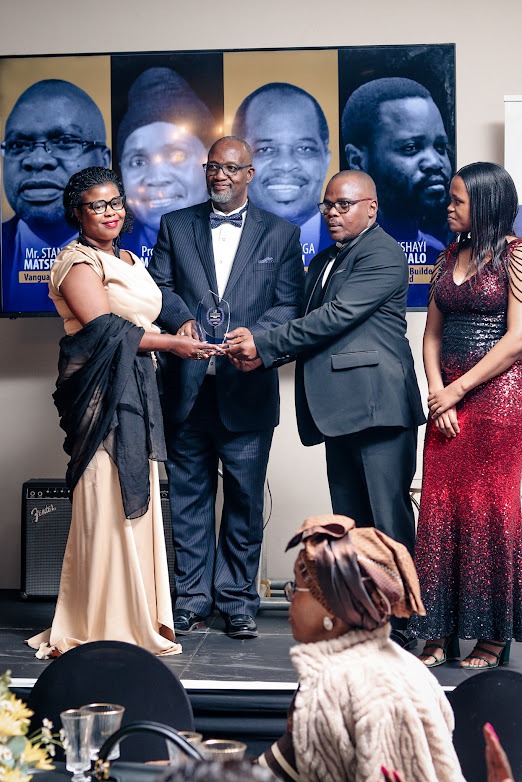
His daughter, Tenele Dlamini-Vilakati, said, “He lived for the dignity of others. We are honoured that those who grew up under him remember his guidance. May his legacy live on.”
Stanley Matsebula: The Economist Who Rescued A Bank And Fed A Community
Stanley Matsebula’s life combined rare financial insight with genuine humility, turning Swazi Bank from a failing institution—where over 80 percent of loans were non-performing—into a thriving institution with assets growing from E300 million in 2000 to E1.7 billion by 2013.
Yet, his greatest impact went far beyond profit: he ran a community soup kitchen, shared produce from his own farm with staff, slaughtered cattle for his community at Christmas, championed gender equality, and authored Siswati books that influenced social thought, including Mane Ungitfole Tsine and Siyisike Yinye Nje. The latter became a beloved radio play.
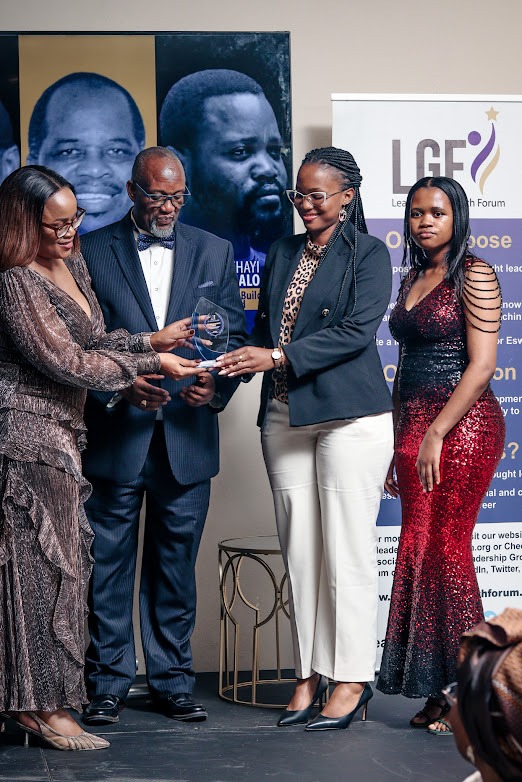
At the time of his passing, he was finishing The Nguni Pale, a manuscript Mabuza urged the audience to help his family publish. Reflecting on his legacy, Mabuza reiterated that “leadership is everything.” At the same time, his wife, Kholiwe, expressed his essence with heartfelt simplicity: “He was a great leader at home and in the community. Leadership meant responsibility.”
Professor Lydia Makhubu: The Iron Lady Who Made Science A National Gateway
Professor Lydia Phindile Makhubu was more than an academic; she was a historic force. The first Liswati and the first woman to earn a PhD, she went on to break barrier after barrier:
• First Liswati in the UNESWA science department
• First woman in the department
• Senior lecturer → Dean → Pro-Vice Chancellor
• And in 1988, the first Liswati and the first woman Vice Chancellor of UNESWA
She led with firmness, clarity, and conviction.
Building Institutions That Broadened Access
She pioneered the Institute of Distance Education (IDE), making learning accessible to working and rural EmaSwati. She also founded the UNESWA Foundation, creating new ways to gather resources. Her research included more than 20 academic publications and two monographs—mainly on medicinal plants.
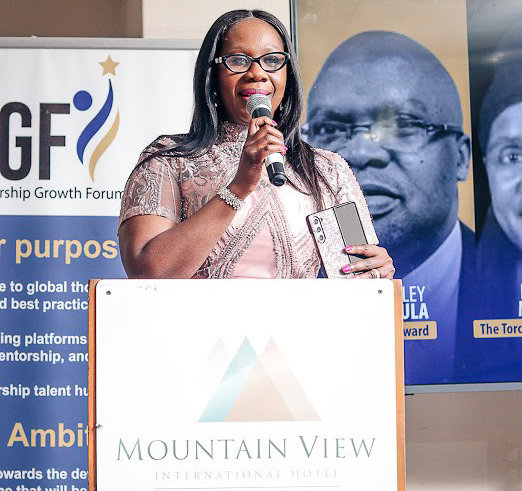
Her daughter, Dr. Nozizwe Mulela, shared a touching memory: “She was known for making lightning in the science lab!” While accepting the award, she paid tribute to her mother’s influence: “She lit a flame of hope, ambition, and possibility. Every girl dreaming of sitting in labs, lecture halls, and boardrooms carries her torch.”
She concluded with quiet pride: “May your torch shine bright. I carry it with humility and the commitment to pass it on.”
A Night That Shifted The Wind
The LGF honorary awards became more than just a ceremony—they turned into a nation’s reflection, reminding Eswatini that its progress is not by chance but the result of leaders who built when structures were weak, believed when faith was scarce, served without expecting reward, and created opportunities they might never personally enjoy. The evening ended with a powerful truth: these four icons did not just build schools, banks, universities, or industrial sites—they built people, and those people built the nation. Their legacy now fuels LGF’s mission in everyone who witnessed the celebration: to honor, remember, and foster a culture where leadership remains a vibrant, living force for national transformation.