
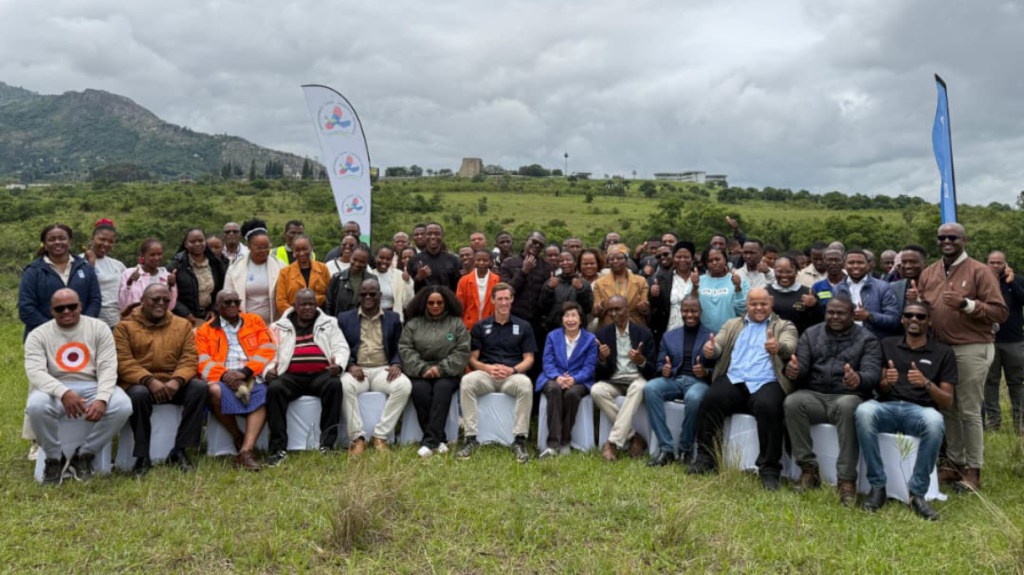
CONCO Limited has committed E870,000 to an innovative ecosystem restoration effort along the Lusushwana River, representing one of the country’s most significant private-sector initiatives toward climate resilience and catchment conservation.
The project supports a joint effort led by the Eswatini National Trust Commission (ENTC) and the United Nations Development Programme (UNDP) to restore damaged riverbanks, eliminate invasive species, and secure water sources for local communities and industries downstream.
Unveiled during a site visit on Friday at Lozitha, the pilot project involves 20 youth volunteers from Lozitha and Lobamba Lomdzala to uproot invasive species and plant native trees.
The goal is to protect the Upper Usuthu Catchment, a vital water source for households, farmers, and major industries in Matsapha, including CONCO’s own world-class concentrate plant.
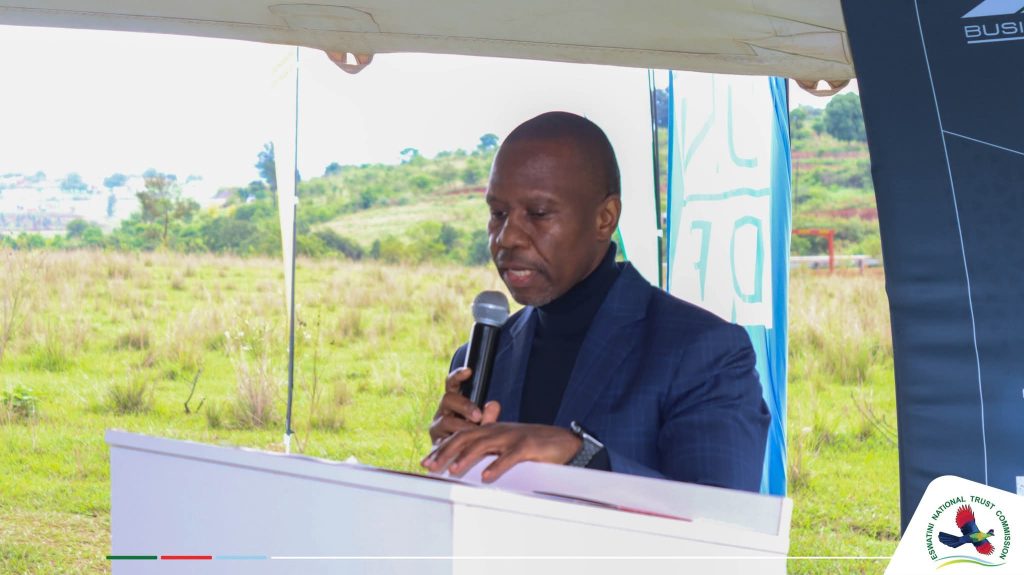
CONCO General Manager Muzi Mahlobo said the company’s contribution goes beyond regulatory compliance and demonstrates a deep understanding of water as its most crucial resource.
“Every litre we use must be returned to the environment. Protecting this river is not optional; this water sustains our facility, our farmers, and our communities,” he stated.
Mahlobo added that CONCO’s partnership with government, UNDP, community leaders, and youth volunteers showcases how collective effort can address climate-related challenges. He also mentioned that the company is exploring the creation of a sustainable catchment fund to fund future restoration projects.
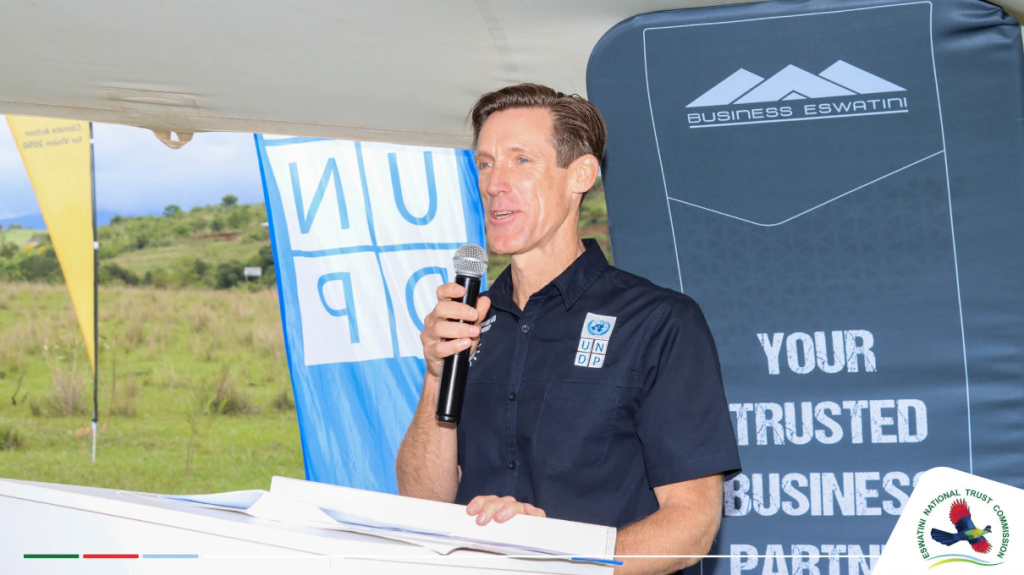
UNDP Resident Representative Henrik Franklin praised CONCO’s leadership, highlighting that the private sector plays a vital role in financing sustainable development and supporting the country’s National Development Plan. Franklin emphasized that downstream water users need to protect the ecosystems supporting their operations actively.
Speaking on behalf of Business Eswatini CEO Musa Maseko, it was highlighted that the private sector recognizes the economic risks caused by degraded catchments, emphasizing the urgent need for coordinated action.
“Water, land, and ecosystems are foundational economic assets. When catchments degrade, businesses suffer, from farms to processors to manufacturers,” Maseko said.
He stated that the initiative aligns with Business Eswatini’s strategic shift toward ESG and responsible business practices.
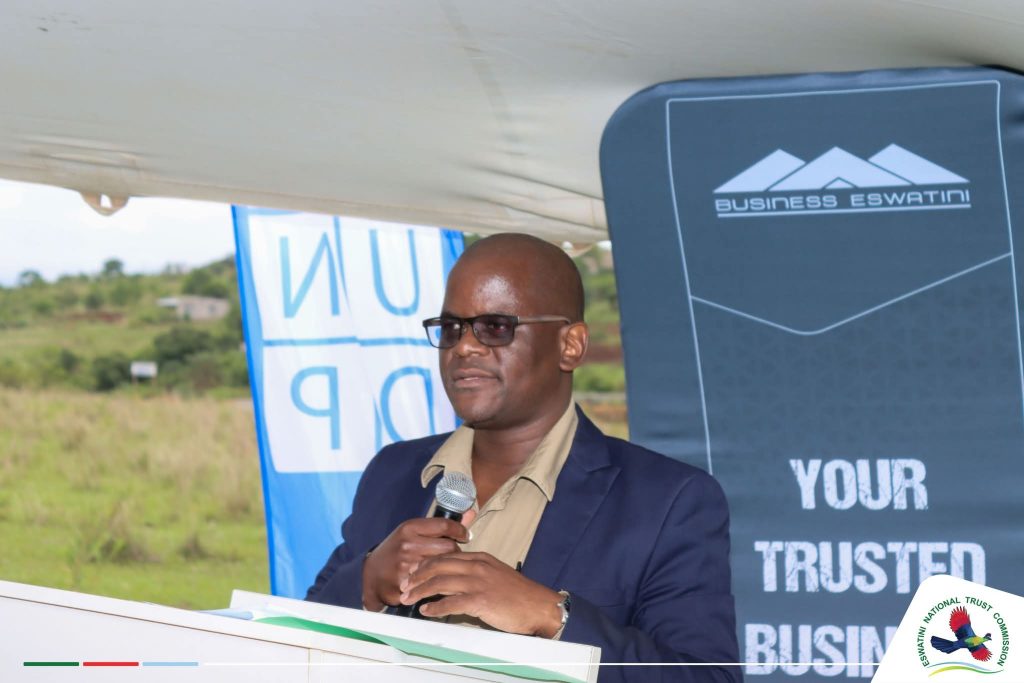
For ENTC, the project marks a step toward long-term catchment rehabilitation, rooted in community participation, scientific mapping, and alignment with national strategies. Representing ENTC CEO Mduduzi Ndzinisa, he said the project represents a significant advance in restoring the river system and building community resilience.
“Our livelihoods depend on clean water and healthy ecosystems. These alien plants are consuming large volumes of water and threatening farming and employment,” he noted.
He applauded community volunteers for their leadership, calling them “the new generation of environmental guardians.”