
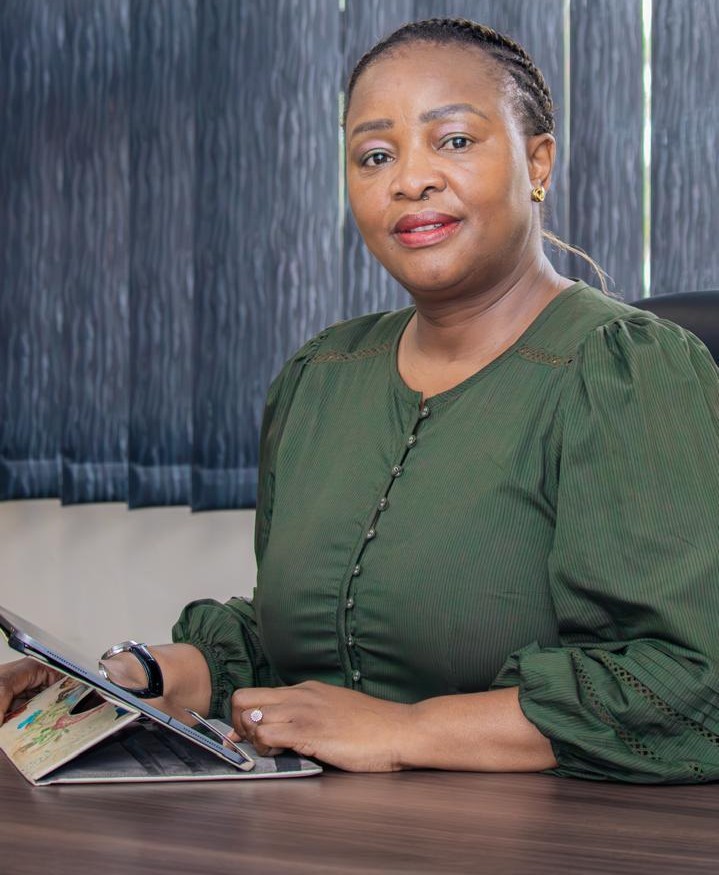
By Phesheya Mkhonta
Your career spans esteemed institutions like Coca-Cola Eswatini (CONCO) and the Central Bank of Eswatini. Can you walk us through your early career and what attracted you to the human capital field?
My professional journey started at a commercial bank, working in customer service. It was there that I developed a deep appreciation for people-centered service, laying the foundation for my future career. With an academic background in economics, I later transitioned to the Ministry of Finance as a policy analyst. That role sharpened my analytical skills and provided valuable insights into macroeconomic policy and its influence on national development.
However, it was during my time in Public Affairs and Communications with the Coca-Cola Africa Foundation that the human side of development truly came alive for me. I coordinated social impact projects across Africa, working with bottling partners to empower communities and improve livelihoods. That experience ignited a genuine passion for people development and organizational culture. From there, taking on a generalist HR role felt like a natural step. It allowed me to combine strategic insights with a people-first approach, guiding me through my roles at Coca-Cola, the Central Bank of Eswatini, and now at Ubombo Sugar Limited.
Looking back, what key moments or mentors influenced your philosophy as an HR leader?
I’ve been fortunate to have several mentors and pivotal moments that shaped the HR leader I am today. A major moment was being invited to join Coca-Cola’s HR team by Jabulile Mashwama. She saw potential in me and took a chance at a time when I was still finding my footing in the space. Her confidence in my abilities laid the groundwork for my growth. Her leadership was empowering; she invested in my development, gave me room to grow, and highlighted my strengths.
Colleagues like Karin Gilbert and Bathobile Gule also played vital roles in my early days at Coca-Cola. They generously shared their time and knowledge, helping me navigate an unfamiliar environment. Their mentorship instilled in me a strong sense of accountability and a deeply people-centric HR approach.
I also drew inspiration from my Bank colleagues Mfanfikile Dlamini, whose work ethic, attention to detail, and business sense set a standard I’ve always admired. Former CBE Governor, Majozi Sithole, who was also my economics lecturer at the University of Eswatini in the 1990s, offered reflective and ethical leadership infused with wisdom and perspective that still influences my leadership today—upholding integrity, thoughtfulness, and respect for people.
Joining Ubombo Sugar, I was lucky to land in a complex and dynamic environment under Muzi Siyaya’s leadership. Muzi is a marvel and a genius. From day one, he set a compelling and clear vision, ensuring that the human capital strategy aligns with organizational strategy and provides all the necessary tools, structure, support, and presence to enable me to deliver on the mandate.
You joined USL nearly three years ago. What was the HR landscape like when you arrived, and what transformation objectives did you set for yourself and your team?
When I joined Ubombo Sugar, it was evident that while the company had a proud legacy, the HR landscape needed both immediate attention and a long-term strategic overhaul. There were critical gaps in governance, structure, and organizational culture affecting performance and morale.
One of the most urgent issues was an imbalanced industrial relations environment. This created uncertainty, undermined managerial confidence, and weakened accountability. Additionally, we identified significant governance challenges; many HR policies were outdated or absent, leading to inconsistent decision-making and perceptions of unfairness.
There was also a noticeable disconnect between leadership and the wider workforce. Communication was predominantly top-down and reactive. Managers were not visible or accessible on the shop floor, resulting in low engagement, fragile trust, and unresolved issues.
The transformation goals were clear:
● Reclaim the people agenda by making leadership accountable for culture, communication, and the employee experience.
● Build a solid governance framework by reviewing and institutionalizing fair, business-aligned policies.
● Reset the tone of leadership to promote visibility, accessibility, and courageous conversations.
● Enable open, transparent communication through platforms that encourage real dialogue, not just formalities.
● Rebuild trust through fairness and consistency so that every employee, at every level, feels seen and heard.
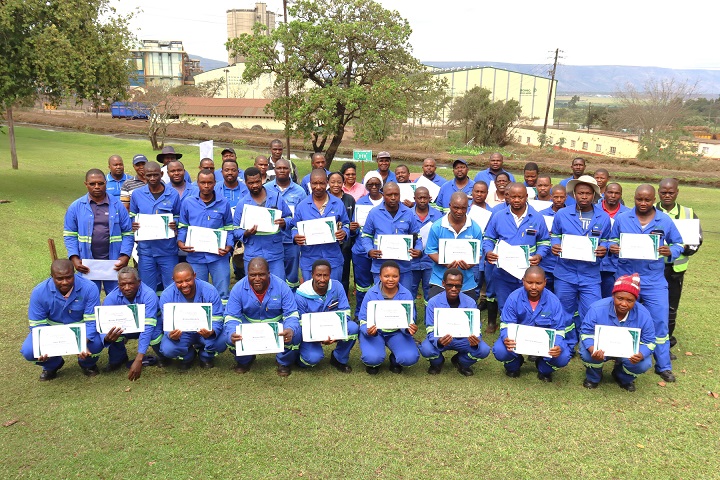
We introduced several engagement platforms, such as MD Coffee Sessions, leadership walkabouts, and roadshows. Bit by bit, the culture is shifting, from one of control and reaction to one of accountability, openness, and shared leadership.
It’s a journey, and we’re still on it, but the progress is tangible. People feel seen, heard, and led. That, to me, is the most meaningful measure of transformation.

USL is one of Eswatini’s oldest mills and largest employers. What does it mean to lead people strategy at a legacy organization of this scale and impact?
It’s both an honour and a great responsibility. What makes this role unique is that we operate at the intersection of three highly demanding sectors: agriculture, manufacturing, and healthcare. Each has distinct workforce dynamics and cultural expectations.
In agriculture, we work with large seasonal labour forces, often from rural communities, where the lines between social development and business operations are closely intertwined. In manufacturing, we deal with regulatory compliance, automation readiness, and performance-driven expectations. The hospital adds another layer of complexity with its own workforce culture and professional standards.
Leading the people strategy here means balancing all these realities while honouring the legacy of an institution many have called home for generations. You can’t drive transformation without respecting that history. But at the same time, you must be bold enough to modernize, hold people accountable, and introduce change.
At this scale, HR isn’t a support function; it’s a business driver. It impacts everything: risk management, labour relations, talent retention, and the organization’s reputation.
I’m also fortunate to work with an exceptional team and leaders who understand the mandate, are highly capable, and deeply committed to delivering results. Collaborating with professionals who are equally invested in progress is incredibly fulfilling.
What does a ‘transformative culture’ look like at USL, and how does it manifest in day-to-day interactions?
A transformative culture is one where people feel safe (psychologically safe) to speak up, innovate, and challenge norms. At USL, it shows up in how we collaborate, how leaders show up, and how we resolve conflict.
It’s in the language we use, the feedback we give, and the way we onboard and support each other. It’s in the shift from command-and-control to shared accountability. We are still on the journey, constantly reflecting and recalibrating. But we’re committed to the long haul.
*To read the full article, download Issue 12 of Inside Biz Magazine, now available on PressReader.